


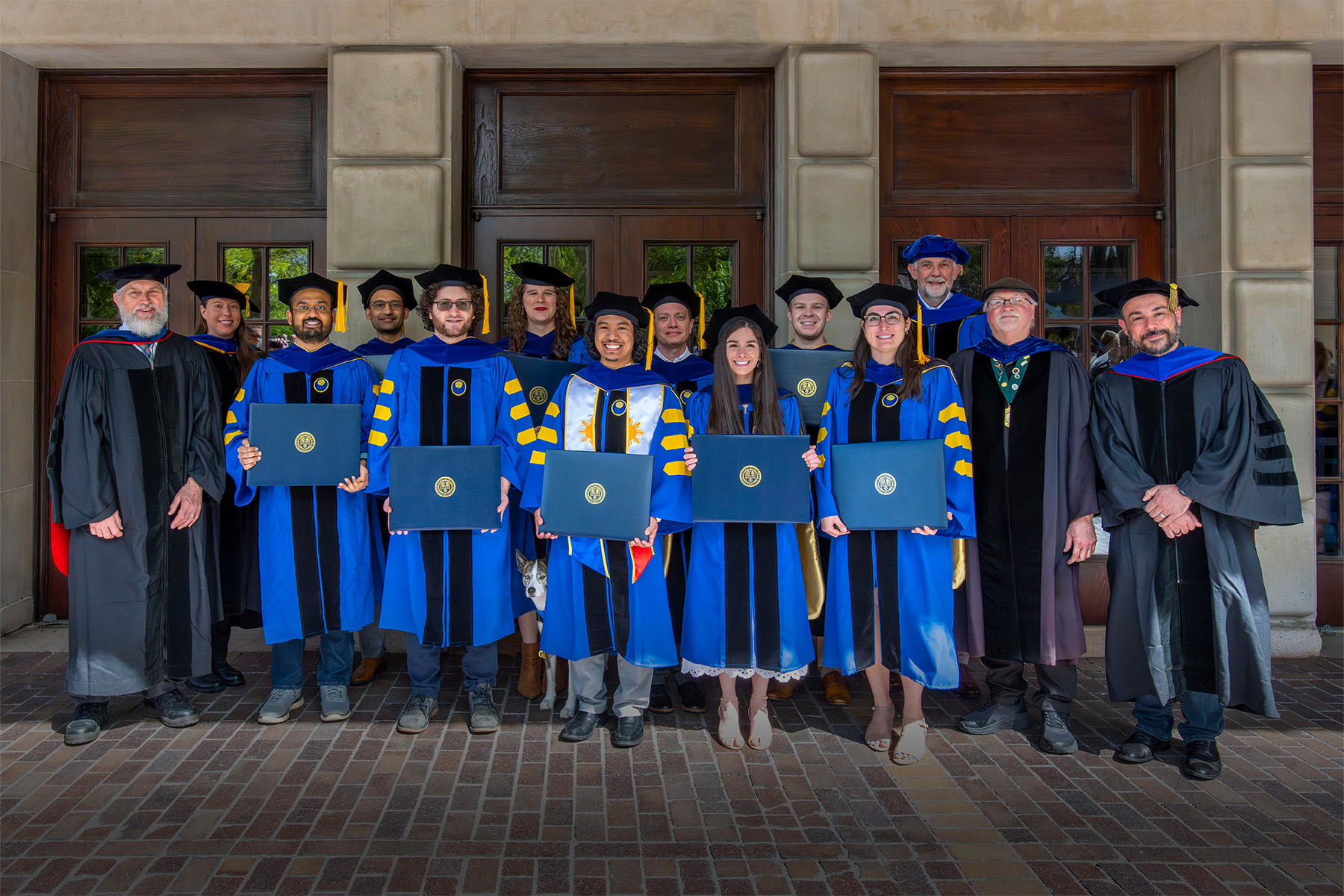
During his doctoral studies at LLE, David Bishel remembers asking a senior scientist about a problem he was struggling with. Without hesitation, the scientist invited David over to his office and promptly handed him an original print of an article he had published on the exact same subject more than 30 years ago. “It is this immediate access to such a high level of expertise in plasma physics, high-energy-density physics, diagnostics and detectors, laser systems, and more, that’s one of the most beneficial aspects of being a student at LLE,” says Bishel, who graduated from the University of Rochester’s Department of Physics and Astronomy in the fall of 2024. “My experience is one of countless examples of the ongoing legacy of expertise cultivated at LLE,” Bishel says.
Bishel’s experience does not surprise Dustin Froula, LLE Distinguished Scientist and PULSE Division Director. “The laboratory’s deep commitment to research and innovation changes the professor–student dynamic,” Froula says, adding that “the presence of more than 150 professionals with advanced degrees in the facility makes it easier to teach students about the latest developments in various fields.” In that sense, LLE functions as both a working laboratory and an unparalleled learning environment.
Feeding a Talent Pipeline
Growing demand for skilled professionals in STEM fields has made the development of a robust, well-trained workforce more important than ever. LLE is committed to strengthening and expanding the workforce pipeline, which is key to sustaining momentum and accelerating progress in critical areas while supporting the larger mission of the National Nuclear Security Administration (NNSA) and National Security Complex. “We do this by providing students with the opportunity to develop the practical skills required to contribute to large and complex scientific efforts while also exposing them to environments far beyond their typical experiences,” Froula says. The rewards are readily apparent—particularly in the job offers new graduates receive. Manfred Virgil Ambat, for example, defended his doctoral thesis this past spring and had an offer from Los Alamos National Laboratory before he even completed his studies.
Internships, scholarships, and awards such as the Horton Fellowship Program, for example, which was established in 1993 to honor the legacy of the late Congressman Frank J. Horton—a dedicated supporter of LLE’s mission—go a long way in supporting graduate students during their time at LLE. The fellowship covers tuition costs, grants stipends to doctoral students, and has benefited over 260 fellows over the years. “The Horton Fellowship has helped bring full circle my dreams of becoming a scientist, and sharing that passion with [younger] students has been immensely rewarding,” says Ambat.
Outreach Starts Early
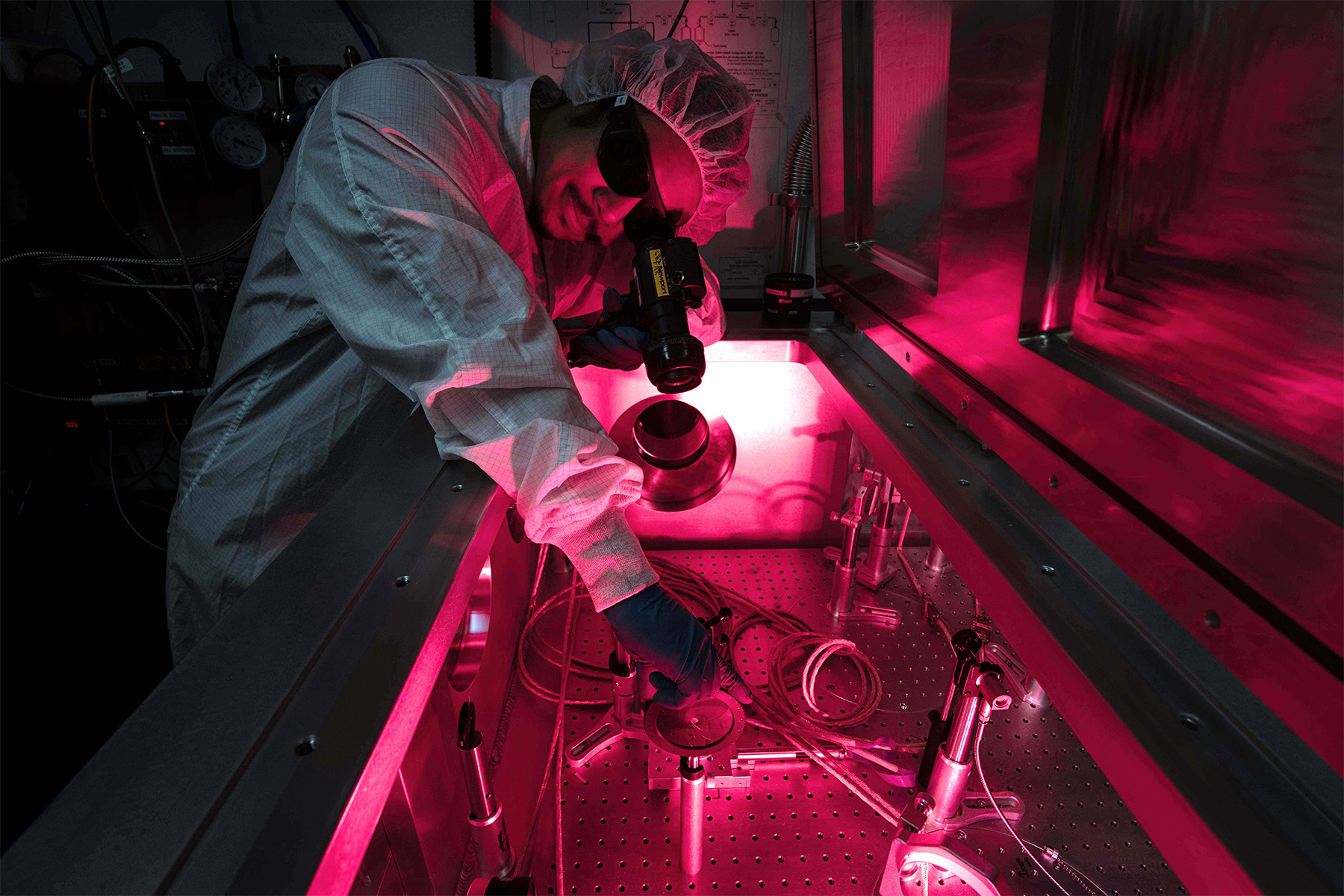
In keeping with the spirit of feeding the talent pipeline, “It’s important to start the process early,” says Diane Boni, Director of the Undergraduate Research Program at LLE. The institution’s outreach programs for Rochester-area high schools are part of this effort. “We want to reach students earlier in their high school career, before they’ve really mapped down a program of study, so they have an improved awareness about post-high school opportunities in STEM fields, and so that they can plan their courses for their junior and senior years,” Boni says.
The eight-week Summer High School Research Program offers incoming seniors a peek into LLE’s advanced facilities. Accepted students are assigned to a research project and supervised by a staff scientist or engineer. In addition, LLE’s six-week summer Broad Exposure to Science and Technology (BEST) program, held at East High School in the Rochester City School District, exposes underrepresented students and their teachers to STEM-related research activities.
For undergraduates, the laboratory also offers mentored research experiences throughout the year, welcoming new students to the programs in both the fall and spring semesters. Through its Summer Undergraduate Education Program, launched in 2023, LLE hosts undergraduate researchers from the University of Rochester, Rochester Institute of Technology (RIT), and other colleges and universities around the country. Weekly seminar sessions highlight career development and different parts of the research experience. Students attending institutions in the Rochester area have the option to continue working on projects with their mentors even after the summer term has ended, and in some cases, a remote collaboration option is also available to students from outside the area.
One of the highlights of the undergraduate program is the unique opportunity for students to participate in an LLE-organized trip to visit and tour national laboratories, including Lawrence Livermore National Laboratory, Los Alamos National Laboratory, the Nevada National Security Site, and other facilities. The trip, which was launched in 2024, has been eye-opening for many, including Matthew Harmon-Prendas, a current electrical and computer engineering major. “I had always assumed that the national lab environment was mostly centered around the work of physicists, but I learned that engineers play a vital role in daily operations, even representing a majority of the technical staff,” says Harmon-Prendas. “This trip has inspired me to learn more about the science of fusion, which will eventually benefit all humanity.”
Inspiration fuels the rest of the summer research experience, and every day, students from high school all the way to the graduate school level have the chance to meet and interact with their peers, share their research, and take part in informal mentoring opportunities. Boni has witnessed graduate students helping undergraduate researchers prepare their research posters and share advice about life as a science researcher—a testament to the encouraging and supportive atmosphere LLE strives to create through its educational programs.
Collaborative Use of LLE Facilities
In addition to training the next generation of scientists, LLE also opens the doors of its facilities to researchers from other institutions. During scheduled collaborative shot days, external researchers work together with various teams at LLE to conduct experiments on the facility’s high-power laser systems. Krish Bhutwala, a scientist from Princeton Plasma Physics Laboratory, remembers his shot day during his graduate studies at the University of California, San Diego. “In a single day, scientists from around the world come together to peek at nature’s inner clockwork for a few select moments—an experience like no other,” he says.
To facilitate further collaboration and the judicious use of the Omega Laser Facility, LLE launched the National Laser Users’ Facility (NLUF) program in 1979, and for nearly 50 years, the program has enabled researchers to make leaps and bounds in the fields of high-energy-density physics, inertial confinement fusion, and beyond. NNSA funds the NLUF experiments through its Office of Experimental Sciences, allowing users to conduct basic science experiments without incurring direct facility charges. Limited target support for NLUF experiments is also provided by General Atomics and funded by NNSA. An open call for NLUF experiments goes out every two years, and applications are merit-reviewed by an independent committee. Projects are weighed based on their scientific and technical merit, feasibility, and impact. Mingsheng Wei, LLE Senior Scientist and manager of the NLUF and Laboratory Basic Science user programs, says the biggest challenge with the program is that demand always exceeds availability. Wei encourages researchers from multiple institutions to form collaborative teams with members working on different aspects of a project.
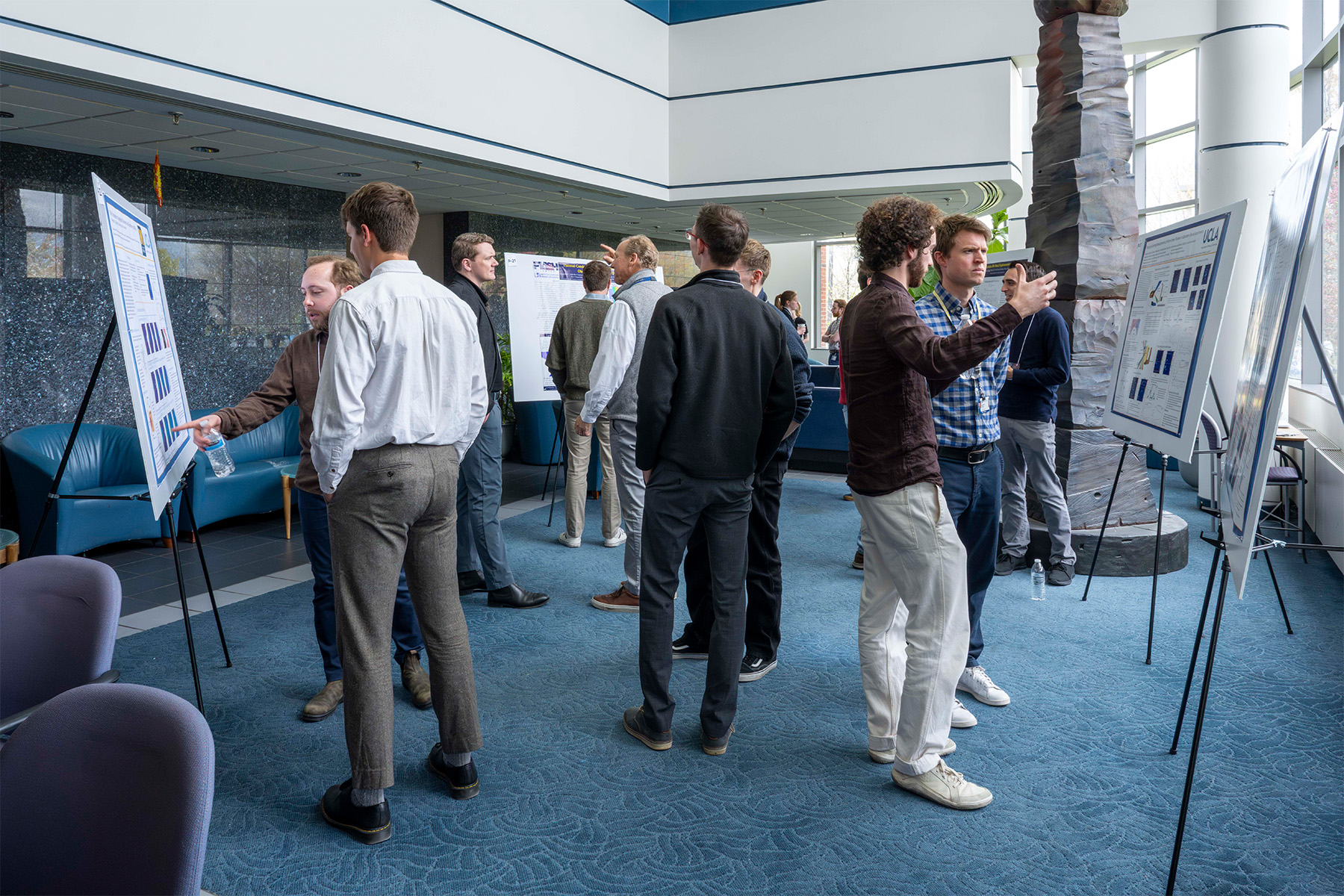
This same spirit also lies at the heart of the Omega Laser Facility Users Group (OLUG) community, which is comprised of over 800 users from more than 70 institutions. Since 2008, LLE has hosted an OLUG workshop every April to facilitate communication, collaboration, and networking.
Kickstarting Lifelong Careers
LLE’s comprehensive education initiatives have paid rich dividends, and students of every level regularly comment on the value of the cutting-edge research they have been able to perform, the mentorship they have received, and the career opportunities that have been made possible to them.
“My supervisor and the scientists with whom I work treat me, a student, as their equal and take the learning process incredibly seriously,” says Pericles Farmakis, a mechanical engineering graduate student at the University of Rochester. “They not only encourage students to take up real responsibilities as theory or experimental principal investigators on projects worth hundreds of thousands of dollars, but also offer classes no other university offers and leave their doors open for you, should you need anything. What students are encouraged to do at LLE is a unique endeavor in the US and the world. You come to realize the importance of collaboration, perseverance, and resolve to extend human knowledge to new heights with your personal input.”
While education and collaboration have expanded the talent pipeline for national laboratories and government agencies, private industry has also benefited from these relationships. Alison Christopherson, Head of Target Design at Xcimer Energy, did her graduate research at LLE and went on to become a staff scientist at Lawrence Livermore National Laboratory before joining Xcimer, a laser-fusion startup working to commercialize inertial fusion energy. The Xcimer team recently conducted an experiment on OMEGA as part of an NLUF campaign with the goal of generating experimental data to directly inform Xcimer’s hohlraum design work, providing validation required for system-level confidence.
Margaret Huff, who received her PhD from the University of Rochester in 2023 and now works at Sydor Technologies, a manufacturer of imaging diagnostic systems, is grateful for LLE’s role in shaping her career. “The skills I built at LLE have allowed me to contribute to the field of fusion both during my time as a postdoc at Los Alamos National Laboratory and now as a Solutions Scientist at Sydor Technologies,” Huff says. “By enabling access to world-class scientists and staff, as well as facilities, LLE has provided me with a foundational knowledge of high-energy-density physics and diagnostic technology. The support provided to me as a graduate student made a huge difference in the way I interact with the field as an early-career professional now.”
Looking Ahead
Over five decades, LLE’s community of researchers, engineers, students, and collaborators has made countless strides across scientific discovery, technological development, and applied innovation—deepening our understanding of the physical world and producing capabilities that exist nowhere else. These achievements have largely been made possible by the laboratory’s longstanding investments in educational and collaborative research opportunities for students and scientists of all levels. As new facilities, infrastructure, and outreach programs are being developed and refined, LLE looks ahead with renewed commitment to inspiring, nurturing, and empowering younger generations who will tackle tomorrow’s challenges and carry the legacy forward.