Students Gain Rare Access to Some of the Countryʼs Leading Science Facilities
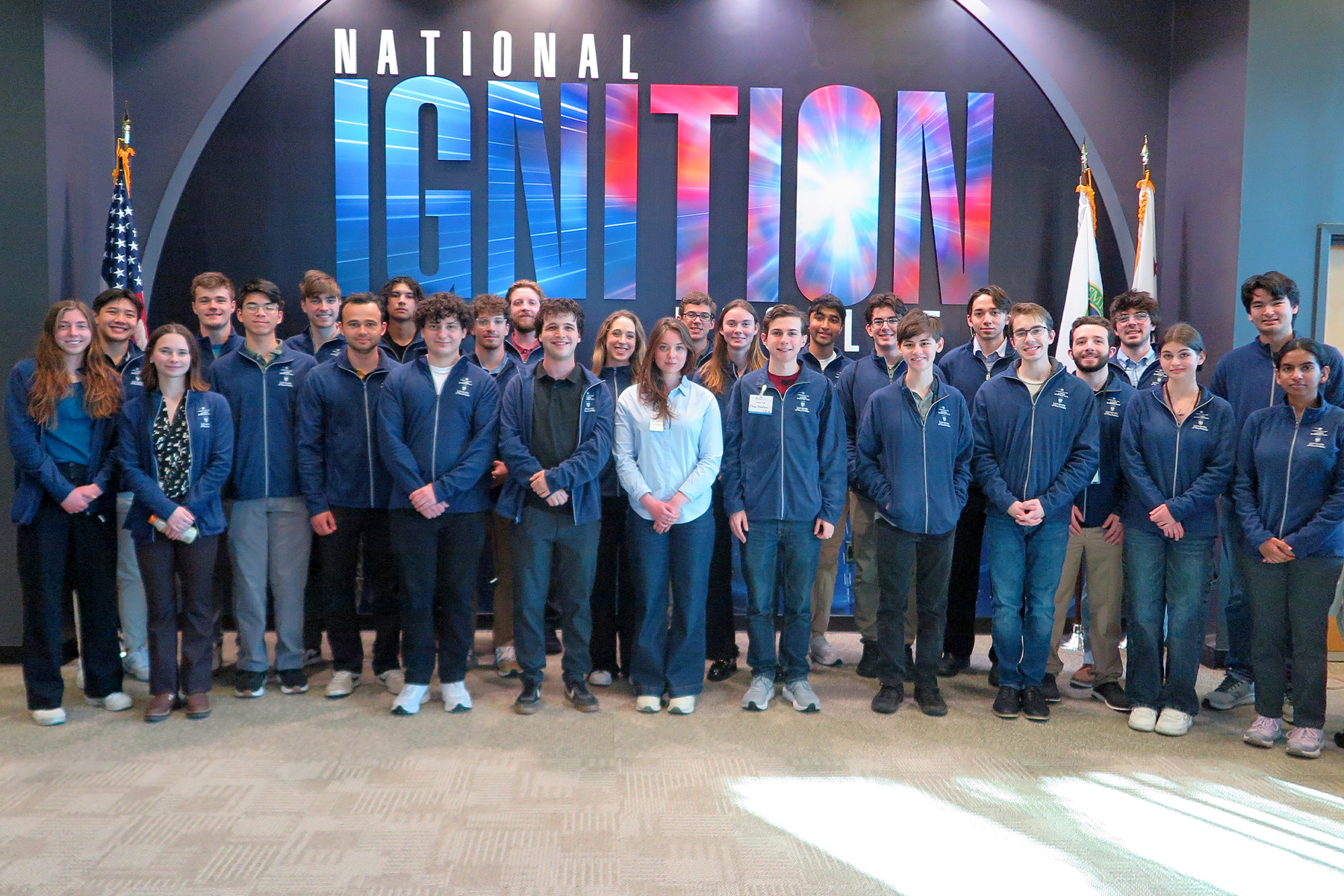
For most undergraduates, national laboratories exist only as names on research papers or distant career possibilities. This past January, 27 students in LLE’s Undergraduate Research Program got something rarer: direct access to three of the facilities where some of our nation’s most important science and engineering happens.
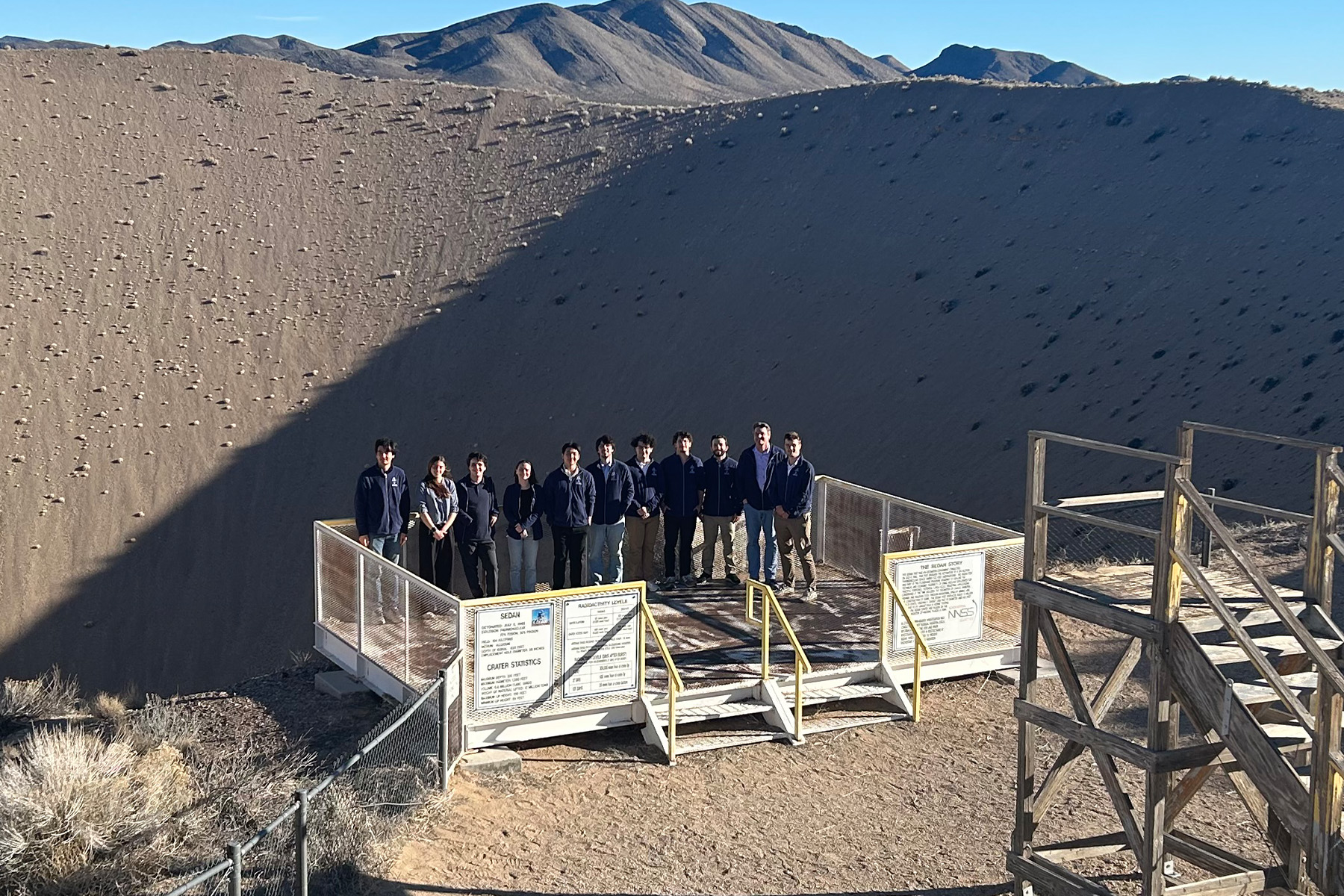
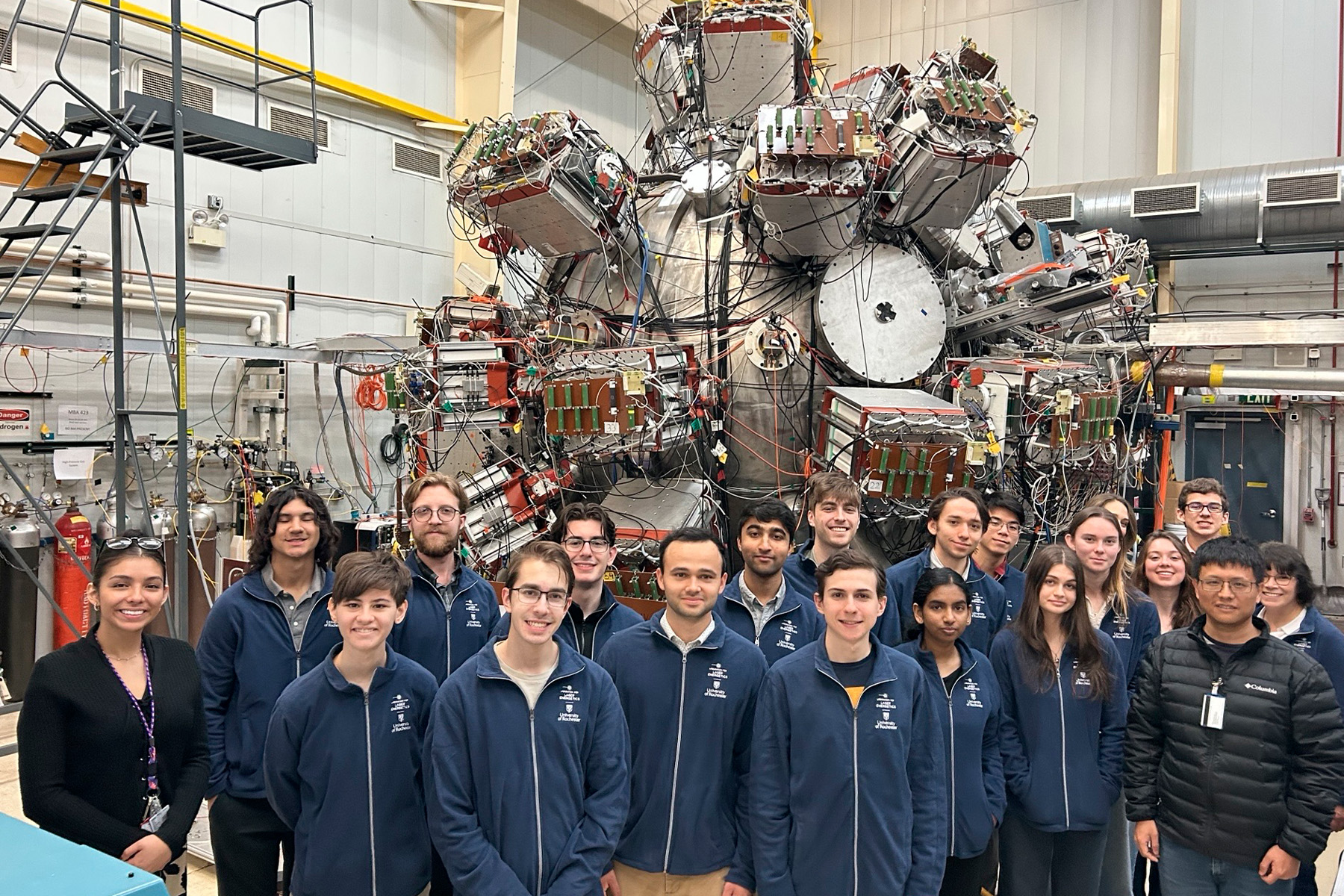
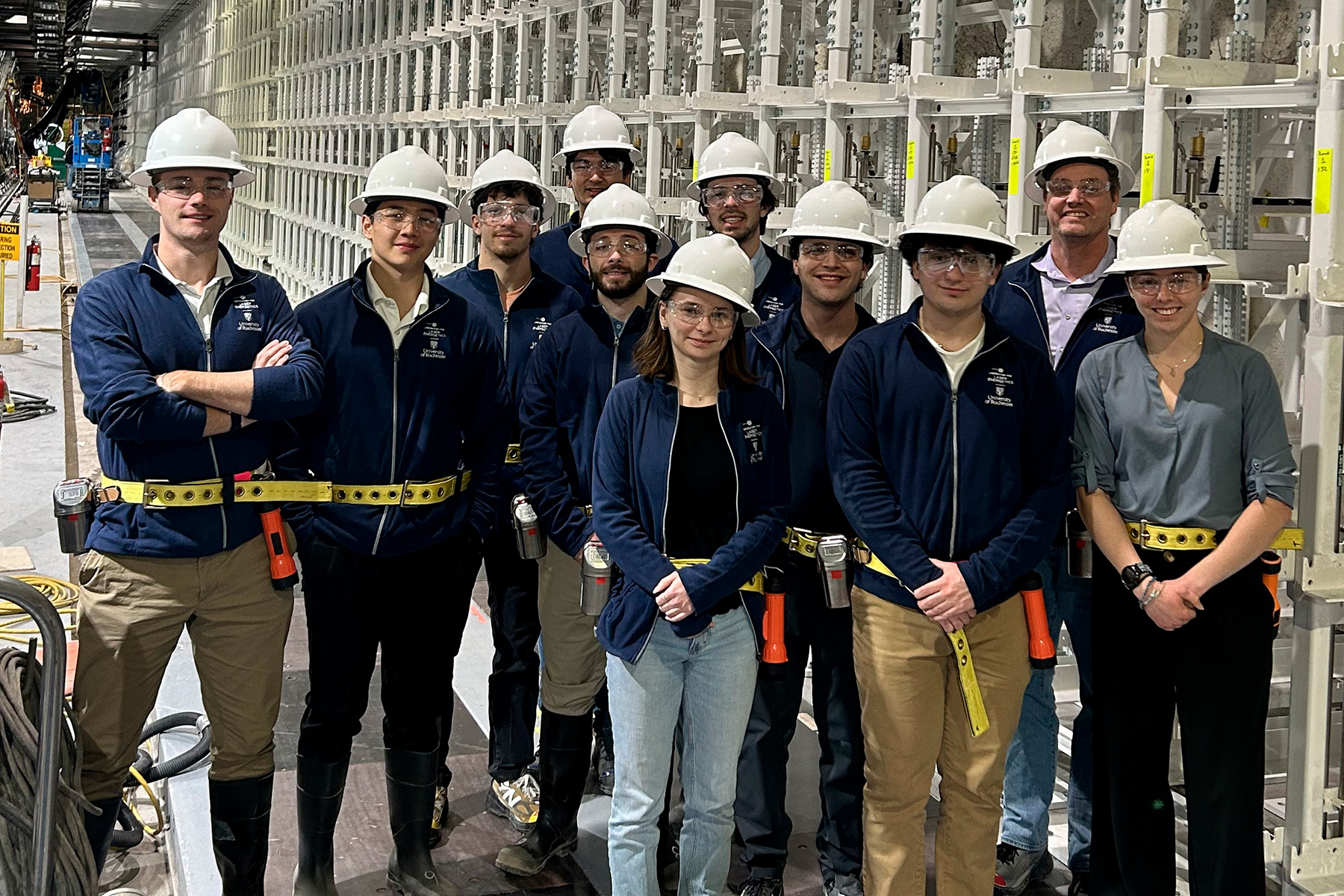
The students traveled to Lawrence Livermore National Laboratory (LLNL) in California, Los Alamos National Laboratory (LANL) in New Mexico, and the Nevada National Security Site (NNSS), visiting scientists, touring restricted facilities, and connecting their own research projects to the broader national laboratory mission. For many students, the experience is eye-opening—not just for what they see, but for what it reveals about the scale and purpose of the work.
The LLE Undergraduate Research Program and experiences like these national laboratory visits are designed to address a critical gap in the US scientific workforce. Each year, billions of dollars in capability across the national complex go underused, not due to a lack of scientific ideas or PhD-level expertise, but because the nation needs more engineers and technical professionals than those currently available to execute these missions at scale. The program provides students with the opportunity to develop the practical skills required to contribute to large, complex scientific efforts while also exposing them to environments far beyond their typical experience. For many, this is their first encounter with the scale, responsibility, and impact of work conducted at the national laboratories, broadening both their perspective and their sense of what is possible.
This year, the program helped facilitate research opportunities for 15 students who previously participated in the LLE program, placing them at institutions across the country, including LLNL, LANL, SLAC National Accelerator Laboratory, and NNSS.
Lawrence Livermore and the National Ignition Facility
At LLNL, students toured the National Ignition Facility (NIF), home to a large laser system designed to compress and heat hydrogen fuel to fusion-ignition conditions. The NIF has achieved ignition—the point at which a fusion reaction produces more energy than the laser energy delivered to the target—several times in recent years. For students working on laser and plasma physics experiments at LLE, the visit illustrated how their research connects to work being carried out at larger facilities.
“I learned a lot about the laser technology that has been developed for successful ignition shots,” said Mason Weiss, one of the participating students. “I also greatly appreciated the chance to talk to some researchers about the work culture and opportunities available at LLNL.”
Los Alamos and the History of Nuclear Research
Los Alamos has played a central role in nuclear science since the Manhattan Project and today remains an active research institution working across weapons, energy, and basic science. Students learned about the laboratory’s history and how current programs there relate to research underway at LLE, along with practical information about summer internship pathways.
The Nevada National Security Site and Stockpile Stewardship
The Nevada National Security Site, where the United States conducted nuclear tests until 1992, now supports stockpile stewardship—the ongoing scientific effort to certify that the nation’s nuclear weapons remain safe and reliable without underground testing. The visit gave students a clearer picture of LLE’s collaborative role in that mission and the kinds of research careers it supports.
Sandia National Laboratories and Pulsed-Power Science
In previous years, students also visited Sandia National Laboratories (SNL) in Albuquerque, NM. At SNL, a leader in national security science and engineering with world-class pulsed-power facilities used to study materials and plasmas under extreme conditions, students make connections between the work at SNL and research at LLE and are introduced to a wide variety of internship and career opportunities.
Building Connections for the Next Generation
The national laboratory trip has been part of LLE’s undergraduate program for several years. Over the past three years, nearly 60 students have visited LLNL, LANL, NNSS, and SNL. Next year’s trip will include Savannah River National Laboratory in South Carolina.
The visits are intended to help students understand the national laboratory system, make professional connections, and consider career paths they might not otherwise encounter. Several students from previous trips have gone on to summer internships at the facilities they visited. The experience also gives students a clearer sense of how large-scale research environments operate and where their own interests might fit within them.
“The trip opens their eyes to opportunities in science, technology, and engineering outside of their limited experiences,” said Dustin Froula, Director of LLE’s Plasma & Ultrafast Laser Science & Engineering Division. “Students are already taking advantage of the contacts they’ve made to do summer internships at the national labs, which will help line up future jobs at these institutions once they graduate.”
For students at an early stage of their careers, the exposure can be clarifying. “Seeing these facilities in person and talking to the people who work at them inspires me to keep pursuing work that is both interesting and has a positive impact on our communities and country,” said undergraduate Ethan Mentzer. “The lab trip helped me gain lots of insight into how I might structure my future.” Froula offered a simpler summary: “The experience was extraordinary—the kind that imprints itself for life.”