Timeline – 2006
National Ignition Campaign (NIC) Milestone Achieved
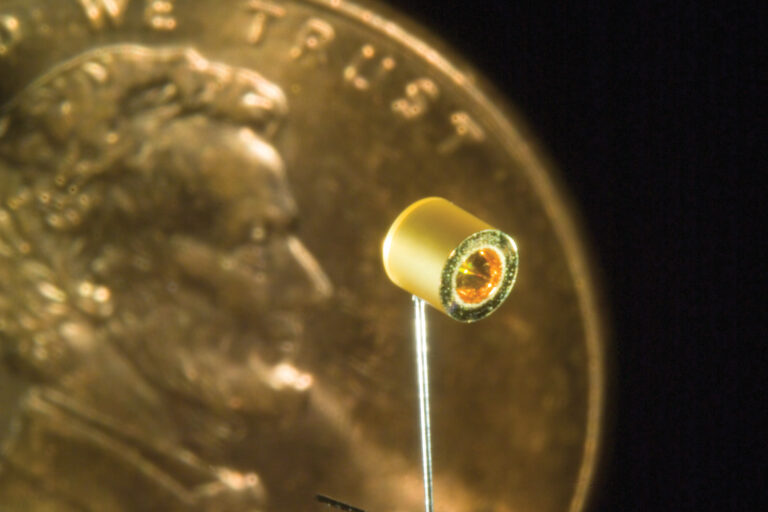
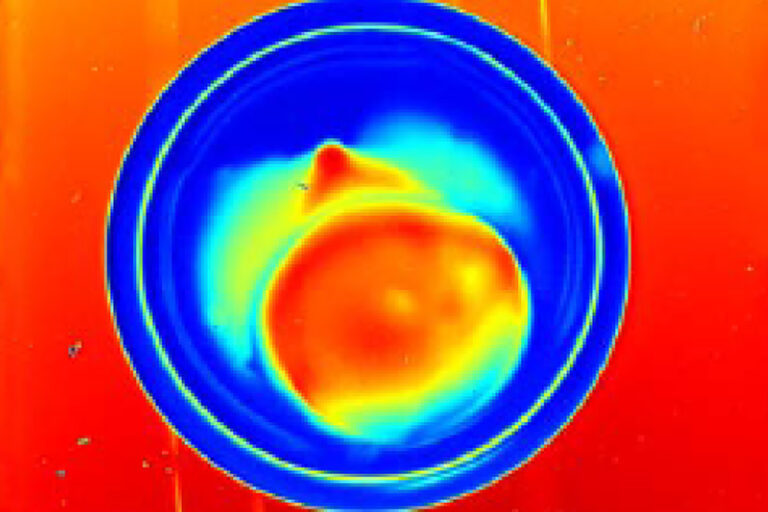
Scientists at LLE and Lawrence Livermore National Laboratory completed a NIC milestone on August 17, 2006 dealing with hohlraum energetics experiments with elliptical phase plates. A set of 43 elliptical phase plates (E-IDI300) were designed and manufactured for these OMEGA experiments. Seven scale-1, thin-walled, gold hohlraums were irradiated with 40 beams smoothed with E-IDI-300 phase plates. Several gas fills were investigated. High-Z dopants were introduced into the gas fills to reduce hard x-ray production and laser scattering levels. The hohlraum energetics were measured for a 13.5-kJ shaped laser pulse (PS26) with the following diagnostics: Dante, full-aperture backscatter, near-backscatter imaging, gated hard x-ray imaging, gated soft x-ray imaging, and the hard x-ray detector. The peak radiation temperature Tr inferred from the measured levels of the x-ray flux increased by 17 eV when the laser beams were smoothed with phase plates. The improved coupling was a consequence of reduced laser-scattering losses.
Cryogenic DT Target Experiments
The first direct-drive, ignition-scaled, cryogenic target containing tritium was imploded on the OMEGA laser in February 2006. The target contained 0.06% tritium by atom fraction. This implosion was the first in a series of planned experiments that led to LLE scientists imploding two fully β-layered DT capsules during the week of March 27, 2006. The tritium fraction in each capsule was 13.5%. Both capsules were layered without external IR radiation, confirming earlier estimates that a tritium fraction of ~10% would be sufficient for β-layering to occur. This is the first time that a β-layered DT target was used in a laser-driven implosion.
Active Shock Breakout (ASBO) Upgrade
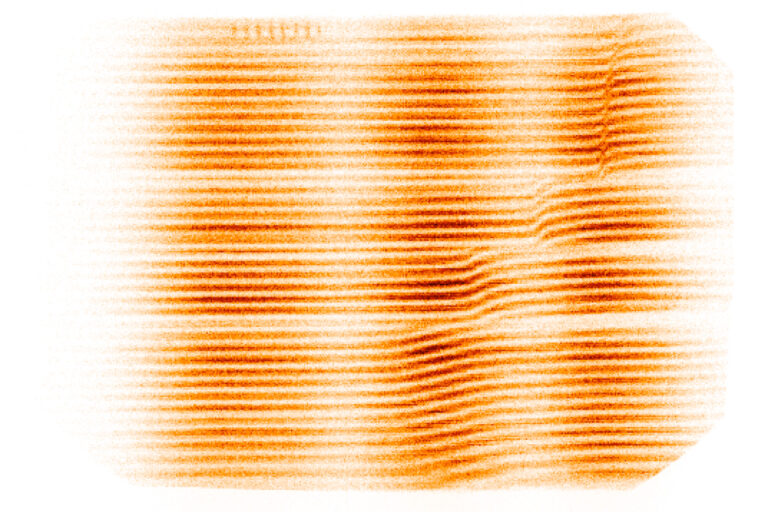
A year-long project to upgrade the ASBO diagnostic was completed in April 2006. The ASBO diagnostic measures the timing of shock waves inside an imploding cryogenic D2 sphere. Using the existing system as a baseline, a new optical layout was conceived that uses two Rochester Optical Streak System (ROSS) streak cameras as detectors for the two VISAR (velocity interferometer system for any reflector) channels. The result was an outstanding optical device that provides excellent optical performance and smooth operation using the accurately calibrated ROSS cameras.