Timeline – 2000
First Cryogenic Implosions of Deuterium (D2)-Filled Targets
The first cryogenic implosions of D2-filled targets using the new Cryogenic Target Handling System (CTHS) were carried out on July 14, 2000. This was a major milestone in the program that would eventually lead to direct-drive, high-gain implosions on the National Ignition Facility. The primary capabilities for the CTHS included filling thin-walled plastic shells with a room-temperature-equivalent pressure of 1500 atm of DT; producing four targets per fill cycle, up to 12 targets per week; cryogenically manipulating and transporting targets to the center of the target chamber; using infrared heating to smooth the D2 or DT-ice surface into an ice shell; characterizing the ice smoothness; and safely operating with tritium. This system was the first of its kind to become operational.
Polarization Smoothing Implemented
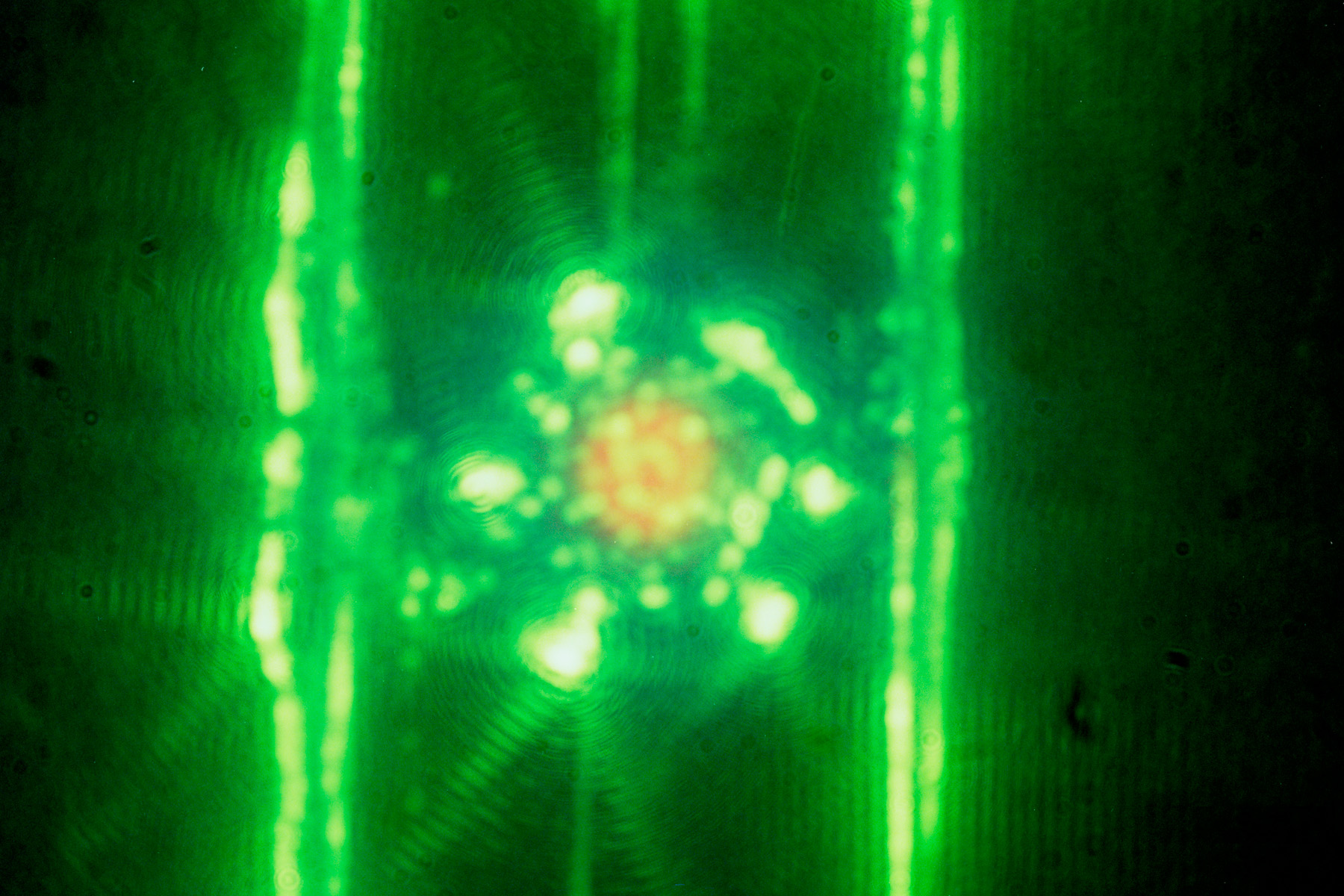
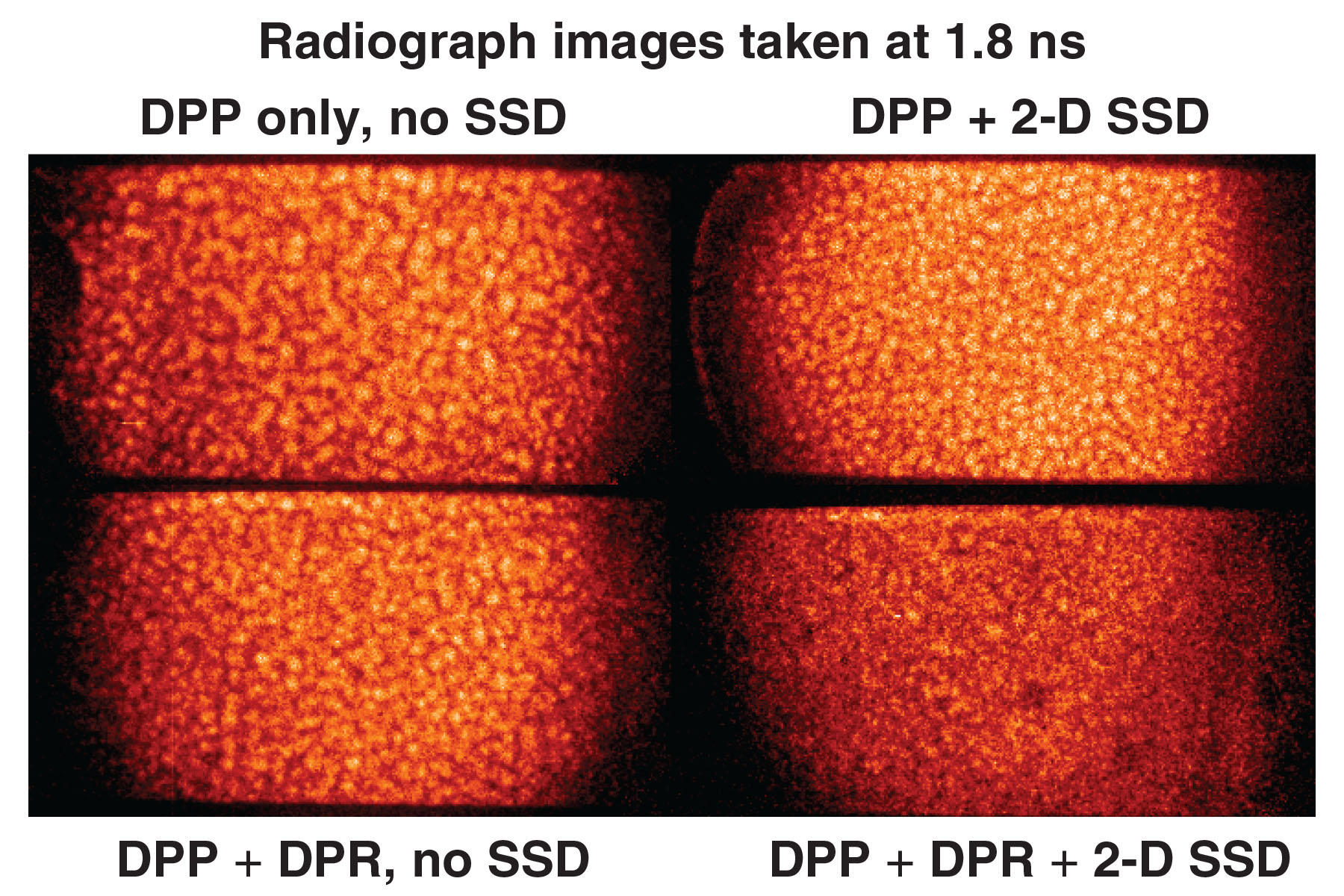
Polarization smoothing using distributed polarization rotators was implemented on OMEGA along with high-bandwidth (1-THz) 2D SSD in 2000. The improved level of beam smoothing led to increased performance by direct-drive capsules.
“Experimental Investigation of Smoothing by Spectral Dispersion” by S. P. Regan et al. was published in the September issue of the Journal of the Optical Society of America B, reporting on measurements of smoothing rates for smoothing by spectral dispersion (SSD) of high-power, solid-state laser beams used for inertial confinement fusion research.
S. P. Regan, J. A. Marozas, J. H. Kelly, T. R. Boehly, W. R. Donaldson, P. A. Jaanimagi, R. L. Keck, T. L. Kessler, D. D. Meyerhofer, W. Seka, S. Skupsky, and V. A. Smalyuk, “Experimental Investigation of Smoothing by Spectral Dispersion,” J. Opt. Soc. Am. B 17 (9), 1483–1489 (2000).