Timeline – 1981
Frequency Tripling in Use
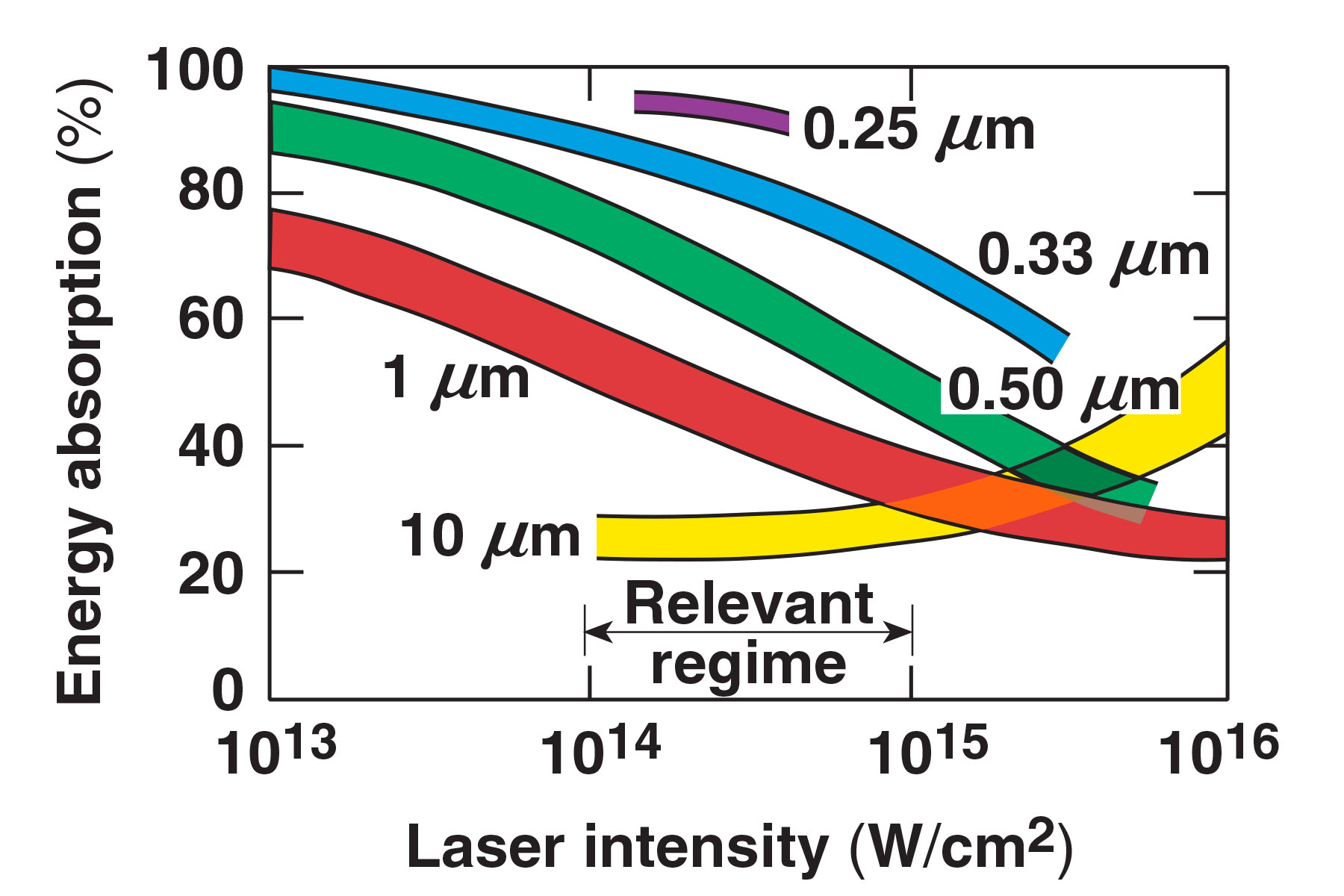
In 1981, initial papers were published on LLE’s use of frequency tripling. LLE’s third-harmonic-generation schemes for high-power glass lasers allowed for highly efficient absorption of the incident laser. By tripling the frequency of the beams, more power was delivered to the target.
R. S. Craxton, “High Efficiency Frequency Tripling Schemes for High Power
Nd:Glass Lasers,” IEEE J. Quantum Electron. QE-17 (9), 1771–1782 (1981).
Ablation-Driven Rayleigh–Taylor Instability
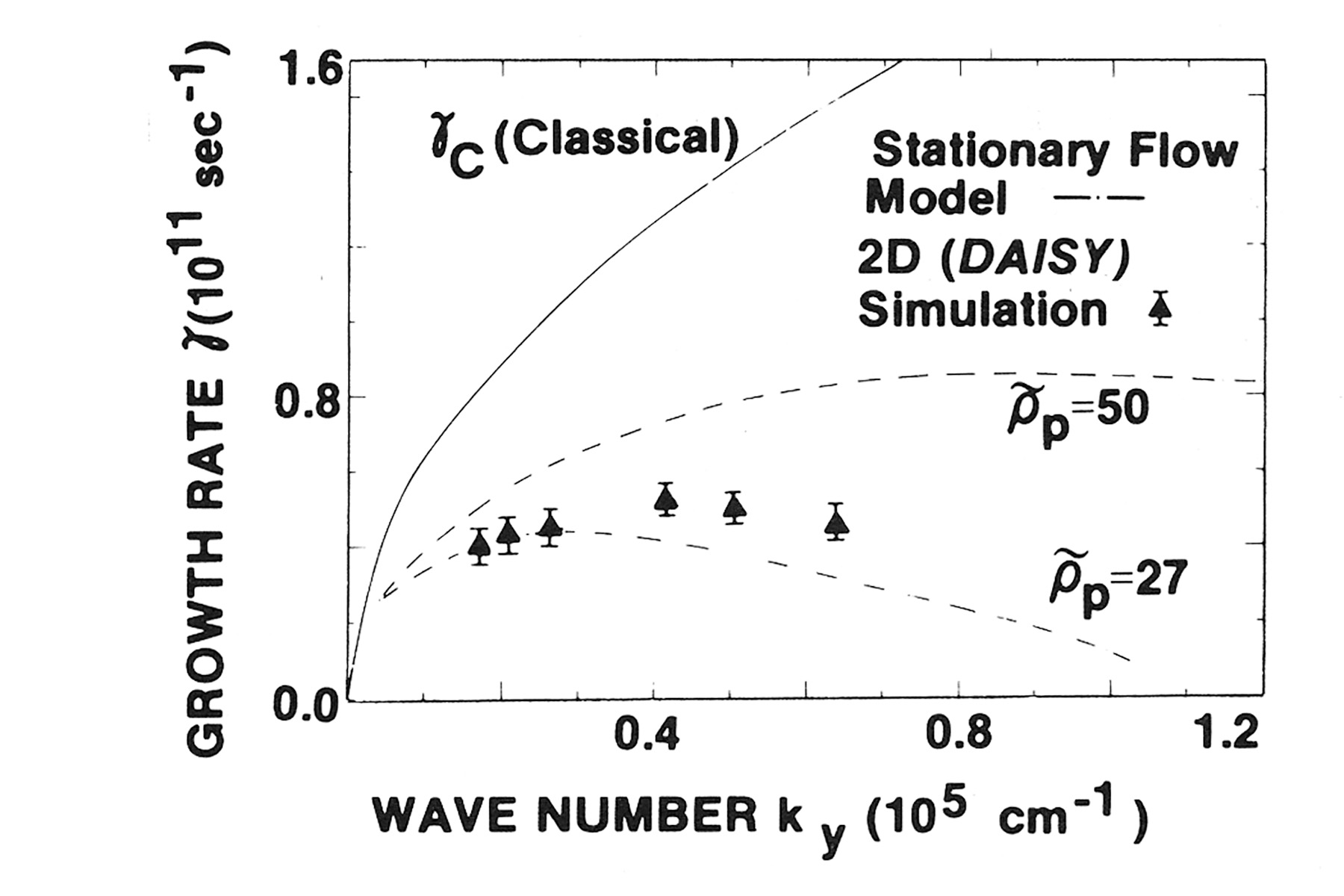
The paper “Nonlinear Evolution of Ablation-Driven Rayleigh–Taylor Instability” by R. L. McCrory et al. appeared in Physical Review Letters. This work examined nonlinear aspects of Rayleigh–Taylor instability and showed that it was plausible to design successful moderate-aspect-ratio capsules.
R. L. McCrory, L. Montierth, R. L. Morse, and C. P. Verdon, “Nonlinear Evolution of
Ablation-Driven Rayleigh–Taylor Instability,” Phys. Rev. Lett. 46 (5), 336–339 (1981).