Skip to content
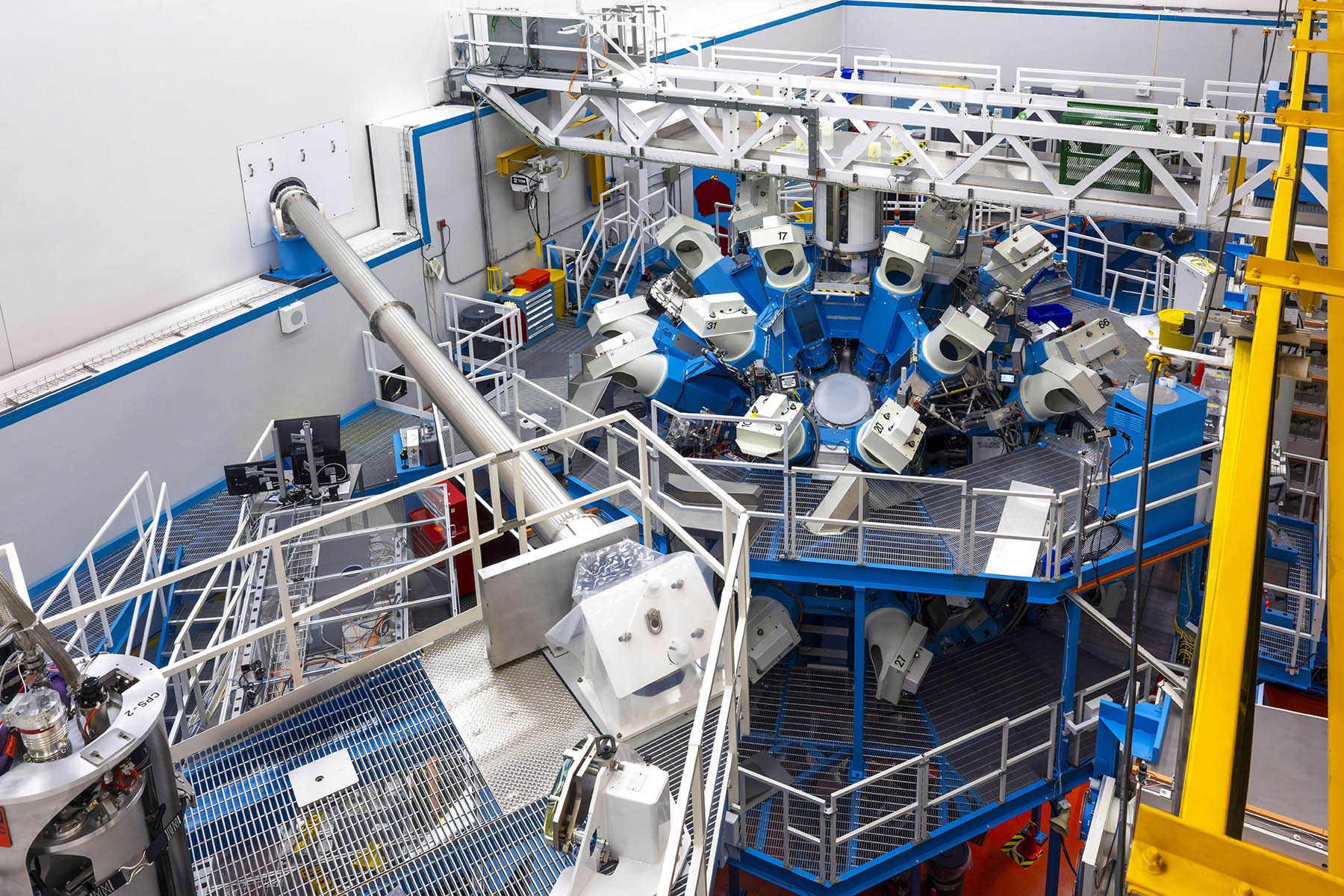
OMEGA Target Bay at the Laboratory for Laser Energetics.

An Enduring Legacy of Leadership and Innovation

LLE’s Omega Laser Facility, the largest laser facility at any academic institution in the world and a premier high-energy-density science research center, is made up of two major laser systems: OMEGA-60 (also simply called OMEGA) and OMEGA EP (Extended Performance). This year, OMEGA-60 celebrates 30 years of operation. The facility has been invaluable to hundreds of scientists and students from LLE and across the nation, who have conducted more than 50,600 shots on the laser systems over the past three decades. Their findings have been crucial and have led to major breakthroughs at LLE and other labs, including the achievement of ignition at Lawrence Livermore National Laboratory’s National Ignition Facility (NIF) in 2022.

LLE receives substantial funding from the US Department of Energy’s (DOE’s) National Nuclear Security Administration (NNSA). OMEGA-60 and OMEGA EP play a direct role in supporting NNSA’s mission-critical research activities relating to national security, stockpile stewardship, and scientific discovery. With approximately 2000 target shots conducted annually on the laser systems for experiments focusing on the exploration of fusion, astrophysics, plasma science, laser–matter interactions, and more, OMEGA-60 and OMEGA EP have accelerated our collective understanding of high-energy-density science, helped achieve inertial fusion in the laboratory, and transformed the landscape of laser science research. The facility also provides immense value to the greater Rochester region, offering an abundance of economic, educational, employment, and research opportunities to the community. It is a feat made possible by the dedication, creativity, and expertise of every department at LLE and by generous financial support from the University of Rochester, New York State, and DOE.

A Brief History

OMEGA-60’s history is deeply intertwined with that of LLE itself, so a reflection on the origins of the laboratory is useful in understanding how and why the laser system came to be. After being inspired by the initial laser demonstrations of the early 1960s, Moshe Lubin and other scientists from the University of Rochester realized the potential of using lasers to develop a future renewable energy source. Their initial campus-based laser experiments evolved into larger endeavors, and within a few short years, backed by energetic support from then-University of Rochester president Robert Sproull and companies such as Eastman Kodak, LLE was founded in the fall of 1970, with Lubin as director. Established as a multidisciplinary teaching and research center within the College of Engineering and Applied Sciences, LLE was the first of its kind at any US university.

As the team’s research objectives expanded, so too did LLE, and by 1975, the newly constructed four-beam DELTA laser system—the original precursor to OMEGA-60—was in operation. Within a year, construction began on the current facility site, with the original building opening in 1977. By 1980, after building on early successes such as the development of glass laser amplifiers, LLE had overseen the development and initial operation of the one-beam glass development laser (GDL), the six-beam ZETA laser, and the 24-beam OMEGA laser, all infrared lasers. LLE established the National Laser Users’ Facility (NLUF) in 1979. In 1980, LLE used GDL to demonstrate how to efficiently convert infrared lasers to the ultraviolet. By 1985, all 24 OMEGA beams were converted. By the late 1980s, plans were in place to upgrade the 24-beam OMEGA laser to its current 60-beam configuration. This initiative was executed as a DOE major project with a cost of $62 million and led by then-LLE Director Robert McCrory. The development of LLE’s laser systems was a monumental undertaking that required the commitment of hundreds of staff members.
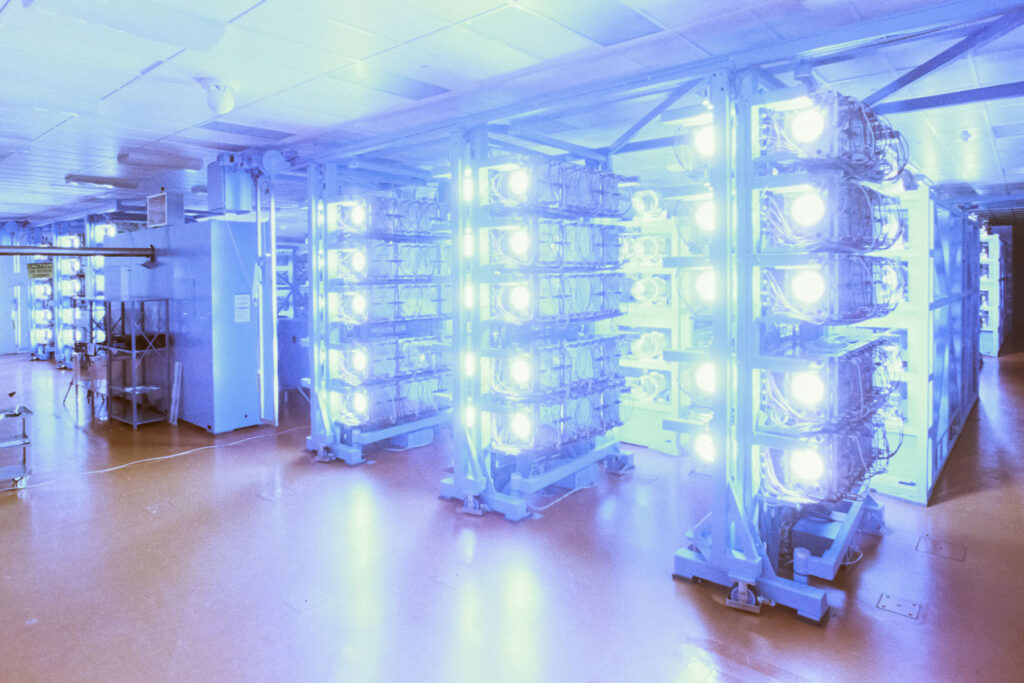
OMEGA-60 laser bay showing all beams firing.
First firing of the 60-beam OMEGA Laser System in 1995.

“It takes all of LLE to operate OMEGA-60,” says former Omega Operations Division Director Sam Morse, who retired this past spring after a storied career of over 40 years at LLE. Morse witnessed the design, development, and evolution of the laser system from the very beginning: “The completion of OMEGA-60 in 1995 marked an inflection point in LLE’s history,” he says. “While the lab had previously conducted cryogenic deuterium–tritium (D–T) implosions, the new system’s higher energy and precision enabled experiments at ‘near-ignition’ conditions. Almost immediately, experiments in 1995 demonstrated regimes that supported the development of ignition-relevant diagnostics, improved understanding of plasma conditions, and then led to many contributions to the national effort to achieve ignition on the NIF.”

For over a decade, OMEGA-60 was the world’s most powerful fusion laser, setting the standard for inertial confinement fusion (ICF) research. In 2008, the OMEGA EP Laser System was added, expanding the capabilities of the Omega Facility to include four NIF-scale beams, two of which can deliver ultrahigh-intensity laser pulses. Together, the two systems serve as the nation’s workhorse for ICF research, providing 80% of the nation’s high-energy-density–physics experiments to the community.
 

Omega Excellence

What makes the Omega facility so unique and important? First, in terms of scale, it is situated at a magic middle place: neither too large nor too small, the size of the facility is “just right.” Practically speaking, this means that the laser systems can allow for greater productivity, flexibility, and a wider variety of experiments that are capable of pushing the boundaries of science with fewer costs, less-complex logistics, and a smaller workforce than are required to run a significantly larger laser system like the NIF. On the other hand, because OMEGA-60 and OMEGA EP are the largest of all university-based lasers, they can support experiments that are simply not possible on smaller systems. For the high-energy-density community, the facility’s ideal size means that scientists can generate reproducible plasma conditions in experiments that can be executed and refined before being scaled up to larger facilities like the NIF.

Second, the vast capabilities of the OMEGA-60 laser system are key. Roughly the size of a football field, OMEGA-60 is an extremely powerful and versatile laser that can deliver up to 30 kJ of ultraviolet energy at 30 TW (that is, 30 trillion watts) onto a target using 60 beams that are arranged in a spherically symmetric pattern. All 60 beams are precisely synchronized and aligned in such a way that when the laser fires, the beams hit the surface of the target within picoseconds (trillionths of a second) of one another—at the right place and at the right time for a uniform implosion. Targets can be spherical, planar, cylindrical, or hohlraum in shape, or any combination thereof. The OMEGA-60 laser can be configured to bring to life highly complex experiments, which help develop some of the most sophisticated physics models in the world. A summary of OMEGA-60’s many important features is listed below:

• Symmetric drive energy from 60 laser beams
• Infrared laser with an Nd:glass laser medium (1053 nm)
• Each beam is frequency tripled for high absorption (351 nm)
• A 3.3-m-diam target chamber
• Precise beam synchronization and alignment
• Flexible pulse shaping with custom shapes ranging from 100 ps to 4 ns in duration
• Advanced diagnostics suite
• Versatile target-positioning system
• Cryogenic target-handling capabilities

Third, the facility relies on a highly sophisticated and interconnected support system available at LLE—a system that has set the standard for operating high-power laser user facilities at scale. From the numerous scientists and engineers to the countless diagnosticians, facility operators, safety officers, and others, everyone at the lab plays a vital role in maintaining this infrastructure, as highlighted in the following sections.


“The experimental capabilities on OMEGA-60 are remarkably varied and deeply mature, which means we as researchers can pursue frontier science questions with a level of rigor, shot access, and configurability that simply isn’t available elsewhere. This scientific richness is what makes the lab so compelling to work at.”

– Matthew Cufari Graduate Student, MIT

Target fabrication department and Cryogenic and Tritium Facility

LLE is home to a robust Target Fabrication Department and a Cryogenic and Tritium Facility. Since 1991, LLE has been supported by its longtime partnership with San Diego-based energy and defense corporation General Atomics (GA), the DOE-designated target fabrication contractor for the US ICF program. GA maintains a dedicated on-site team within the Target Fabrication Department, who together manufacture over 2500 targets each year, including over 100 DT cryogenic targets that are used in experiments at the Omega Laser Facility. Engineering marvels mere millimeters in size, the cryogenic targets are plastic shells filled with a precise mixture of deuterium and tritium, two heavy isotopes of hydrogen, at pressures up to 1000 atm. The department provides additional support with target assembly, metrology, and delivery on shot days, as well as exemplary troubleshooting support for any target-related issues that may arise.

The Cryogenic and Tritium Facility is one of the only cryogenic target production programs in the nation. Tritium, which is both rare and radioactive, requires extremely strict safety and handling regulations. The shells are cooled to cryogenic temperatures of −255°C (18 K) and undergo advanced ice-layering techniques to achieve the submicron-level smoothness and uniformity necessary for symmetric implosions before being transferred and delivered to the target chamber.

As LLE looks to the future, advances in target technology will lay the groundwork for new experimental concepts and next-generation laser facilities. One such advancement made by LLE engineers is the cryogenic gas puffer system (GPS), a new and integrated system used to fill cryogenic targets with DT gas. Described in detail in LLE In Focus, Issue 8, the GPS vastly improves both the reliability and efficiency of the filling process, allowing scientists far greater control over target-production capabilities than ever before. A second development that goes hand in hand with the GPS is a highly advanced 3D-printing technique called two-photon polymerization, which essentially uses light and resin to create extraordinarily precise foam microstructures—filaments, some of which are as thin as 0.3 μm—that make up the delicate cryogenic wetted-foam target shells used in experiments on OMEGA-60 and OMEGA EP.

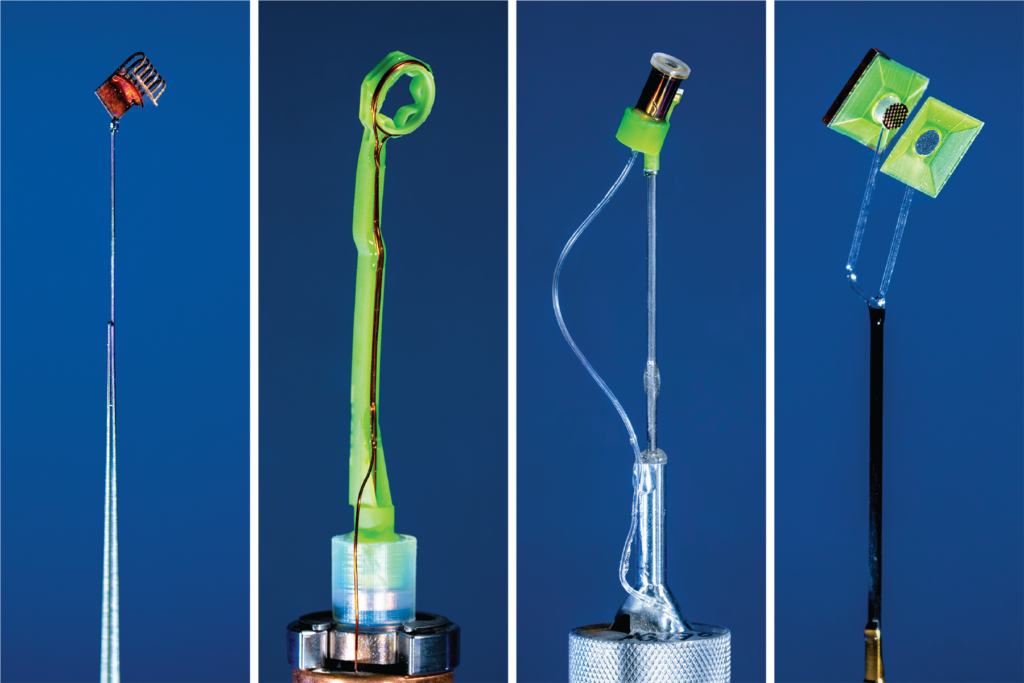
Four targets on a blue background.
Millimeter-scale targets used in OMEGA experiments, fabricated at LLE. Each target is engineered to submicron precision before delivery to the target chamber.

“I enjoy working with the engineers, technicians, and laser facility managers at LLE. I truly appreciate their work because without their expertise and dedication, I wouldn’t have had successful shot days! They create an environment where science can happen and principal investigators can thrive.”

– Jaela Whitfield Graduate Student, University of Michigan

Diagnostics and cutting-edge diagnostic development

The diagnostics required by OMEGA-60 and OMEGA EP measure and analyze both the laser beams and the experimental event that occurs when the beams strike a target. Many of the measurements require resolution on the micron scale (for reference, a strand of human hair is generally ~50 to 100 μm in diameter) and the picosecond scale (i.e., the time it takes light to travel 300 μm), so highly sophisticated instrumentation is paramount for effective experiments. LLE supports over 200 diagnostics on the laser systems, including an extensive suite of state-of-the-art optical, x-ray, particle, and magnetic-field measurement tools. Researchers can select the specific diagnostics and instrumentation they wish to use, which LLE’s team of engineers and technicians then align and configure with extreme precision into the target chamber using advanced robotic diagnostic shuttles known as ten-inch manipulators. Even more importantly, researchers can rely on diagnostic experts to support measurements and help interpret the data these diagnostics produce.

As experimental needs evolve, so too must diagnostic capabilities. Each year, new diagnostics are developed and improved to maintain LLE’s cutting-edge laser technologies. These diagnostics are vital to advancing capabilities at other national laboratories including the NIF and the Z Pulsed Power Facility. During her doctoral research, for example, Michelle Marshall, now High-Energy-Density-Physics Experiments Group Leader at LLE, calibrated the streaked optical pyrometer, one of OMEGA-60’s workhorse diagnostics, which enabled temperature measurements of high-energy-density matter for dozens of users. Her close collaboration with LLNL on these projects not only advanced key research efforts, but also paved the way for her own postdoctoral work there.

Advances in engineering

OMEGA-60 is a highly complex, versatile, and custom-designed laser system. Its capabilities have been supported over the past 30 years by continuous and integrated advances in engineering efforts that span across LLE’s information technology, mechanical engineering, chemistry, and electrical and controls engineering groups. These advances, which improve both efficiency and precision, include software development and computer system support, the highly complex and delicate cryogenic systems that support LLE’s target fabrication department, electromechanical assemblies used on the laser system, grating compressor chambers, the MIFEDS (or magneto-inertial fusion electrical discharge system) used to create magnetic fields for experiments, and more, and are vital to successful operations at the Omega Laser Facility.

Laser operations

The unprecedented productivity, reliability, and effectiveness of OMEGA-60 have long been supported by a shift to formal and disciplined operations introduced by former US Navy submarine captain Steven J. Loucks. Loucks adapted the operational model developed by the US Navy to safely and efficiently operate highly complex nuclear power plants in the dynamic environments where submarines are required. This operational philosophy enables OMEGA-60 to mitigate the risk of human error while rapidly shifting from one experimental platform to another. Additionally, this philosophy enables the disciplined preventative maintenance that has kept OMEGA-60 firing for 30 years.

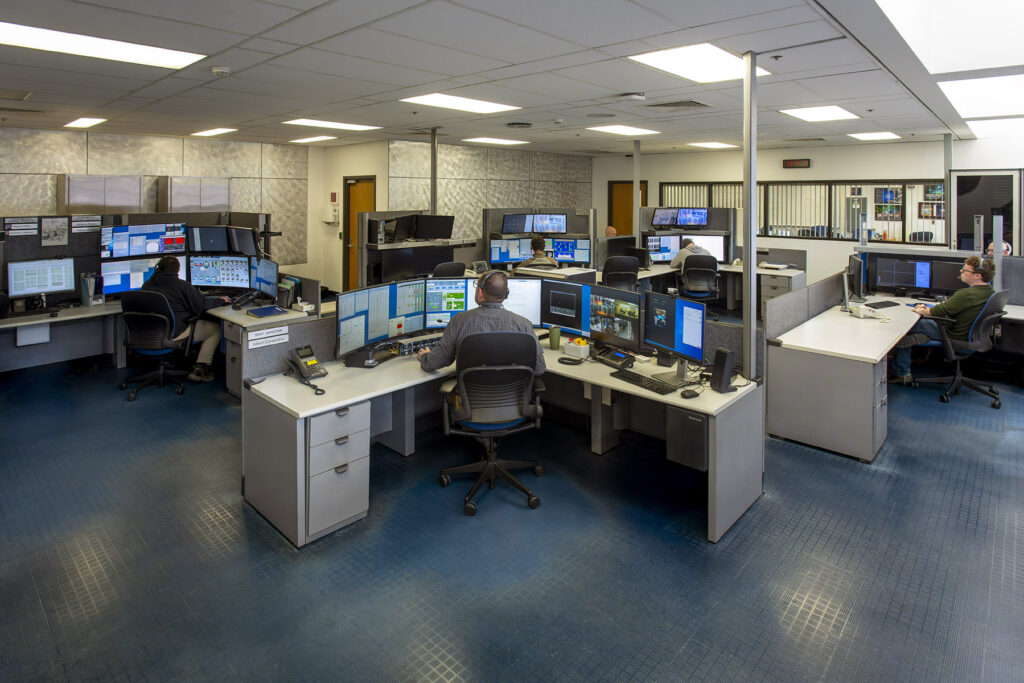
Photo of OMEGA control room.
Operators in the OMEGA-60 control room coordinate experiments on the OMEGA Laser System.

OMEGA-60’s productivity is remarkable. While individual experimental campaigns are awarded single days and executed within them, it would be a misconception to believe that all effort required is completed on that specific day. OMEGA-60 operates similarly to an assembly line factory in which cars are completed at a rapid tempo, but the full production time of each unit is much longer. Every day, LLE is conceiving experiments for the future, planning for those in the midterm, finalizing the details of those approaching, executing today’s experiments, and recovering from those past. One stark contrast between LLE’s process and that of a typical assembly line is the total customization of each shot day: no two shot days are the same, and OMEGA-60 is able to support significant reconfiguration not only overnight, but also midday.

Tyler Burgett, who started at LLE as a student in 2013 and is now Experimental Operations Group Leader, has experienced this efficiency and productivity firsthand over the course of his career journey: “One thing that stands out from my early days is how much progress has been made over time,” he says. “When I first started, we were typically limited to two or three cryogenic shots at most. Now, reaching five shots in a day is much more routine. That kind of improvement reflects not only advancements in capability, but also the importance of teamwork in achieving that success. For students and early-career scientists, my advice would be to keep learning beyond your formal education. Stay curious—if you have a question, pursue it. There is a wealth of knowledge within this organization, and someone here likely has the expertise to help you find the answer.”


Laser and materials technology

LLE’s Laser and Materials Technology (LMT) Division is a center for innovation at the lab and oversees the design, development, fabrication, and troubleshooting of the high-damage-threshold optics used in experiments at the Omega Laser Facility. This includes laser oscillators, amplifiers, pulse-shaping capabilities, and a significant number of laser diagnostics that are critical for successful operations.

LMT’s Optical Manufacturing (OMAN) Group is a state-of-the-art facility that provides in-house expertise to ensure that every optical component meets exacting quality and performance standards for every shot conducted on the laser system. OMAN has the primary responsibility of manufacturing high-damage-threshold coatings for the optical components that form the architecture of the laser system design. These optics range in size from 25 mm in diameter to near-meter-diagonal rectangular optics. The thin-film coatings are used to control the direction and properties of the laser beams in terms of reflection or transmission at specific use angles and wavelengths, and to control the beams’ polarization. The work encompasses areas of thin-film design, material characterization, process development, photometric and interferometric measurements, mechanical tooling design and fabrication, mounting optics, and observations of in-situ damage on laser optics over their use lifetime. The team maintains a “cradle-to-grave” approach in the careful handling of these expensive components from initial receipt through processing to installation and use until replacement is required. “Above all, we are passionate about our work in delivering the highest-quality, large-aperture laser optics in the world,” says Amy Rigatti, OMAN Group Leader. “The OMAN Group consistently meets the challenges presented by each new laser project, pushing the accuracy and capability of the coating process to deliver components that meet ever more stringent technical requirements.”

LMT also invests in ongoing efforts to develop new materials and processes that will support next-generation laser systems for future high-energy-density research. The Fourth-generation Laser for Ultra-broadband experiments (FLUX) laser system, developed by LMT’s Laser Development Projects Group, is one such system that was built to meet the challenges faced by scientists in current ICF research—particularly, the laser–plasma instabilities that arise and undermine laser–matter interactions when using laser systems with narrowband beams. In a nutshell, FLUX provides a path to increased bandwidth (i.e., laser beams that emit light over a broad range of wavelengths) by using optical parametric amplification and sum-frequency generation, two nonlinear optical processes, to generate a high-energy, ultrabroadband beam that is then delivered to the OMEGA-60 Target Chamber. Results from FLUX experiments, now currently underway, are essential to ongoing research on laser–plasma interactions and will guide the development of next-generation laser systems at LLE and beyond.


“Above all, we are passionate about our work in delivering the highest-quality, large-aperture laser optics in the world.”

– Amy Rigatti Optical Manufacturing Group Leader

Omega and the Broader Community

NLUF, LBS, and OLUG

With its premier technical capabilities, the Omega Laser Facility serves as a major hub for national and international researchers who are part of LLE’s vibrant and engaging open-access programs, including the National Laser Users’ Facility (NLUF) and the Laboratory Basic Science (LBS) Program. These two programs account for approximately 25% of shot time on OMEGA-60 and OMEGA EP.

NLUF, a grant program established in 1979 with the DOE, welcomes researchers year-round from universities, government laboratories, and private companies, providing them with access to LLE’s laser facilities without direct charge. For nearly 50 years, scientists have flourished under NLUF, making important discoveries and advances in high-energy-density science, materials under extreme conditions, warm dense matter, nonlinear optics, laser–plasma interactions, laboratory astrophysics, atomic physics, nuclear physics, instrumentation development, and more. Since its inception, the program has importantly championed graduate education and training, supporting hundreds of students each year, many of whom have gone on to join DOE national laboratories.

The LBS Program, established in 2008, provides scientists from US ICF laboratories (LLNL, Sandia National Laboratories, Los Alamos National Laboratory, and LLE) as well as scientists from DOE Office of Science Laboratories (Princeton Plasma Physics Laboratory, SLAC National Accelerator Laboratory, and Lawrence Berkeley National Laboratory) with shot time at the Omega Laser Facility. LBS (and NLUF) projects are selected each year through a call for proposals and undergo a rigorous review process administered by LLE. Since its inception, the program has granted over 300 awards for projects, of which over 50% have been led by postdoctoral researchers and early-career scientists.

The Omega Laser Facility Users Group (OLUG) is another important resource for the high-energy-density–physics community. Also established in 2008, OLUG is led by a ten-member executive committee and currently has more than 800 members from more than 70 institutions across 14 different countries. One of the most unique aspects of OLUG is the fact that OMEGA-60 and OMEGA EP users themselves have a direct say in how the facility is optimized. Each spring, the group holds a workshop at LLE to promote research and collaboration opportunities, identify and discuss ways to improve the capabilities of the Omega Laser Facility, and provide researchers—especially students—with a supportive and informal environment in which they can connect with others and showcase their work.

“OLUG is a welcoming community of brilliant and passionate researchers. What more could one ask for! It was not long ago that I became a member, and I cannot think of a moment when I did not feel supported, both technically and otherwise,” says Perry Samimy, a UCSD graduate student who presented his research at the OLUG poster session this past April. “This has imbued my OLUG and LLE experience with a sense of being part of something greater than myself—a sentiment I’ve heard echoed by others, as well—and so deep fulfillment comes along with the interesting science. Suffice it to say that I always leave the annual OLUG workshops feeling inspired and having learned something new!”

With over 50% of Omega facility shots carried out by external users (non-LLE employees) each year, the impact of the laser facility on scientific study across the nation cannot be overemphasized. These programs are vital for keeping LLE—and, more broadly, the US—at the forefront of international research, continuously spurring on the development of scientific and technological innovations that support experiments and operations. The programs also highlight LLE’s rich educational atmosphere and directly support NNSA’s larger mission of building a next-generation workforce by creating a steady pipeline of trained experts who will lead the way in government, industry, and academia. “For students, there’s really no other place to go get experience in big lasers,” says Patrick Poole, a staff scientist at LLNL. “The great thing about OMEGA-60 and OMEGA EP is that you can have students come and try their ideas and take them to another laser down the line.”

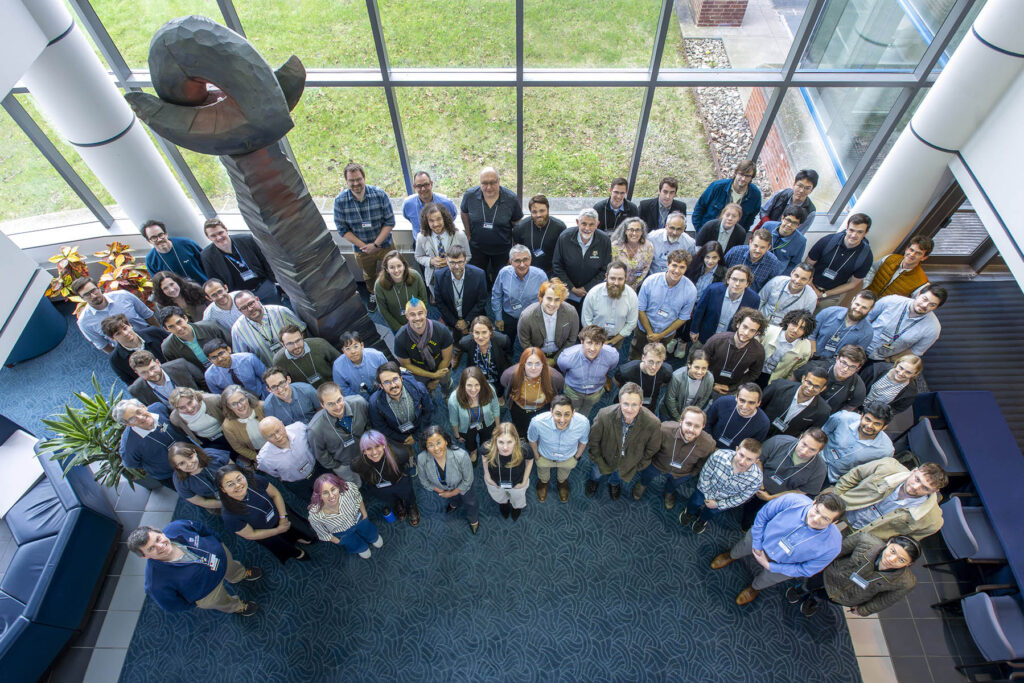
Group photograph of OLUG attendees.
Student and postdoc attendees at the seventeenth Omega Laser Facility Users Group (OLUG) Workshop located at LLE in April 2026.

“Don’t be afraid to reach out, ask questions, and get yourself into the lab. Opportunities like OLUG exist precisely for students like us. You just have to take that first step.”

– Damien Batayeh Graduate student, University of Nevada, Reno

Crosscutting Initiatives with the University of Rochester

As part of a larger academic institution, LLE’s Omega Laser Facility has been central to a wide range of research efforts led by undergraduates, graduate students, and faculty across various departments and groups at the University of Rochester. These include the Departments of Chemistry, Physics and Astronomy, Mechanical Engineering, Electrical and Computer Engineering, and the Institute of Optics, which has been a pioneer in optical technology and engineering for nearly a century since its founding in 1929. A shared mission of working toward a better and sustainable future, together with active collaboration between researchers at LLE and the Institute of Optics, in particular, has led to countless strides in the fields of lasers, optical materials, nonlinear optics, optoelectronics, ultrafast optics, and high-field sciences—all of which, in turn, have been vital to experiments conducted at the facility. “LLE has supported Institute of Optics graduate students for many years to work on fundamental science and engineering problems that are important to the next generation of lasers and laser-based systems,” says Tom Brown, Director of the Institute of Optics.

By bringing together talent and expertise from multiple fields, such collaborations are a testament to the University of Rochester’s commitment to innovation and discovery, and on a broader level, help fuel the Rochester region’s unparalleled optics and photonics scene. This is evidenced by the burgeoning STELLAR (Science, Technology, and Engineering of Lasers and Laser Applications Research) ecosystem, a network of academic, industrial, government, and nonprofit organizations dedicated to restoring and advancing US leadership in laser science research, manufacturing, health, energy, and national security applications. Brown and Jon Zuegel, LLE Distinguished Scientist and Professor of Optics, have spearheaded this important effort, ensuring that both the Institute and LLE remain at the forefront of the charge. “I’ve personally been very grateful for a partnership with Jon Zuegel in working together to establish the STELLAR regional innovation engine—a program that will provide great momentum toward the next generation of extreme laser systems for energy and defense,” says Brown.

Another example of an important interdisciplinary and intercollegiate initiative at the University of Rochester is the Center for Matter at Atomic Pressures (CMAP), a National Science Foundation Physics Frontier Center dedicated to the exploration of laboratory astrophysics. CMAP brings together researchers from the University of Rochester, MIT, Princeton University, UC Berkeley, UC Davis, the University at Buffalo, and LLNL, whose combined backgrounds of condensed matter and plasma physics, astronomy, materials science, planetary science, and more will help advance understanding of cosmic phenomena. On OMEGA, researchers can recreate the extreme temperature and pressure conditions found only in the core regions of stars—conditions that for years were inaccessible and only understandable from a theoretical perspective. “Today, if you want to study an astrophysical event like a supernova remnant, for example,” says Dave Canning, OMEGA EP Laser Facility Manager, “we can create those conditions in the target chamber using our lasers.”


Future Frontiers

As LLE looks to the next 30 years, what lies ahead for the Omega Laser Facility? First and most importantly is the facility’s sustainment. Experiments are conducted year-round at the facility, and over time, instruments and systems age and need to be upgraded or replaced. For laser systems as massive, complex, and powerful as OMEGA-60 and OMEGA EP, this is essential for enhancing performance, lowering operating costs, and continuing to drive world-class research and innovation while ensuring the safety of every member of the lab. Current sustainment projects at LLE focus on OMEGA-60, especially the optimization of beamlines, experimental operations, amplifier technology, power conditioning, and laser sources.

With this in mind, LLE is currently developing plans for a possible next-generation upgrade to OMEGA-60, which would serve LLE and the larger high-energy-density and inertial fusion energy communities well into the 2040s. The facility, OMEGA Next, is envisioned to complement the laser capabilities at LLNL with a laser system large enough to handle higher energy levels and repetition rates than those available at LLE today. Precision diagnostics, advanced computing systems, artificial intelligence and machine-learning techniques, and fourth-generation drivers will be key to realizing this effort. This facility will enable both direct-drive and indirect-drive ICF approaches to be studied—each of which is limited by laser–plasma instabilities. Therefore, continued research on mitigating these instabilities is crucial and lies at the heart of current experiments on LLE’s FLUX laser system, which will define the requirements that will be needed for this next-generation facility. In addition to contributing to NNSA’s missions of stockpile stewardship, education, and workforce development, OMEGA Next will have a significant educational, economic, and scientific impact on the Rochester region, New York State, and the nation at large by creating further employment opportunities for hundreds of individuals while driving technological growth and progress for future generations.

From the visionary scientists who conceptualized and laid the initial foundations of LLE to today’s technicians, scientists, students, and staff who, on a daily basis, run, manage, and conduct experiments on OMEGA-60, this year’s 30th anniversary goes beyond a celebration of the laser system itself and the countless individuals who have made its achievement possible. Ultimately, this anniversary is also a celebration of curiosity and wonder, and what it means to be human—to ask questions, to explore, and to strive to better understand and change the world around us. In short, this year’s anniversary epitomizes the University of Rochester’s Meliora values, to which LLE continues to be committed as it trains and nurtures the next generation of future leaders.

Corresponding author: R. Shojaie


A version of this article appears in Issue 10 of LLE In Focus, the magazine of the University of Rochester’s Laboratory for Laser Energetics.