


LLE’s Nobel-Winning Innovation that Revolutionized Laser Science
Introduction
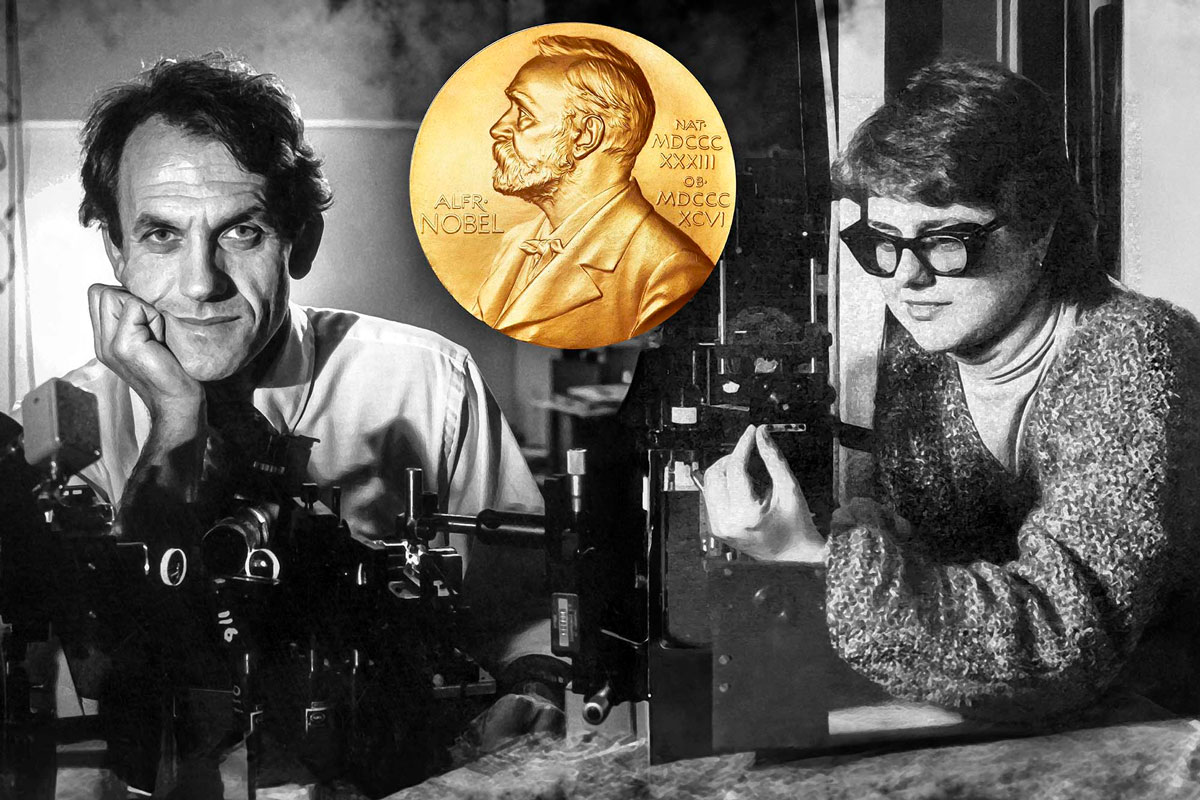
Forty years ago, when then-LLE graduate student Donna Strickland was racing to submit her very first scientific research paper outlining a new technique that she and her advisor Gérard Mourou had developed, she was confident that they were about to forever transform the entire landscape of laser science. Chirped-pulse amplification (CPA), Strickland and Mourou’s revolutionary innovation, was a brilliant solution to a simple question: how can scientists safely achieve extremely high levels of laser power without damaging the laser system itself? The technique, now used today in a wide range of applications including high-energy-density physics, industrial machining, medicine, and beyond, earned Strickland and Mourou the 2018 Nobel Prize in Physics and remains a defining moment in LLE’s legacy of innovation.
The story of CPA continues to resonate with those beyond the high-energy-density–physics world for a multitude of reasons—perhaps the most salient of which is that, at its core, CPA is a powerful reminder that a single student and mentor have the potential to make a big difference and have a lasting impact on their own field of study and on society at large. As CPA continues to shape the scientific world, it serves as a guiding light for LLE, which looks ahead with excitement, renewed vigor, and dedication to its mission of training the next generation of scientists who will lead the way into the future.
History
In order to appreciate the true power of CPA, it is useful to understand why and how the technique was developed. What was the technological landscape of laser systems prior to its invention, and what were some of the challenges that researchers were facing at the time?
In the two decades following physicist Theodore Maiman’s first demonstration of the laser in 1960, dramatic leaps and bounds were made in the development of laser technology, with numerous advances in quantum optics, semiconductor manufacturing, spectroscopy, and more. Soon, scientists were venturing further into unexplored frontiers of laser science like nonlinear optics, the study of the interaction between intense light and matter. As they pushed the boundaries of laser peak power, however, scientists soon realized that they had come to a literal breaking point in terms of the levels of intensity their optics could handle. They found that once power surpassed a certain threshold, the nonlinear effects of the laser system optics would cause the beams to self-focus, resulting in catastrophic and irreparable damage. Essentially, peak power was limited due to these self-focusing effects.
How, then, did scientists propose to circumvent this problem and reach higher levels of power? On the table were two options: the first, to build a physically larger laser system, was monumentally cost-prohibitive due to the sheer scale of the components required. It was also slow and inefficient for a variety of reasons, including the time needed for the system’s optical amplifiers to cool down after each shot. The second option, on the other hand, took a different approach entirely by proposing a unique alternative: to somehow manipulate the laser beams themselves in a way that would overcome these damaging nonlinear effects.
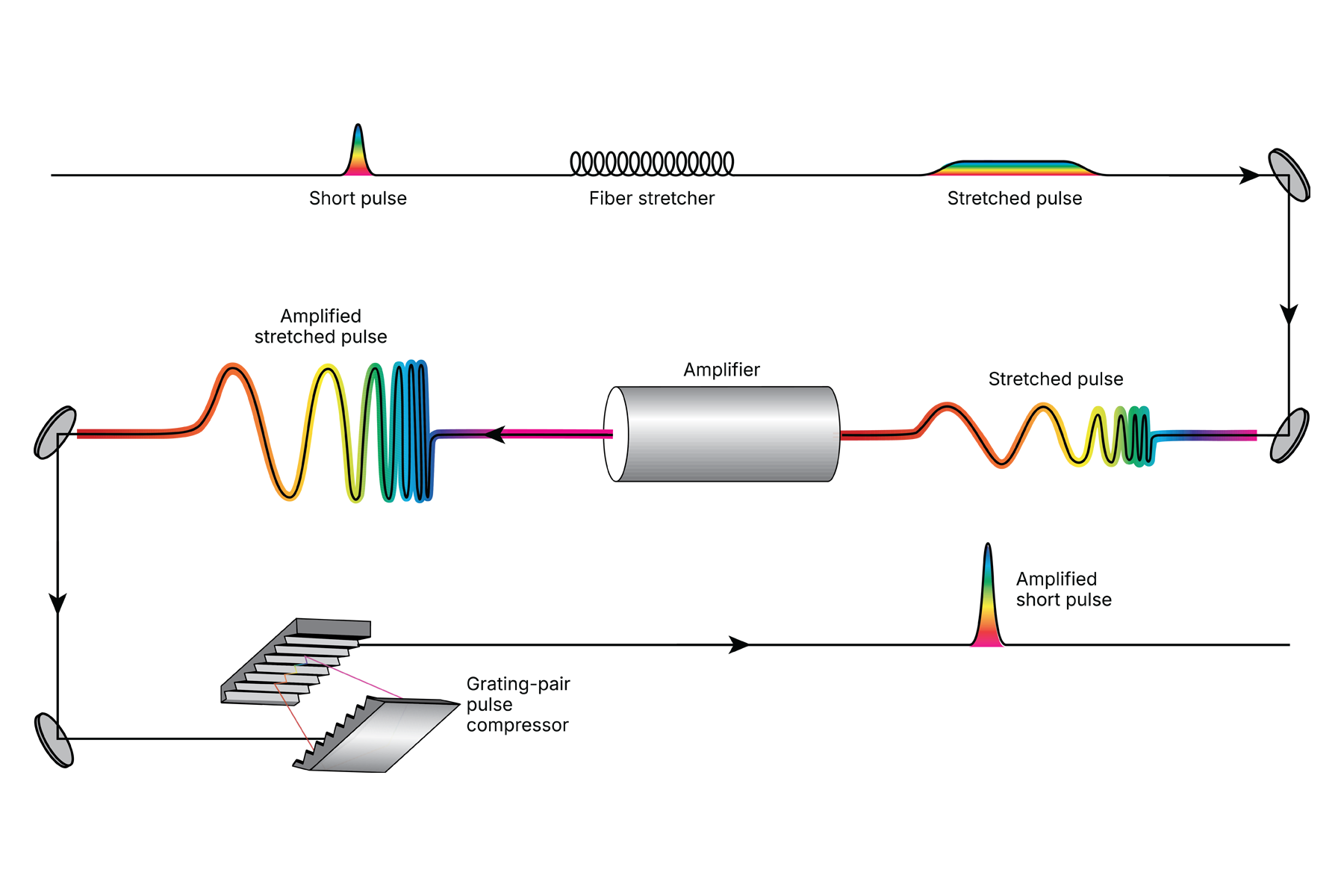
This was precisely the hypothesis that one scientist, Gérard Mourou, was mulling over in his lab at LLE in the early 1980s. He estimated that if the initial laser pulses could be spaced out, amplified, and then brought back together, the result would produce laser pulses of a much higher intensity [1]. In a nutshell, it was this combination of stretching, amplifying, and compressing the laser pulse—essentially, packing more energy into a short amount of time—that proved to be key. Donna Strickland, a young graduate student at the University of Rochester who had come on board at LLE after expressing interest in laser research, was tasked with making Mourou’s hypothesis a reality. “It is the one time in my life that I worked very, very hard!” says Strickland, who was one of only three women in her class pursuing a PhD in physics at the time [1]. Inspired by the “chirp” technique that helped overcome limitations in radar technology, Strickland sought to apply a similar concept here [2].
Experiment and Breakthrough
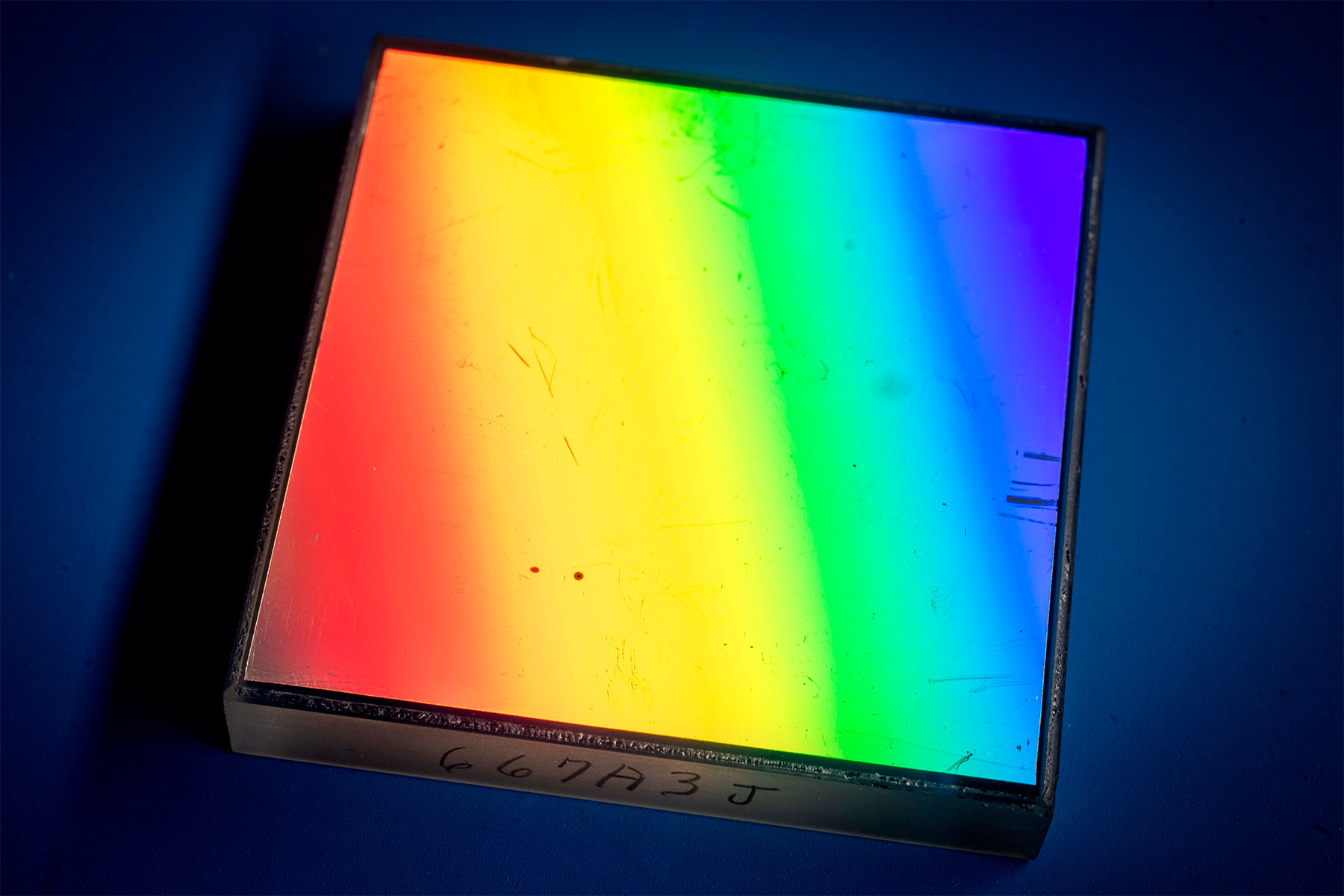
Their experiment was simple and elegant in its execution: first, Strickland used a mode-locked, neodymium-doped yttrium aluminum garnet (Nd:YAG) dye laser to produce a short, 150-ps pulse, which would be chirped and “stretched” as it passed through a 1.4-km length of optical fiber, reducing its peak power [3]. This allowed the pulse to then be safely amplified to a greater energy level by way of an Nd:glass regenerative amplifier, as shown in Fig. 1. Finally, Strickland used a setup of two parallel diffraction gratings, which acted like prisms, to recompress the pulse back to its original duration—but now with a dramatically higher intensity and without any damage to the laser system or optics. “It is truly an amazing feeling when you know that you have built something that no one else ever has—and it actually works,” says Strickland [1].
Strickland and Mourou’s paper on this work, a mere three pages in length, was titled “Compression of Amplified Chirped Optical Pulses” and published in Optics Communications in December 1985, well before Strickland graduated with her PhD in optics in 1989. As further advances were made in laser technology, particularly in the form of the 1990 Ti:sapphire laser, which had several important advantages such as broad bandwidth, high damage threshold, and excellent thermal conductivity, CPA was able to fully take off and be implemented on laser systems small and large, at facilities across the nation and around the world.
Following CPA and LLE, Strickland went on to work at several important institutions across Canada and the United States, including the Canadian National Research Council, Lawrence Livermore National Laboratory, Princeton University, and the University of Waterloo, where she is currently a professor in the physics and astronomy department. After leaving LLE, Mourou brought CPA to the University of Michigan in 1988, where he went on to become a founding director of the Center for Ultrafast Optical Science, a multidisciplinary research center dedicated to the study of ultrafast laser science and its applications and home to NSF ZEUS, the most powerful laser system in the United States. Mourou later returned to France in the early 2000s, where he held several leadership positions in academia and beyond, including a directorship at the Laboratory for Applied Optics at the École Polytechnique. Most notably, Mourou proposed the establishment of a pan-European laser facility, which is today known as ELI (Extreme Light Infrastructure) Beamlines—one of the world’s most important research centers for high-intensity laser science.
Out of the Lab and Into Everyday Life
As with many major inventions that seamlessly become part of the fabric of everyday life, it can be easy to forget just how transformative the invention of CPA was—and indeed how versatile and ubiquitous its modern applications are. Here are just a few of the ways in which CPA is being used today to touch the lives of ordinary people and further shape our scientific understanding [4]:
Corrective Eye Surgery
Laser-assisted in situ keratomileusis, or LASIK, is perhaps the most well-known example of corrective eye surgery performed today. In LASIK surgery, surgeons use femtosecond laser pulses in lieu of a scalpel to make a precise incision in the cornea of the eye, which is then reshaped to correct the patient’s vision.
Radiotherapy and Oncology
In proton therapy, a noninvasive form of radiation therapy used by physicians to treat cancer, high-powered lasers are used to accelerate protons, which can be precisely targeted to destroy tumors—particularly deep-tissue tumors such as those that form in the brain.
Ultrafast Imaging
CPA techniques have helped advance ultrafast medical imaging such as MRI, enhancing our understanding of biological processes in real time. In fusion energy research, CPA is essential for ultrafast photography of fusion implosions and other split-second processes.
Industrial Machining
Did you know that the cover glass on your smartphone was made possible by CPA? With its high-precision capabilities, femtosecond laser technology is used in the machining of brittle materials like cover glass, the micromachining of circuit boards for semiconductor manufacturing, and more.
Laboratory Astrophysics
The high-intensity pulses generated by CPA are crucial for the study of astrophysical phenomena because they allow scientists to replicate within a laboratory setting the extreme temperature and pressure conditions found only in stellar cores and black holes.
CPA in Laser Research Today
In the four decades since its achievement, CPA has been a catalyst for advancing global progress in laser research, continuously spurring on new developments in optics, high-energy-density science, astrophysics, plasma physics, and beyond. An invention born of a simple idea and limited resources, CPA now underpins experiments at all major ultrahigh-power laser facilities around the world, including the Extreme Light Infrastructure facilities in Europe, the Central Laser Facility at Rutherford Appleton Laboratory in the United Kingdom, LaserNetUS and LaserLab Europe facilities, NSF ZEUS at the University of Michigan, and the OMEGA EP (Extended Performance) Laser System at LLE, which is one of the two laser systems (the other being the OMEGA Laser System) that make up the Omega Laser Facility.
In addition, it is thanks to the achievement of CPA that LLE scientists and engineers were able to develop two of the laboratory’s midscale lasers: the Multi-Terawatt (MTW) laser and the MTW-OPAL (optical parametric amplifier line) Laser System—each of which have been pivotal for further advances in laser technology at the lab and are described in detail in LLE In Focus, Issue 1. In operation since 2005, the MTW laser was the first high-power laser at LLE after the tabletop terawatt (T-cubed) laser on which Mourou and Strickland first demonstrated CPA. Built as the prototype front end for the OMEGA EP Laser System, MTW has a shot count of over 178,000 for a wide range of experiments that have focused on laser diagnostic development, ultrafast plasma physics, nonlinear optics, and more. MTW employs a nonlinear optical process called optical parametric amplification (OPA) to boost the energy of an initial broadband “seed” pulse by transferring energy from a high-energy laser pulse to it.
OPA is the basis of the MTW-OPAL Laser System, an all-OPCPA (optical parametric chirped-pulse–amplification) system and the second of LLE’s midscale lasers. The system has proven to be a fertile and hands-on environment at the lab for training scientists, laser operators, and engineers, and serves as the prototype for one of the most exciting initiatives happening at LLE today: NSF OPAL, LLE’s next big laser system. Funded by the National Science Foundation, this proposed new ultra-intense laser user facility will push beyond current peak-power limits and will be dedicated to exploring ultrahigh-intensity laser–matter interactions. “CPA is a state-of-the-art technique that’s still being used to push lasers to higher and higher intensities,” says Jonathan Zuegel, LLE Distinguished Scientist and Professor of Optics at the University of Rochester, who is at the head of the NSF OPAL effort [4]. NSF OPAL will feature two 25-PW lasers (that is, 25 thousand trillion watts of power) and have the capability of delivering 500-J, 20-fs pulses—500,000 times the power of the original Nd:YAG laser used by Strickland and Mourou. Set to become the world’s most powerful laser, NSF OPAL will be a remarkable achievement made all the more special by the fact that the new laser system will be housed near the very site of the old lab in which CPA was invented 40 years ago.
Looking Ahead
In the brief four decades since the invention of CPA, tremendous strides have been made in ultrafast laser science, paving the way for countless innovative technologies that have impacted the lives of millions while shaping our collective understanding of the universe as we know it. Today, scientists are pushing peak power to the extremes—with laser pulses reaching ever higher intensities and ever shorter durations, even into the attosecond realm where pulses are as short as one quintillionth of a second—and expanding the horizons of a wide range of fields that explore the behavior of matter and molecular interaction. In addition, these same scientists are training and guiding the next generation of students who will one day take on the mantle of pushing these frontiers even further.
CPA holds a unique place at LLE and the University of Rochester, not only as a remarkable and impactful scientific achievement, but also because it represents the very best that is possible when curiosity is championed, students are supported, and collaboration is encouraged at every level of expertise. The invention of CPA did more than overcome a technological limitation: it fundamentally changed the trajectory of laser science and opened the doors to entirely new realms of discovery. Today, that same spirit continues to drive advances in ultrahigh-intensity laser–matter interactions, attosecond science, fusion energy research, and next-generation facilities such as NSF OPAL. At this year’s anniversary celebration, we honor Donna Strickland, Gérard Mourou, and their collaborators, and celebrate the spirit of innovation that gave birth to CPA—a legacy that continues to inspire the next generation of scientists and will help define the laboratory’s future for the next 40 years and beyond.
Corresponding author: R. Shojaie