Timeline
2024
LLE Office and Laboratory Expansion
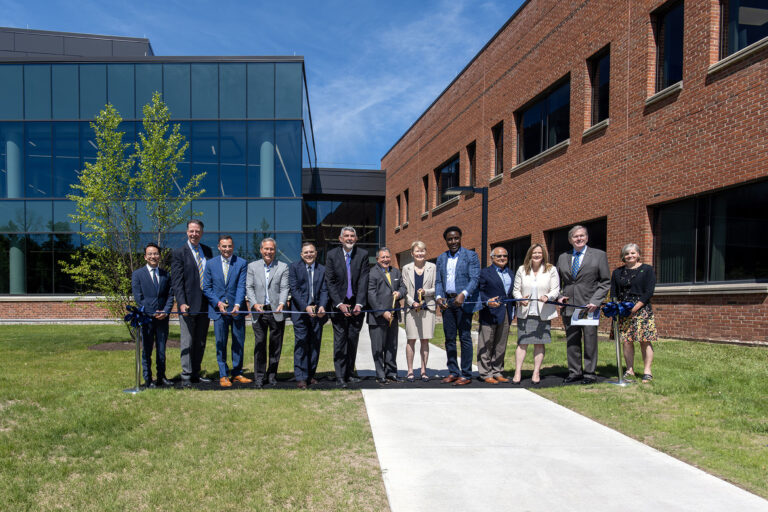
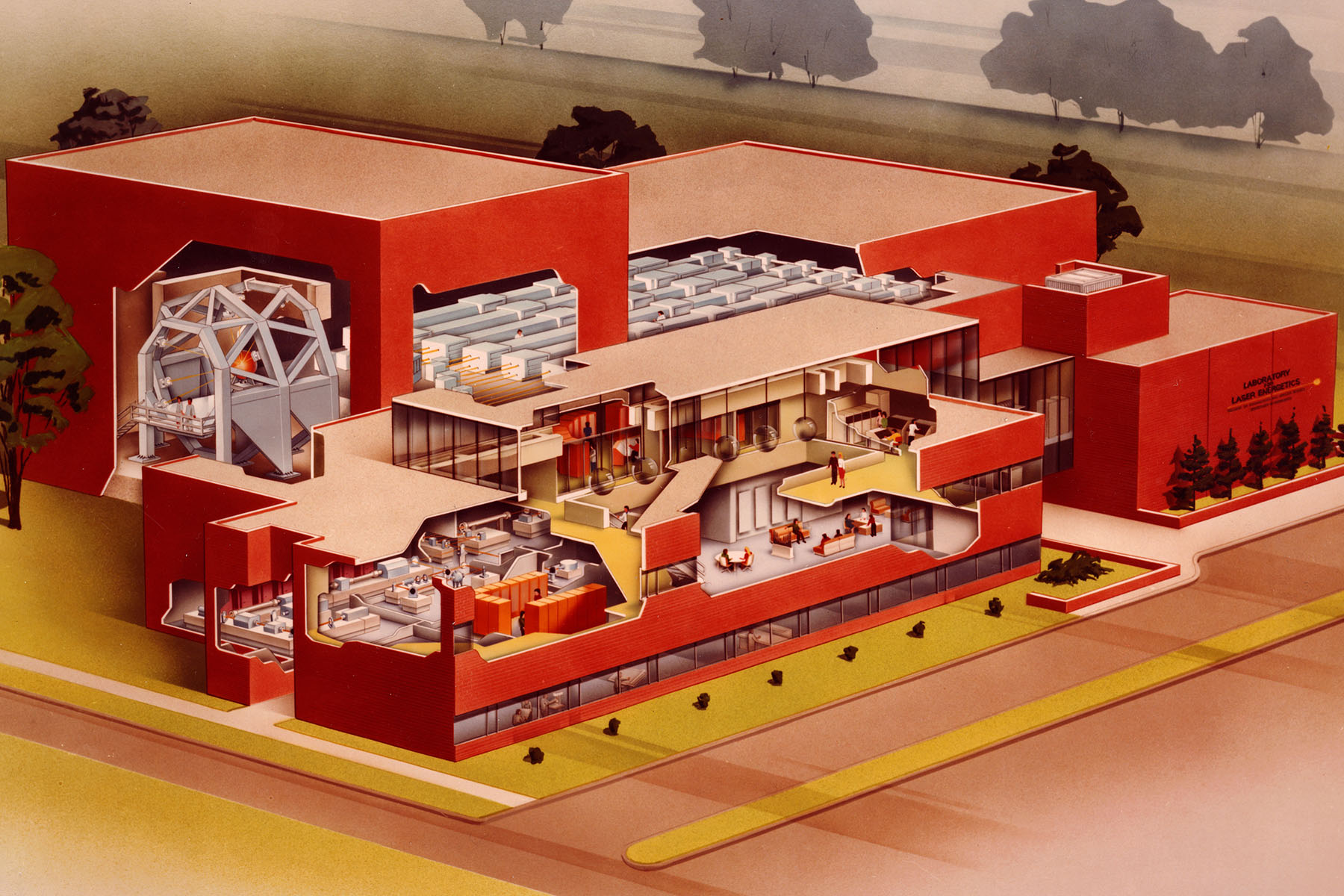
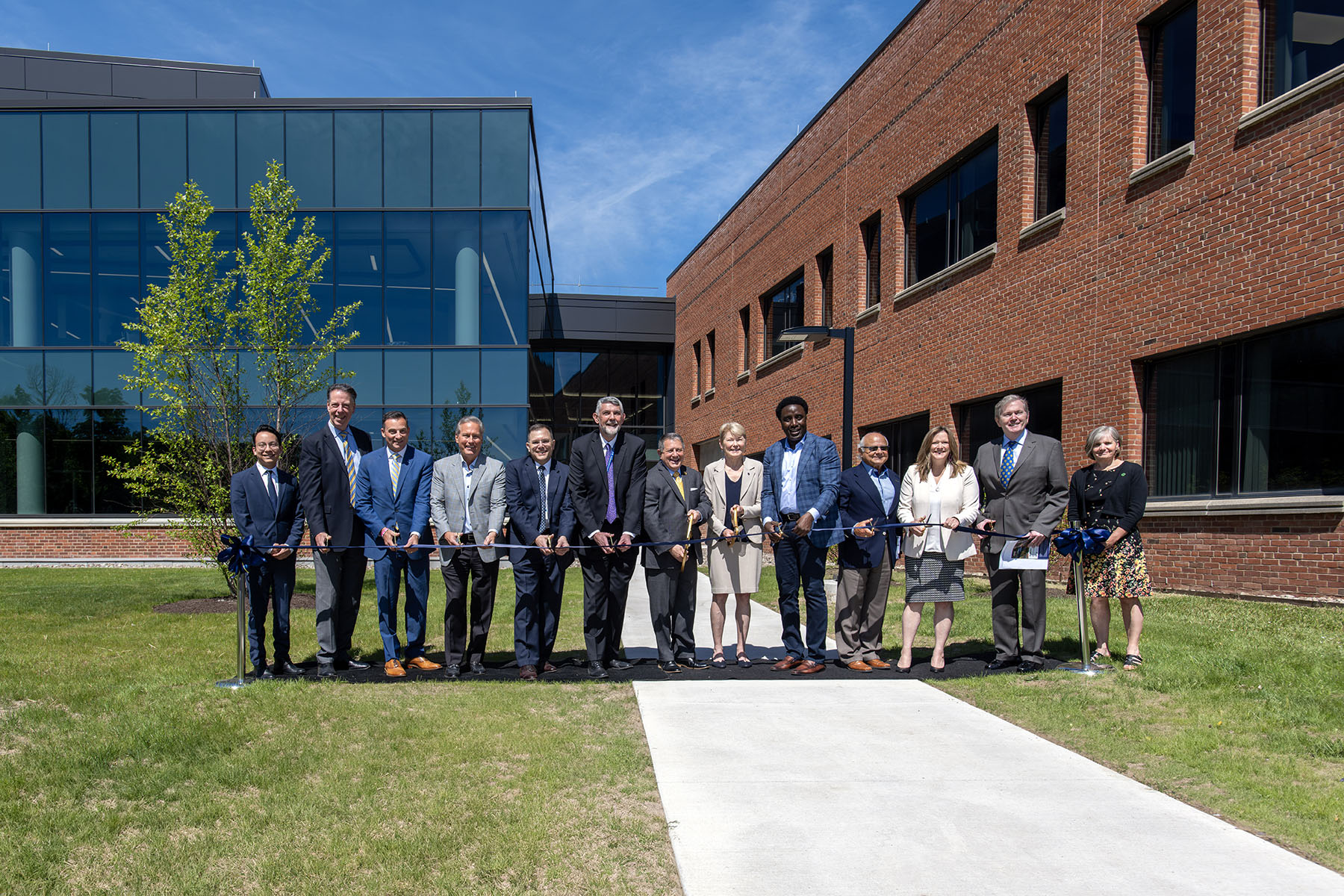
On Friday, May 31, 2024, invited officials, University of Rochester personnel, scientists, staff, and students celebrated the official opening of LLE’s $46 million office and laboratory expansion—the first major addition to the facility in 20 years. “LLE’s history underscores the vital role that our country’s leading research institutions play in the development of new technology and the impact our work can have on the nation’s economic growth,” University President Sarah Mangelsdorf said during the ceremony.
Expansion of Artificial Intelligence and Machine Learning
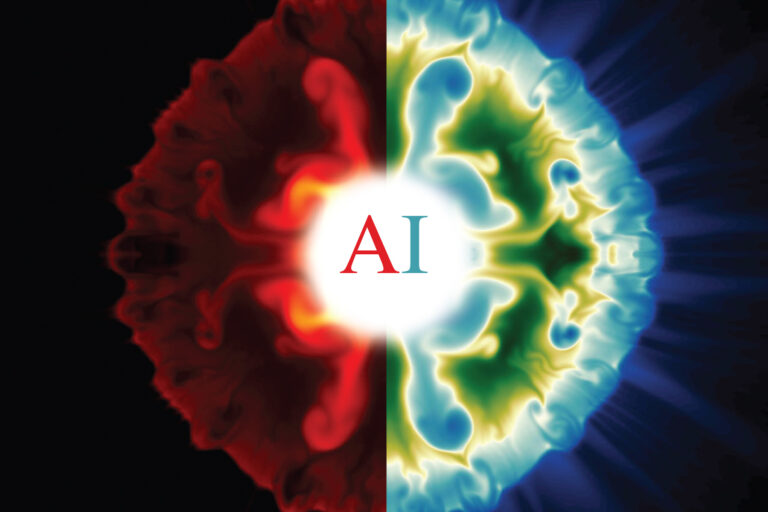
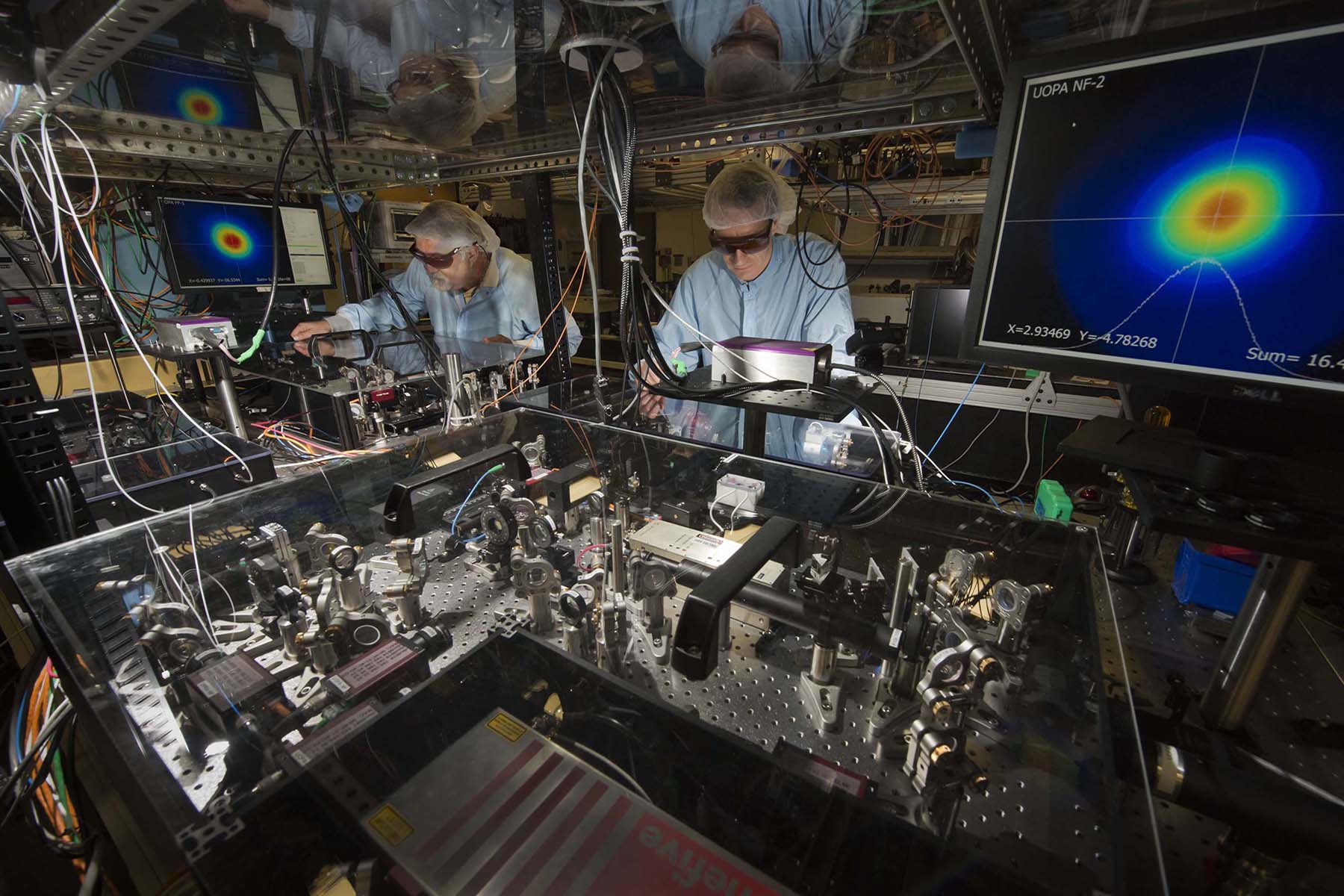
LLE expanded its use of artificial intelligence (AI) and machine learning (ML) to support high-energy-density science, laser facility operations, and next-generation laser system design. To lead this effort, the AI/ML Group was established in 2024 to coordinate and accelerate development of computational tools across the Laboratory. By studying data from various diagnostics, researchers use AI to identify patterns and make real-time, data-driven adjustments to simulations when results diverge from experimental measurements. LLE is also exploring generative AI to predict optimal laser and target settings, enabling rapid adjustments during testing. These tools are essential for improving experimental precision, accelerating discovery, and increasing the efficiency of LLE’s fusion research.
Reducing Instabilities in Inertial Confinement Fusion Targets
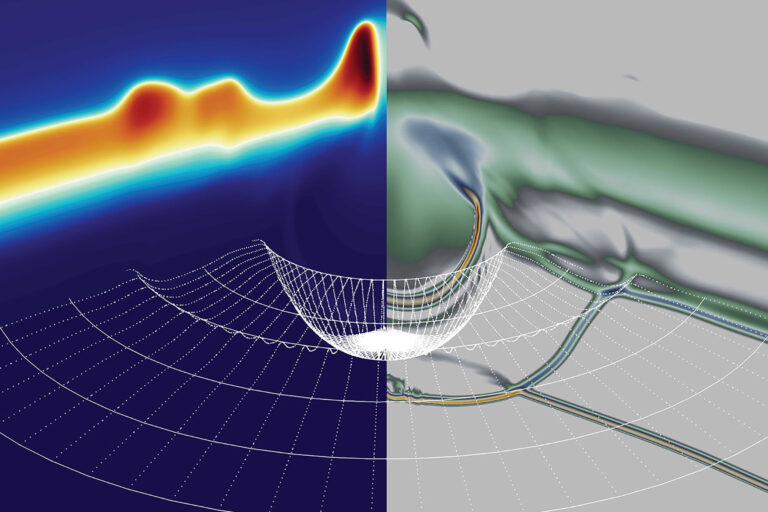
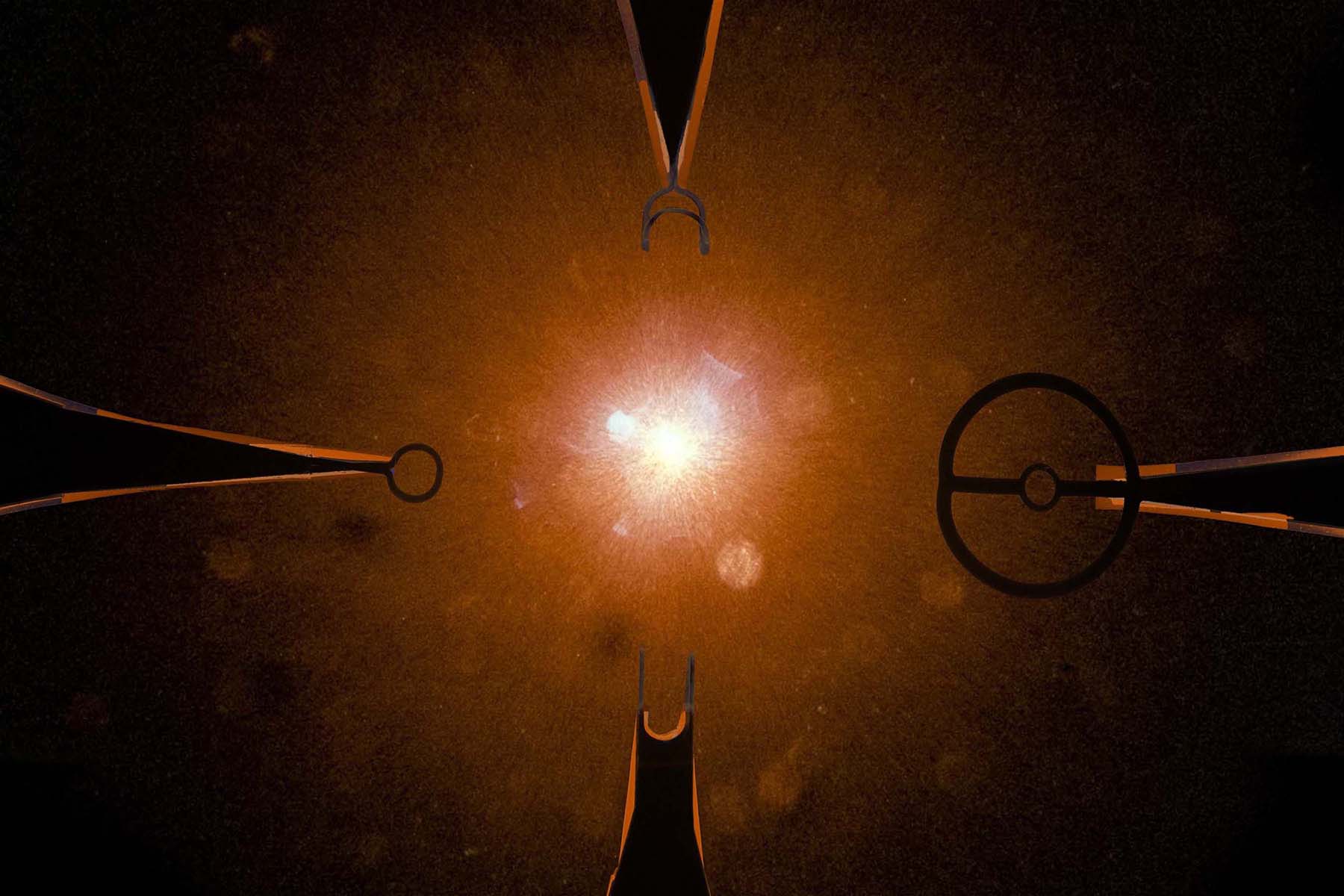
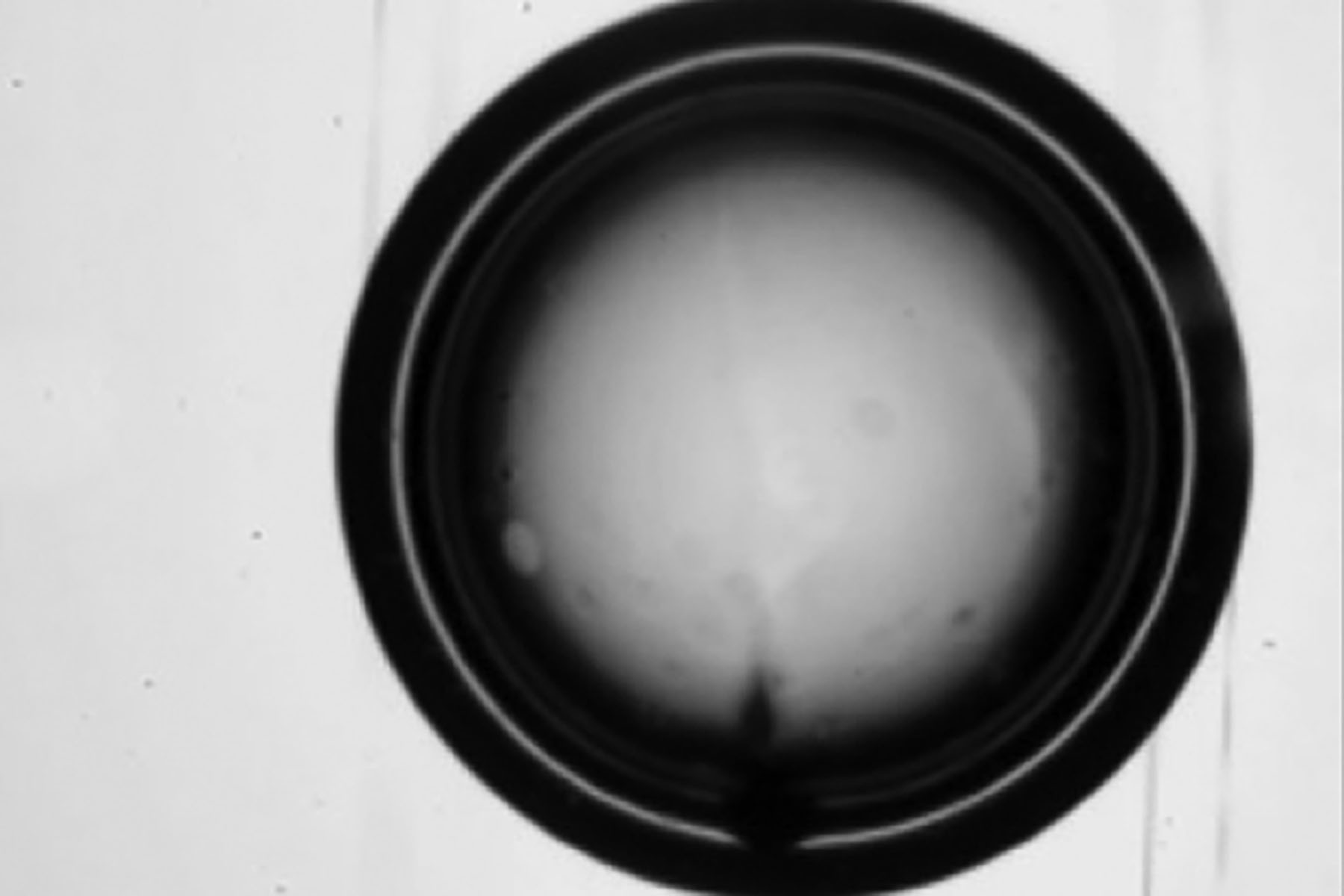
In 2024, researchers at LLE investigated how defects in inertial confinement fusion targets influence implosion performance. Tiny imperfections, such as surface roughness and internal voids, can seed Rayleigh–Taylor instabilities as shocks travel through the target, disrupting the implosion. To better understand these effects, the team used the OMEGA Laser System to study how early-time mass modulations and isolated voids affect shell integrity. Their findings suggest that using low-density ablator materials, such as foams, can help mitigate these instabilities and improve target performance. The team was led by experimentalist Rahul Shah, with theoretical modeling and simulation support from Sam Miller, Tim Collins, Duc Cao, Valeri Goncharov, and Igor Igumenshchev, with additional target fabrication support from David Harding, Mark Bonino, and their team.
LLE Research Team Wins 2024 John Dawson Award
The American Physics Society awarded an LLE research team with the prestigious John Dawson Award for Excellence in Plasma Physics Research in recognition of the team’s pioneering work on statistical modeling to predict, design, and analyze implosion experiments on the 30-kJ OMEGA laser, achieving hot-spot energy gains above unity and record Lawson triple products for direct-drive laser fusion. The award-winning research includes contributions from scientists and engineers in diagnostics and code development, target fabrication and cryogenic layering, and laser facility operation. The team’s research validates innovative design and analysis approaches, paving the way for more-efficient exploration of target designs and improved understanding of the underlying physics. These advancements are expected to guide future implosion experiments and accelerate progress in high-yield inertial confinement fusion and inertial fusion energy. The research team included Riccardo Betti, Aarne Lees, Varchas Gopalaswamy, Mike Campbell, Duc Cao, Chad Forrest, James Knauer, Sean Regan, Rahul Shah, Cliff Thomas, and Connor Williams.
Introducing LLE in Focus
LLE released the first four issues of LLE in Focus, a new quarterly magazine-style publication that shines the spotlight on the accomplishments, technological advances, and cutting-edge research performed at the laboratory. Each issue features a specific theme and highlights graduate students, awards and honors, and updates from the facility. Richly illustrated and written in an accessible style, LLE in Focus is designed to engage with a wide audience of people from all levels of scientific knowledge to help explain and promote the important and truly collaborative work performed by scientists, students, and staff at LLE.