
Timeline
1988
OMEGA Experiments Show 200× Liquid-DT Density
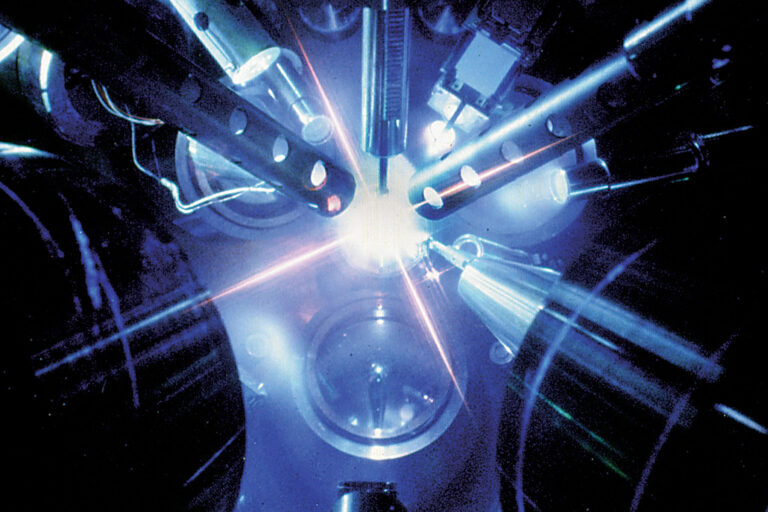
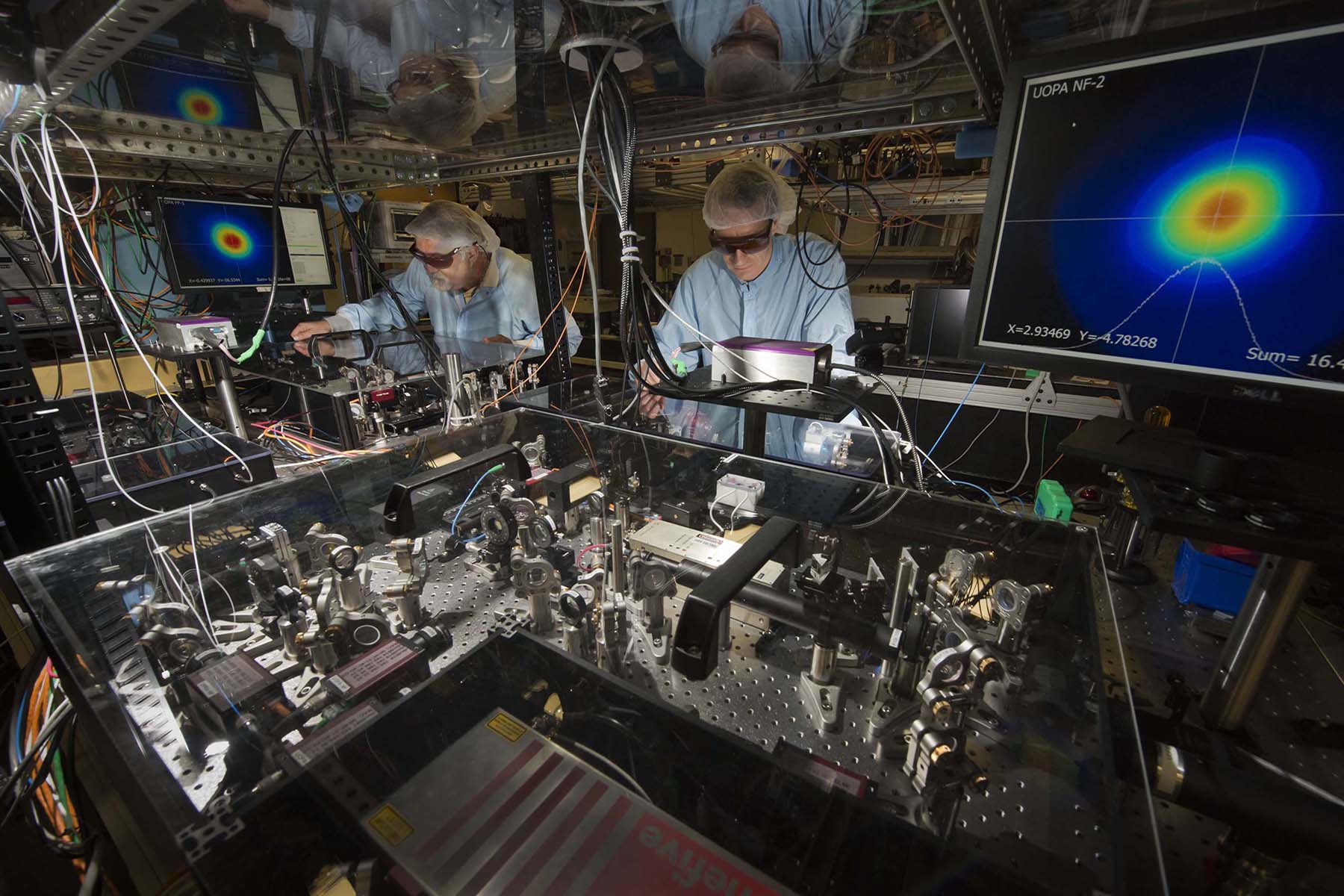
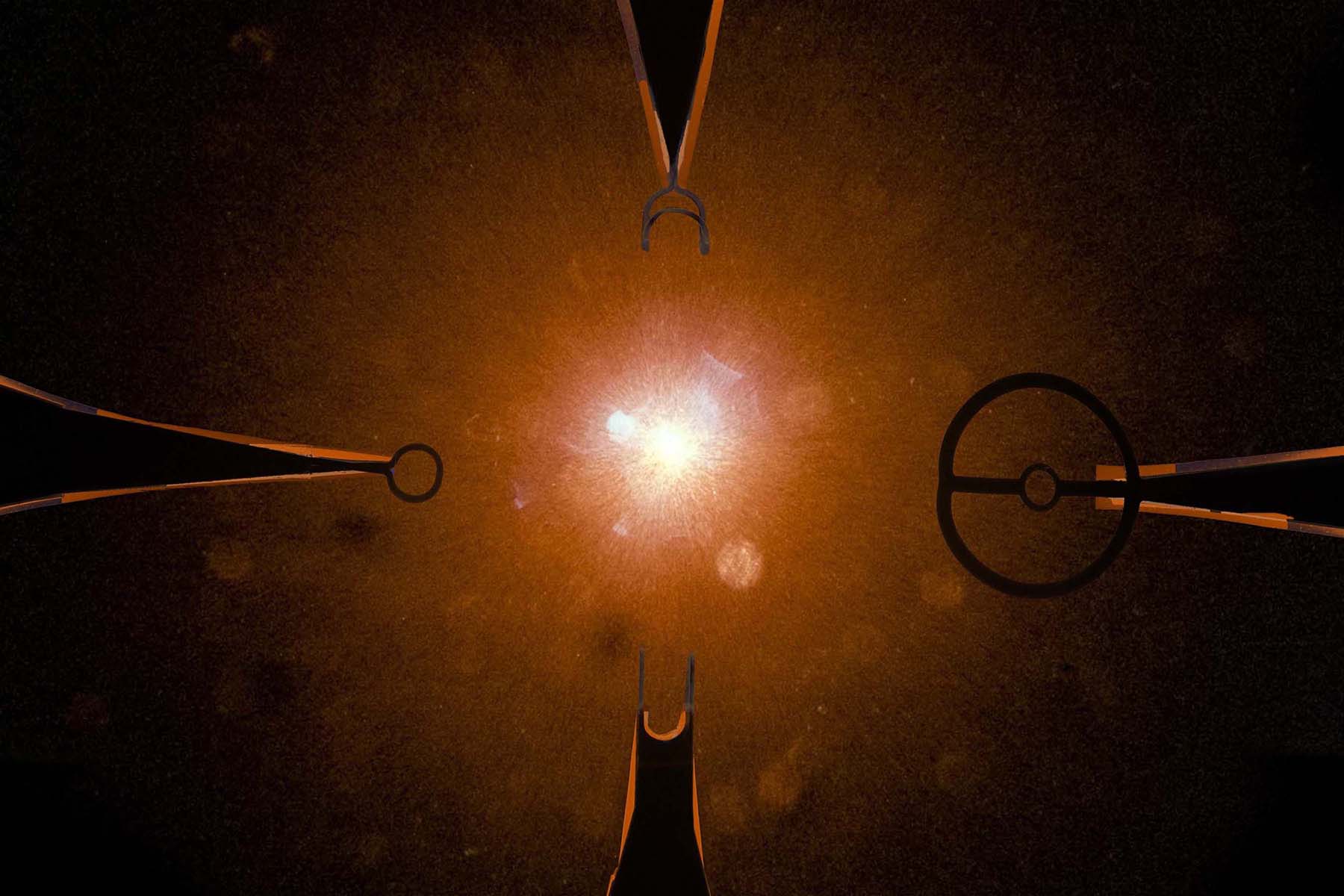
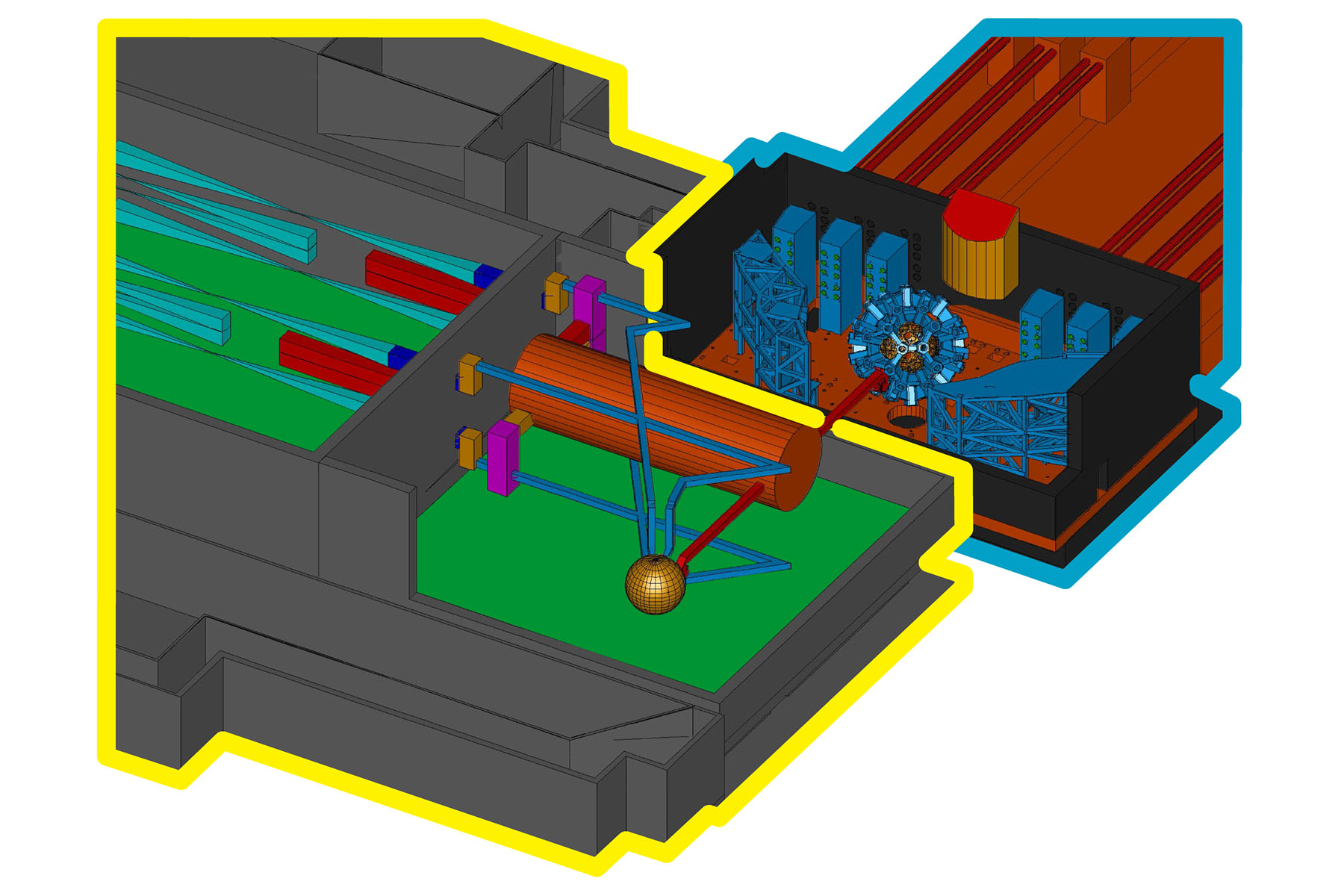
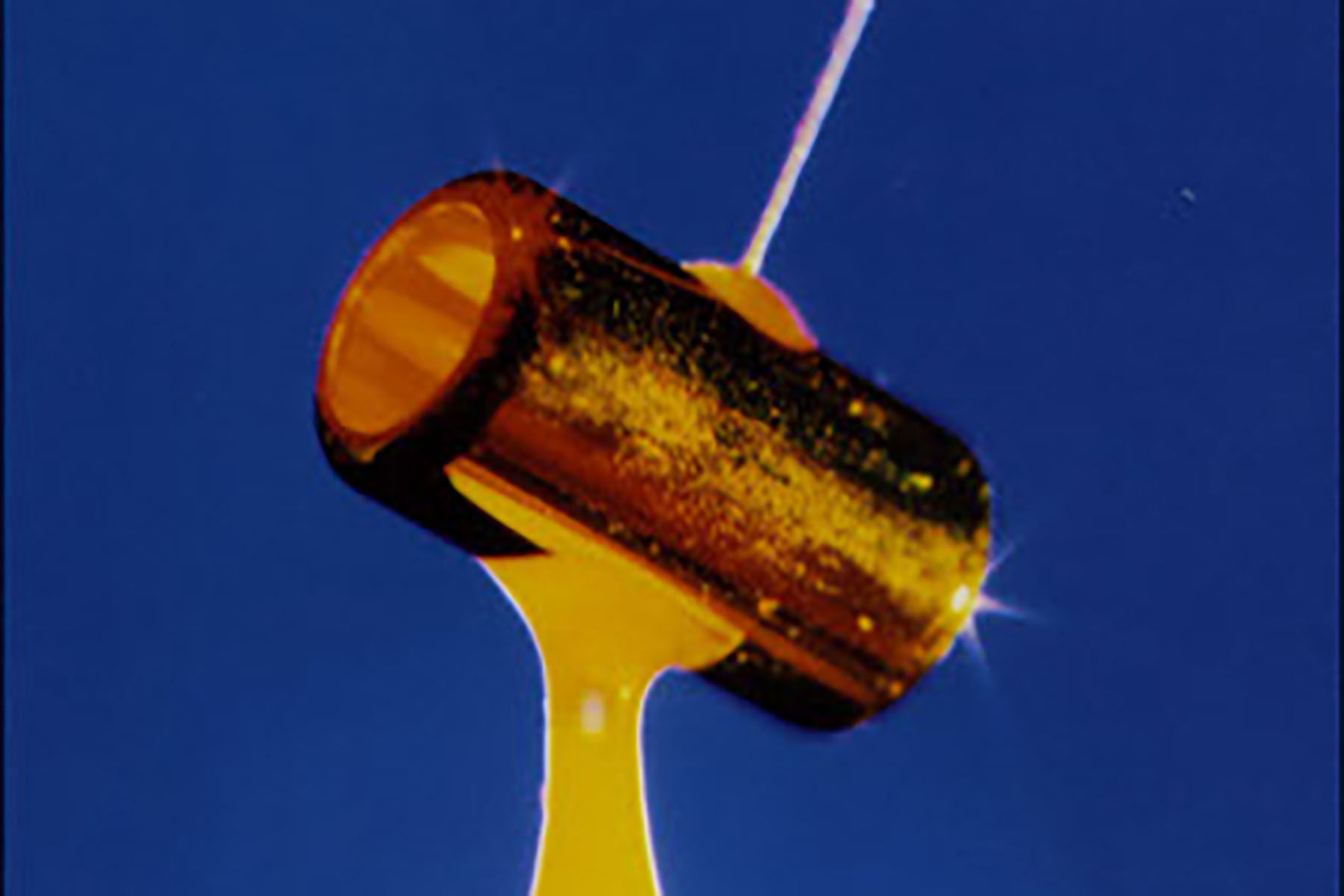
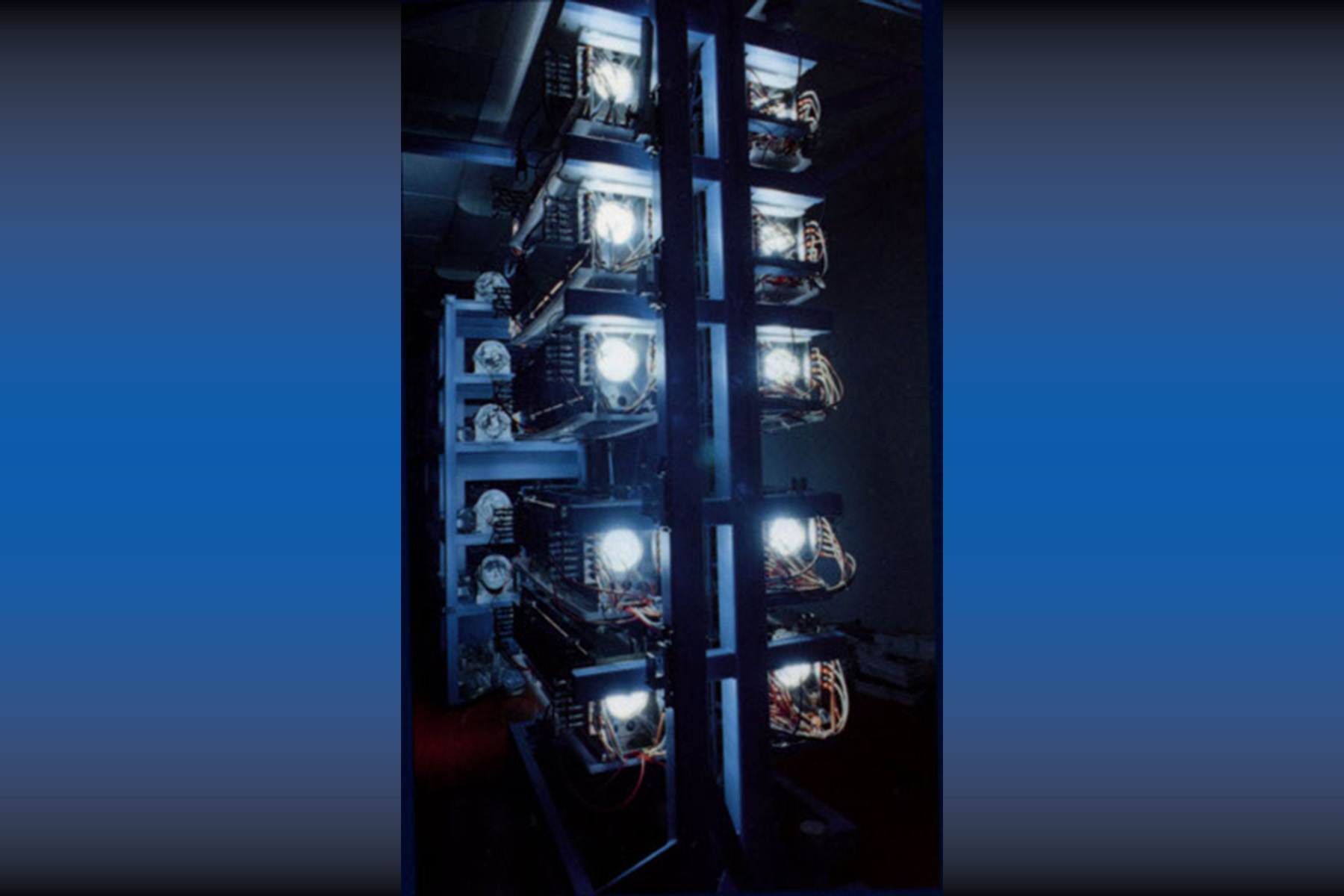
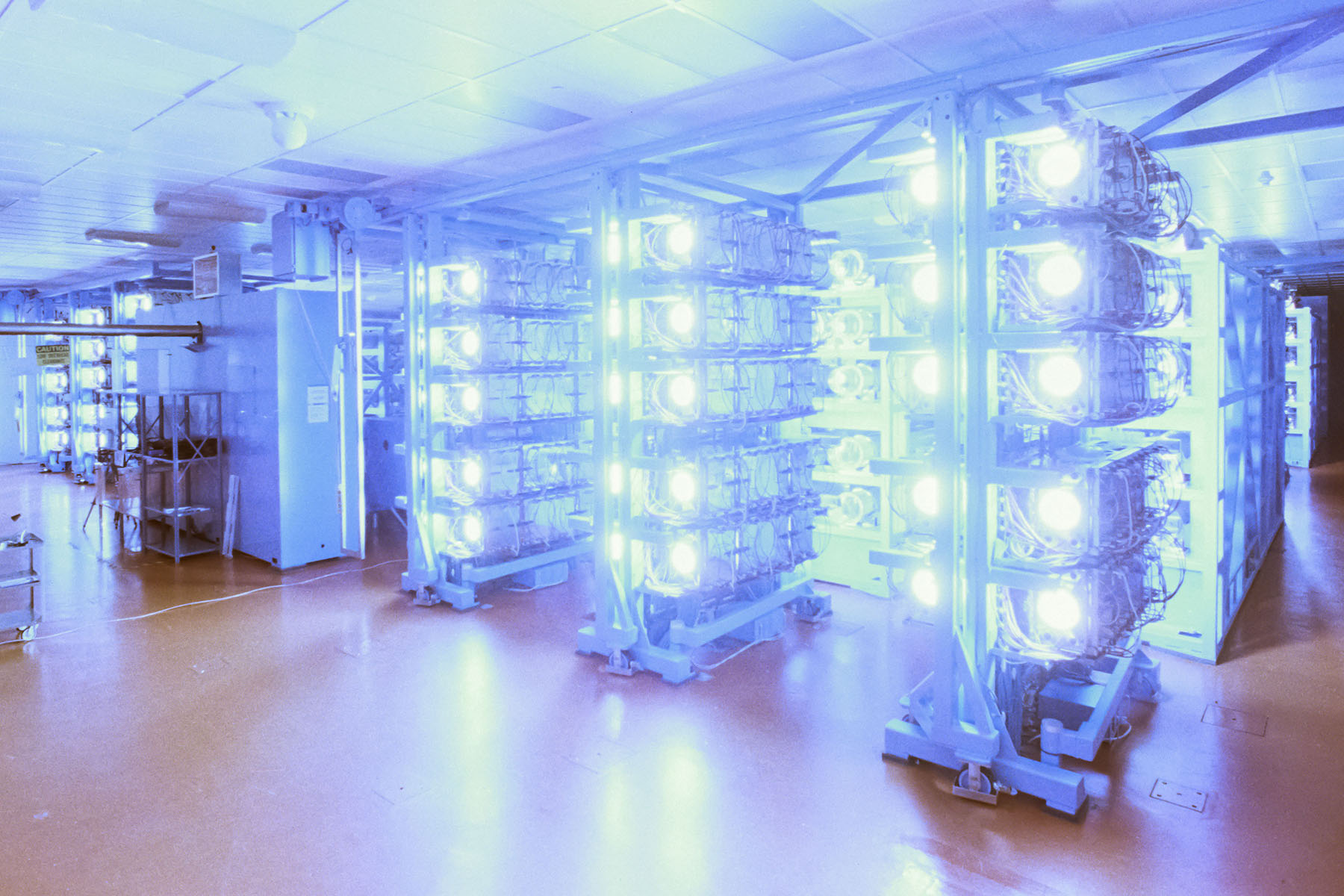
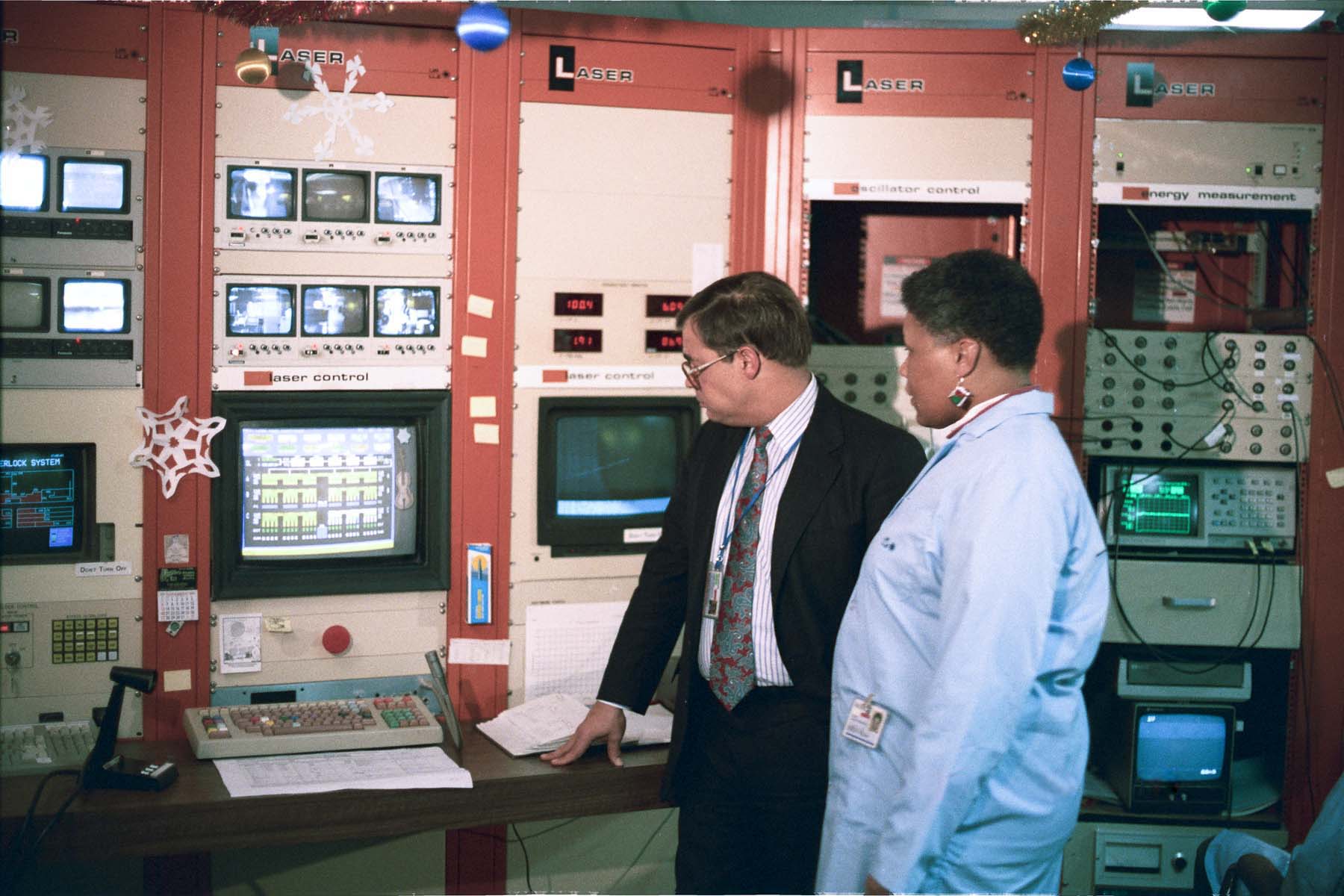
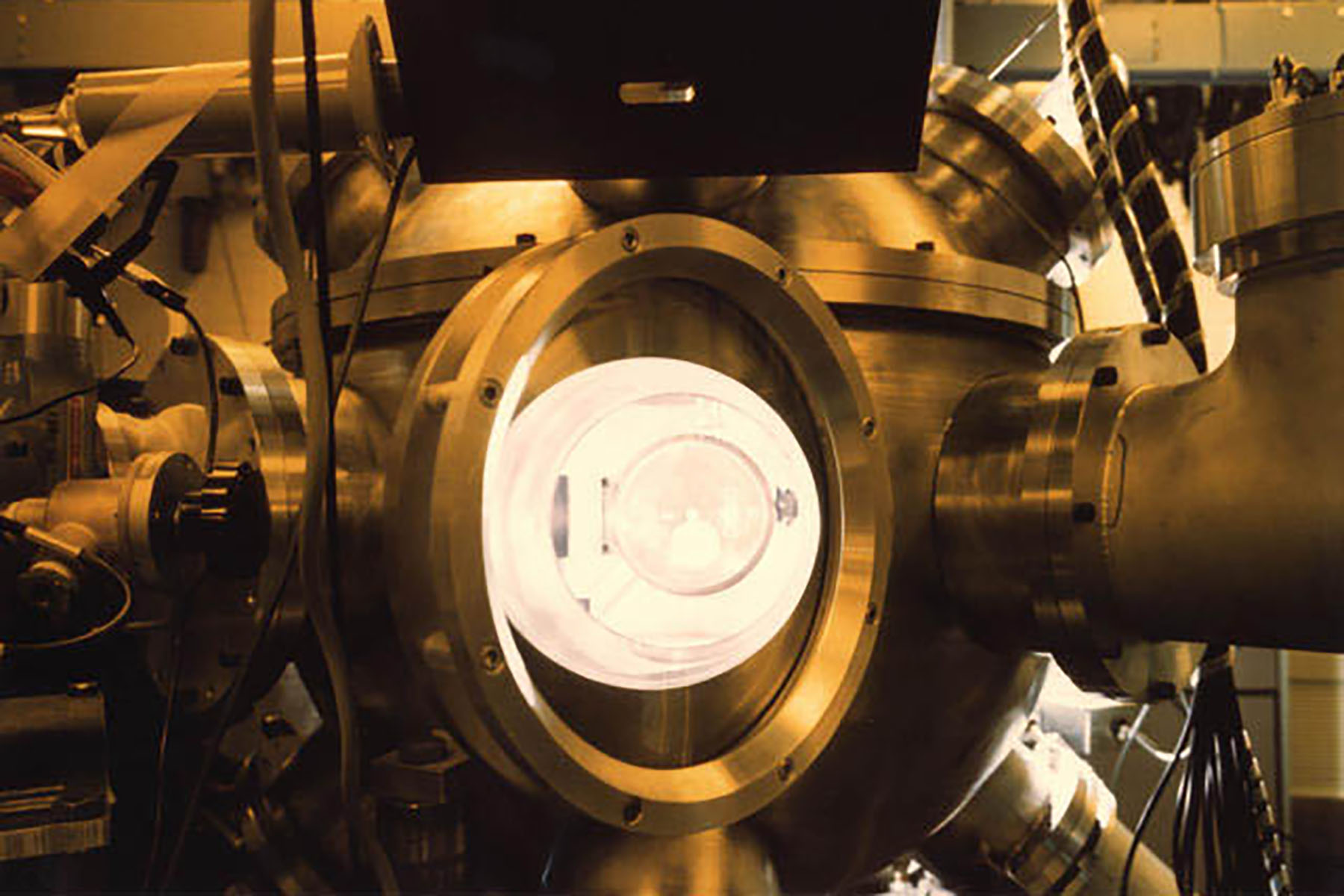
In 1988, with an adapted cryogenic system and newly developed beam smoothing, LLE demonstrated 100 to 200× liquid-DT density implosions on OMEGA. An extensive array of experimental diagnostics was employed to carry out these experiments including absorption and fractional conversion of the absorbed energy into x rays; time- and space-resolved measurements of x-ray emissions; neutron yield and energy spectrum; and fuel-areal-density measurements using knock-on diagnostics. The knock-on diagnostics technique conceived and developed at LLE, in particular, gave unequivocal evidence of high density. It was the only diagnostic that could measure density in a temperature-independent way. The experimental results were validated by an independent DOE panel in March 1988. This was the highest compressed-fuel density record in ICF experiments using either the direct or indirect approach at that time and made a strong case for the direct-drive approach.
“Laser Driven Implosion of Thermonuclear Fuel to 20 to 40 g cm –3” by R. L. McCrory et al. published in the September 1988 issue of Nature, highlighted this achievement.
R. L. McCrory, J. M. Soures, C. P. Verdon, F. J. Marshall, S. A. Letzring, S. Skupsky, T. J. Kessler, R. L. Kremens, J. P. Knauer, H. Kim, J. Delettrez, R. L. Keck, and D.K. Bradley, “Laser-Driven Implosion of Thermonuclear Fuel to 20 to 40 g cm–3,” Nature 335 (6187), 225–230 (1988).
Phase Conversion with Distributed Phase Plates
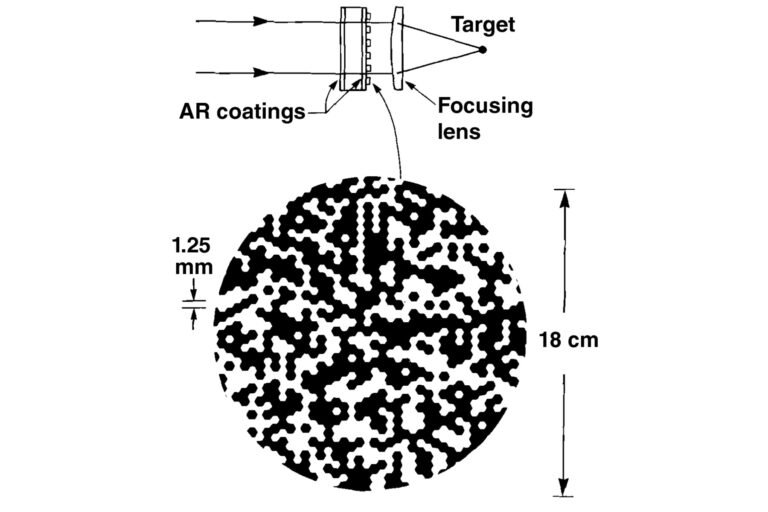
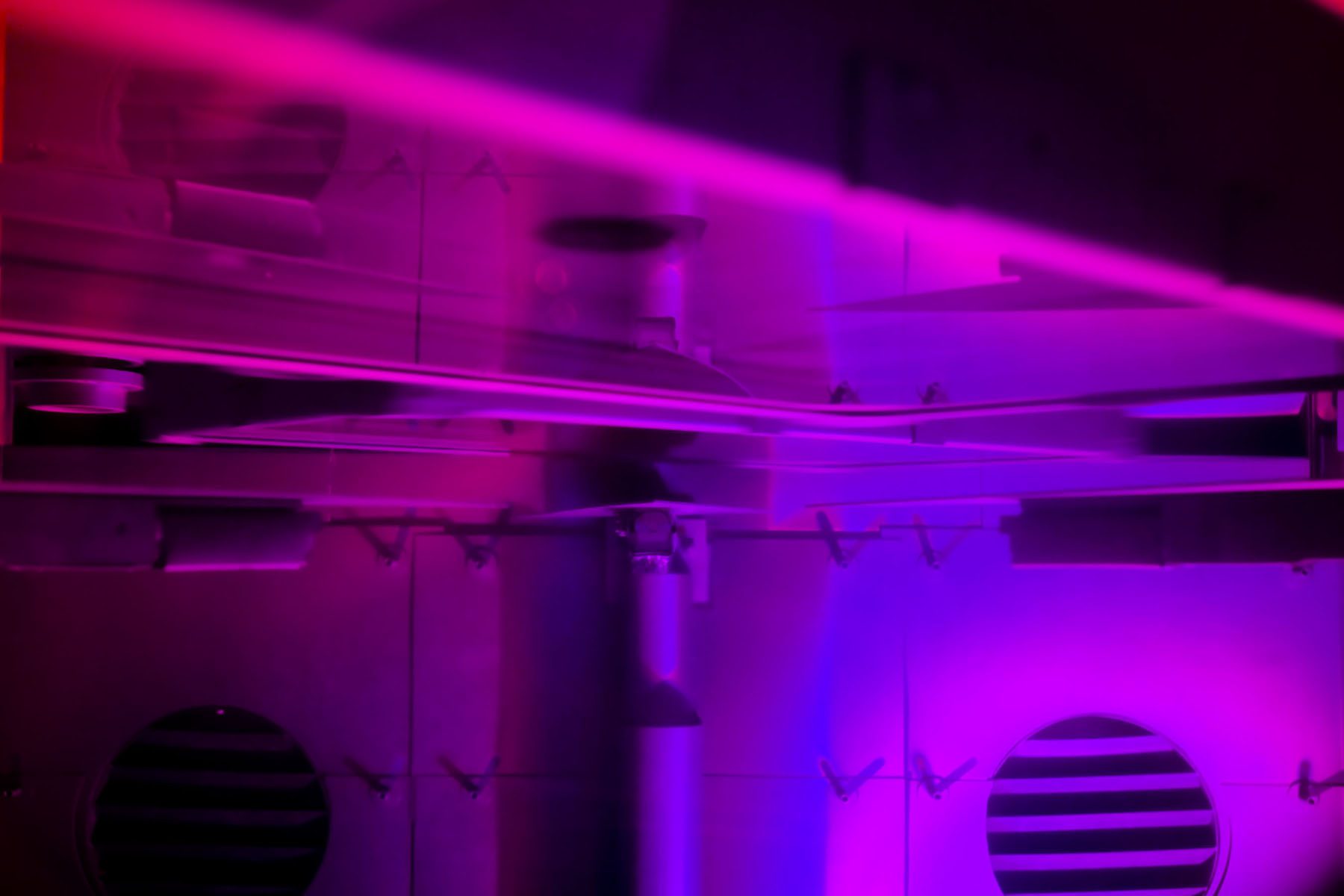
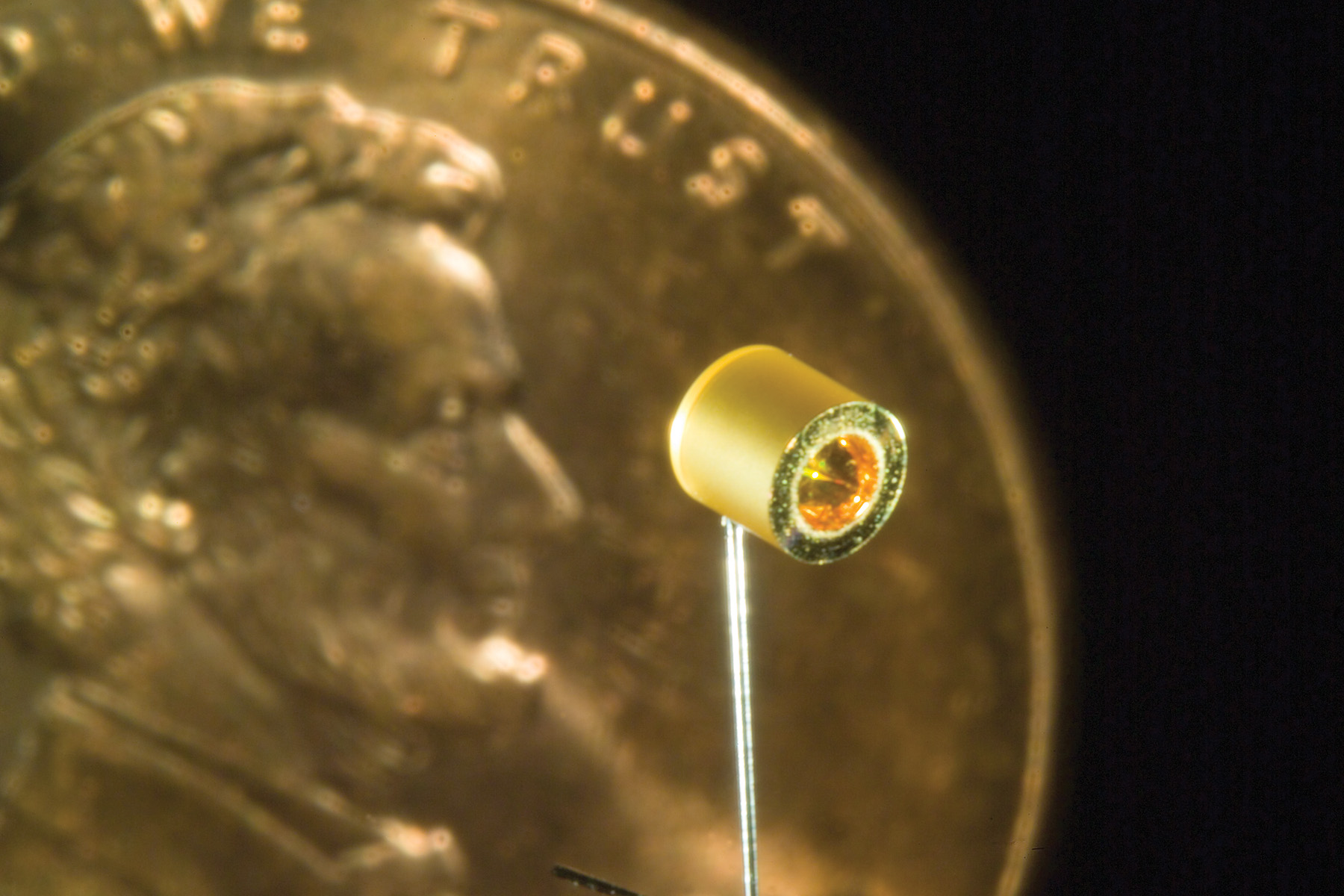
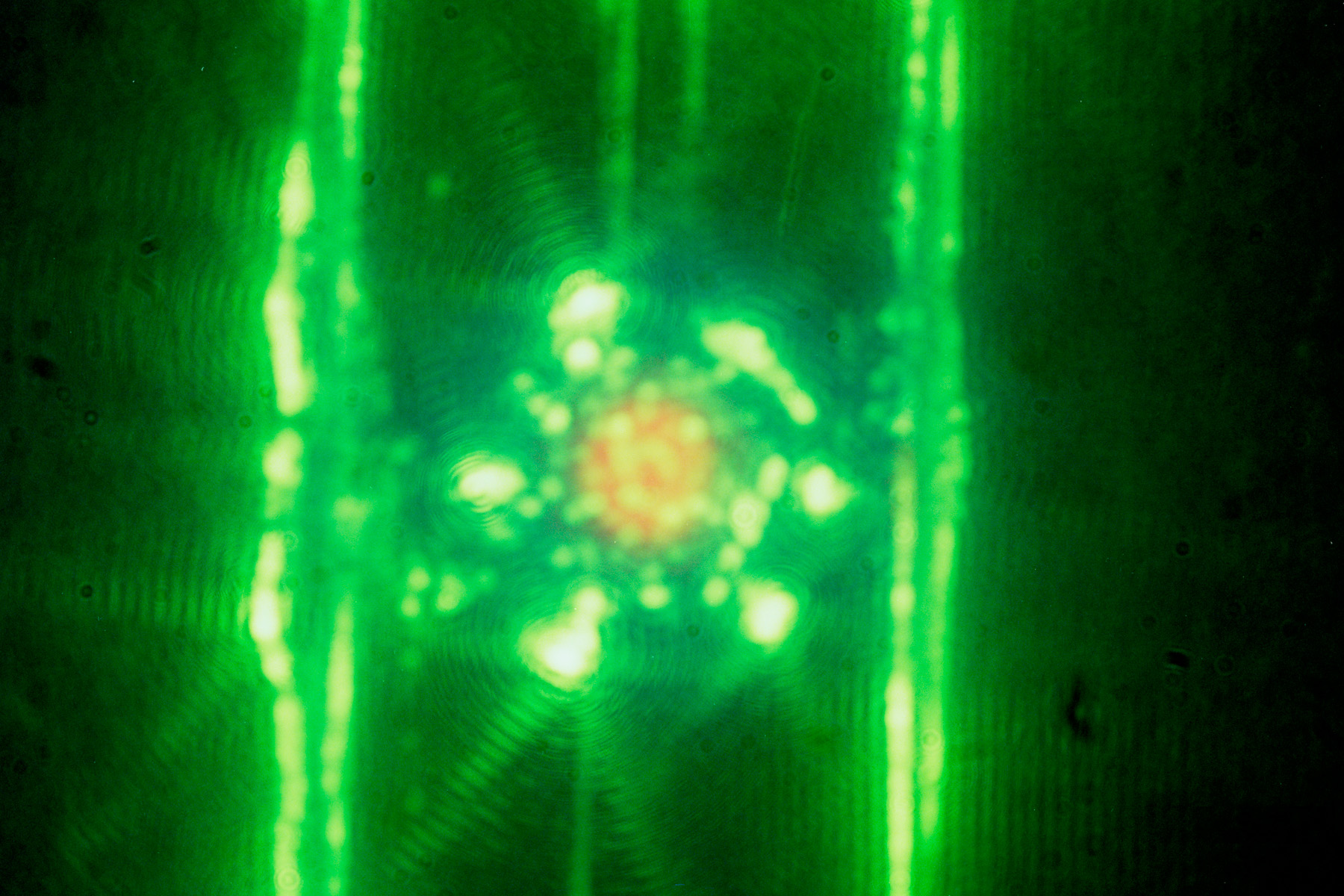
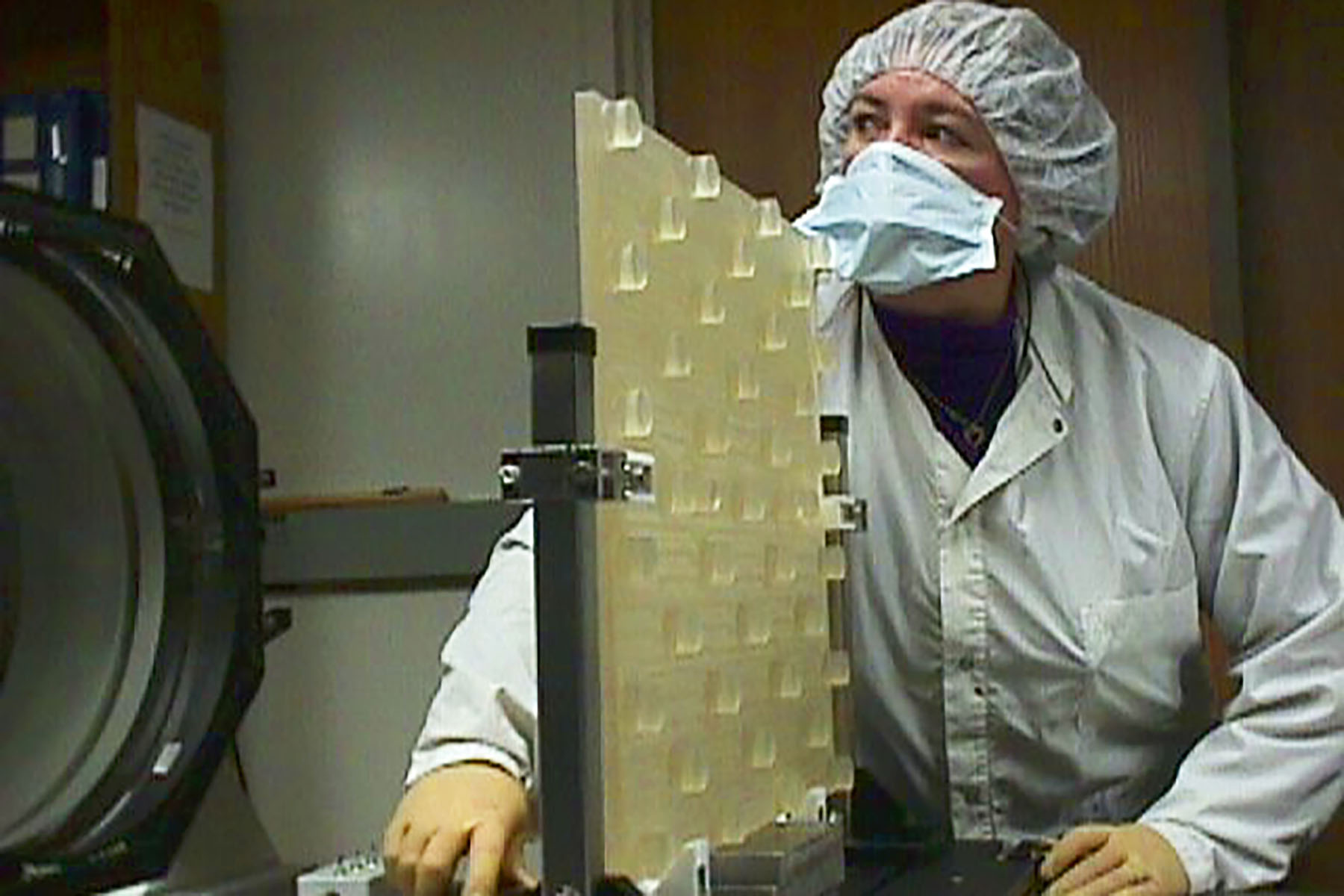
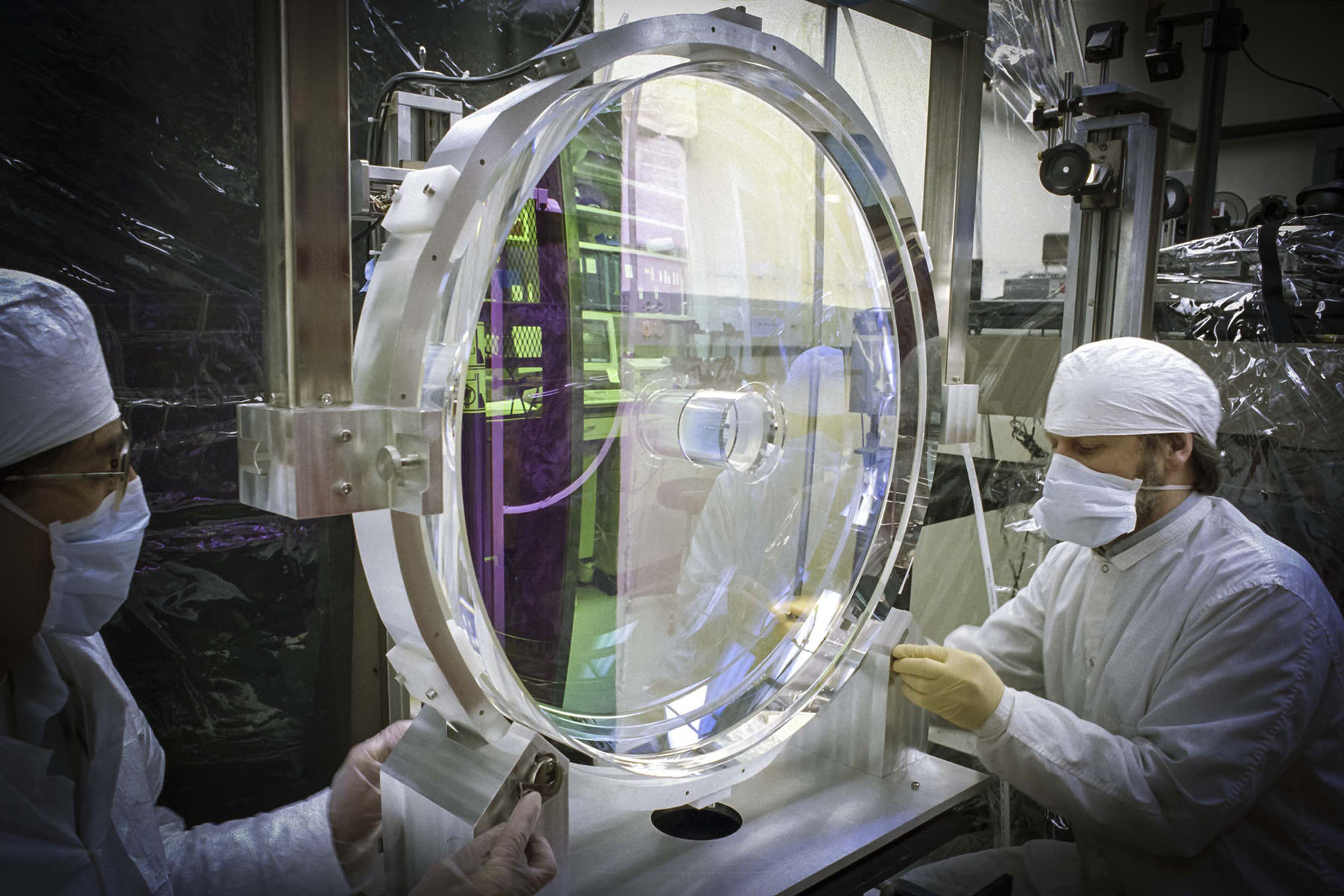
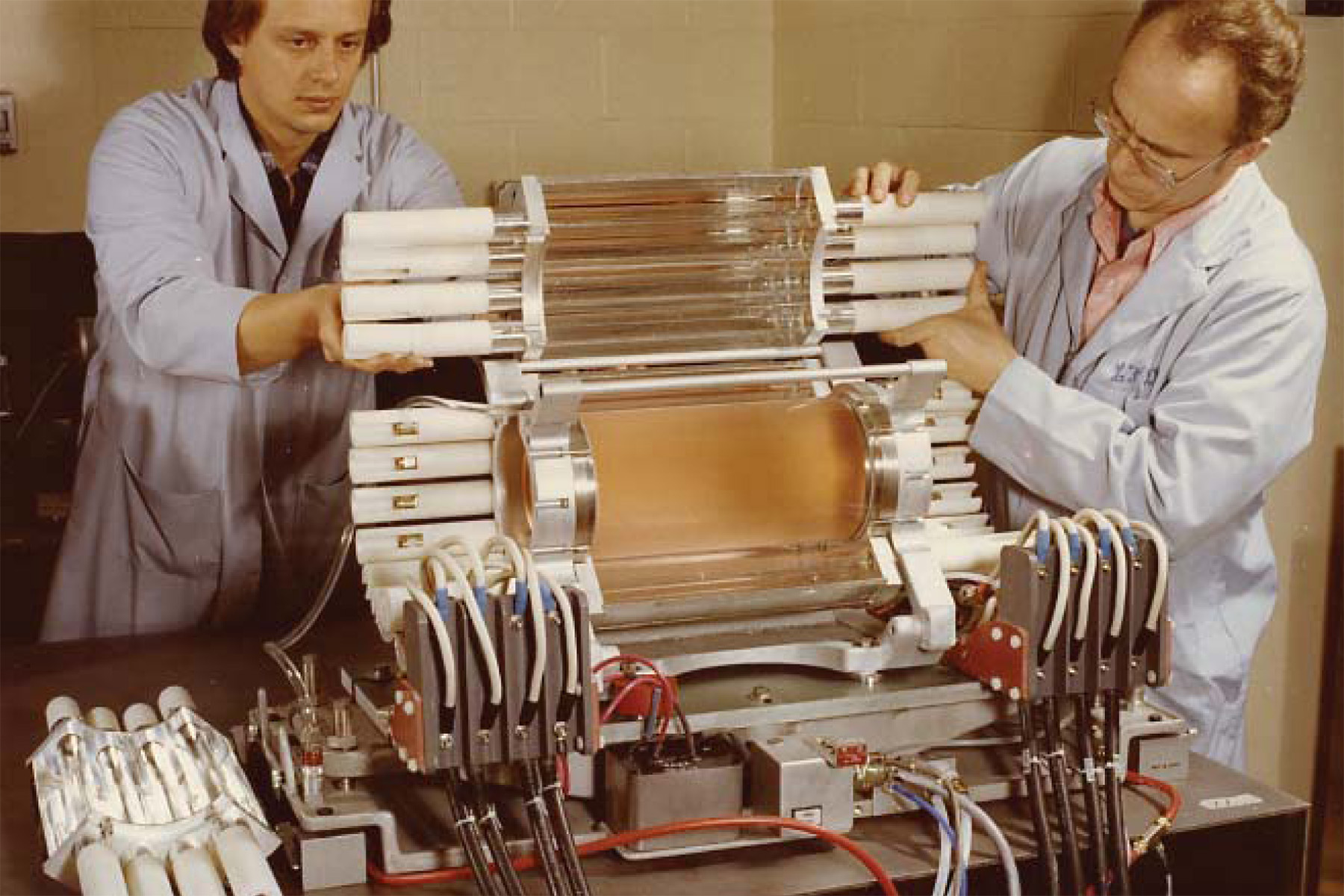
An alternative to phase correcting a wavefront involves modifying the laser beam’s coherence properties, thereby changing its focusing characteristics. A phase-conversion technology that incorporates a distribution of near-field phases to perform either static phase correction or induce spatial incoherence offers a degree of flexibility needed at this stage of research. Distributed-phase-plate technology, deployed on the OMEGA Laser System, offers this parallel route toward increasingly higher levels of irradiation uniformity.
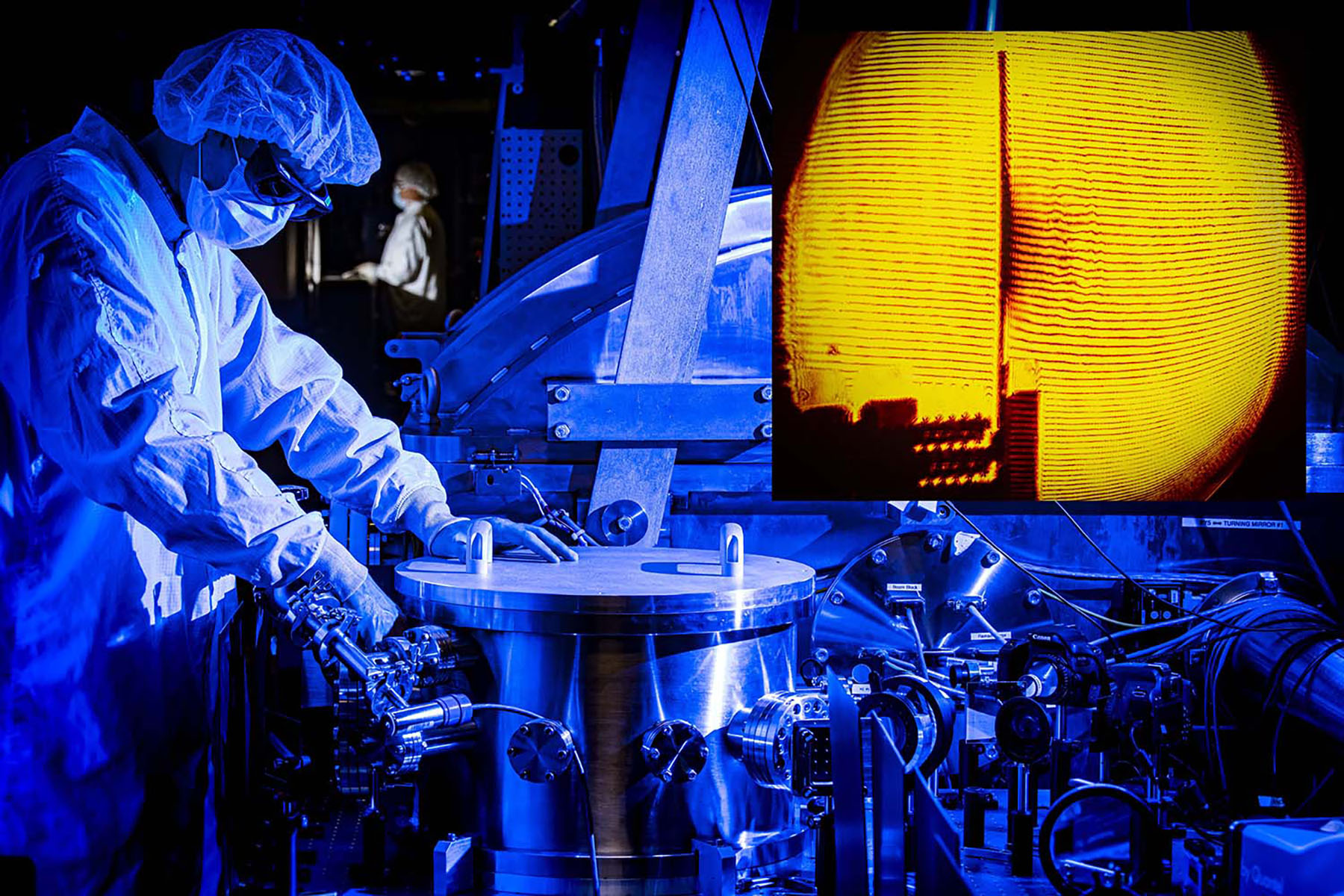
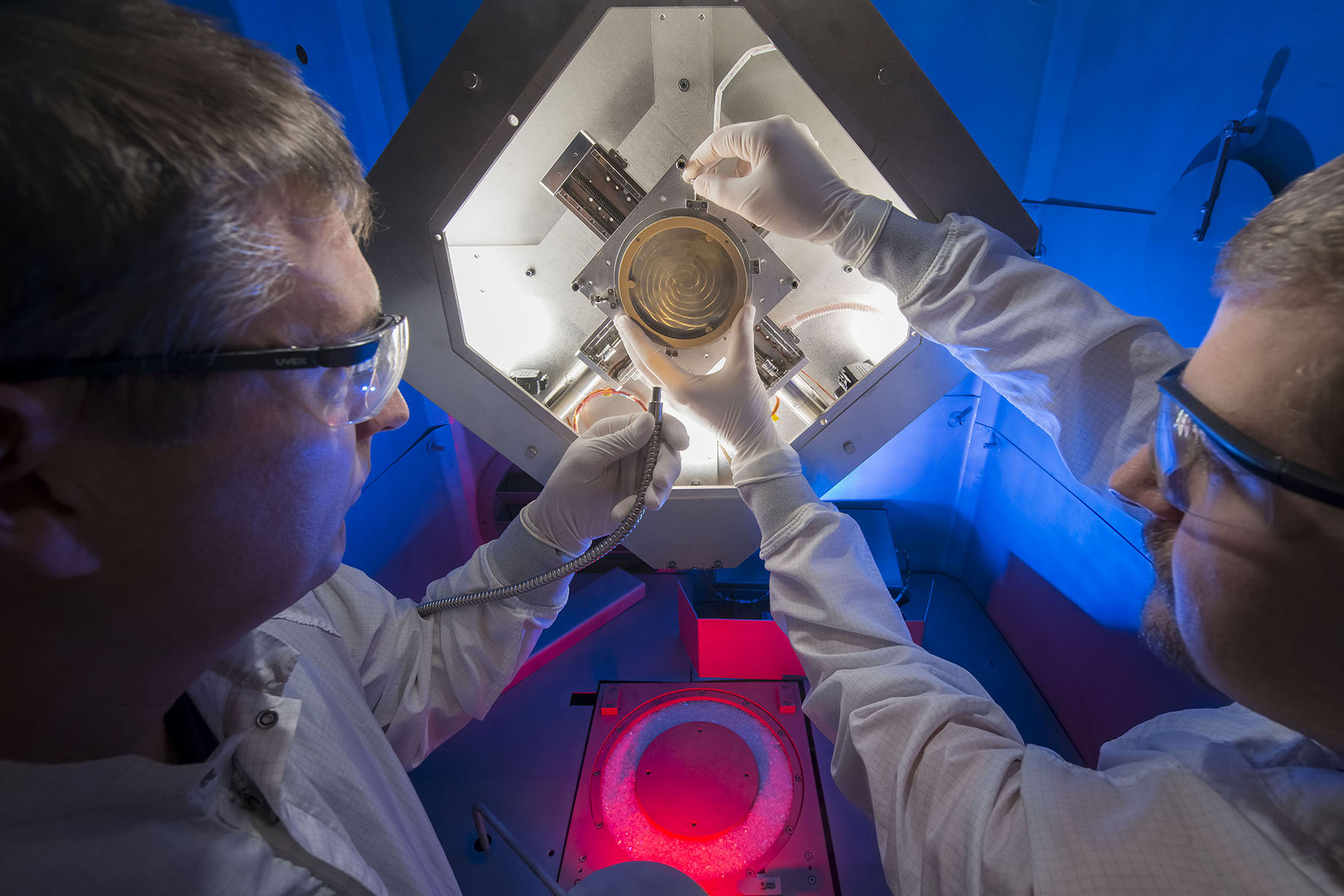
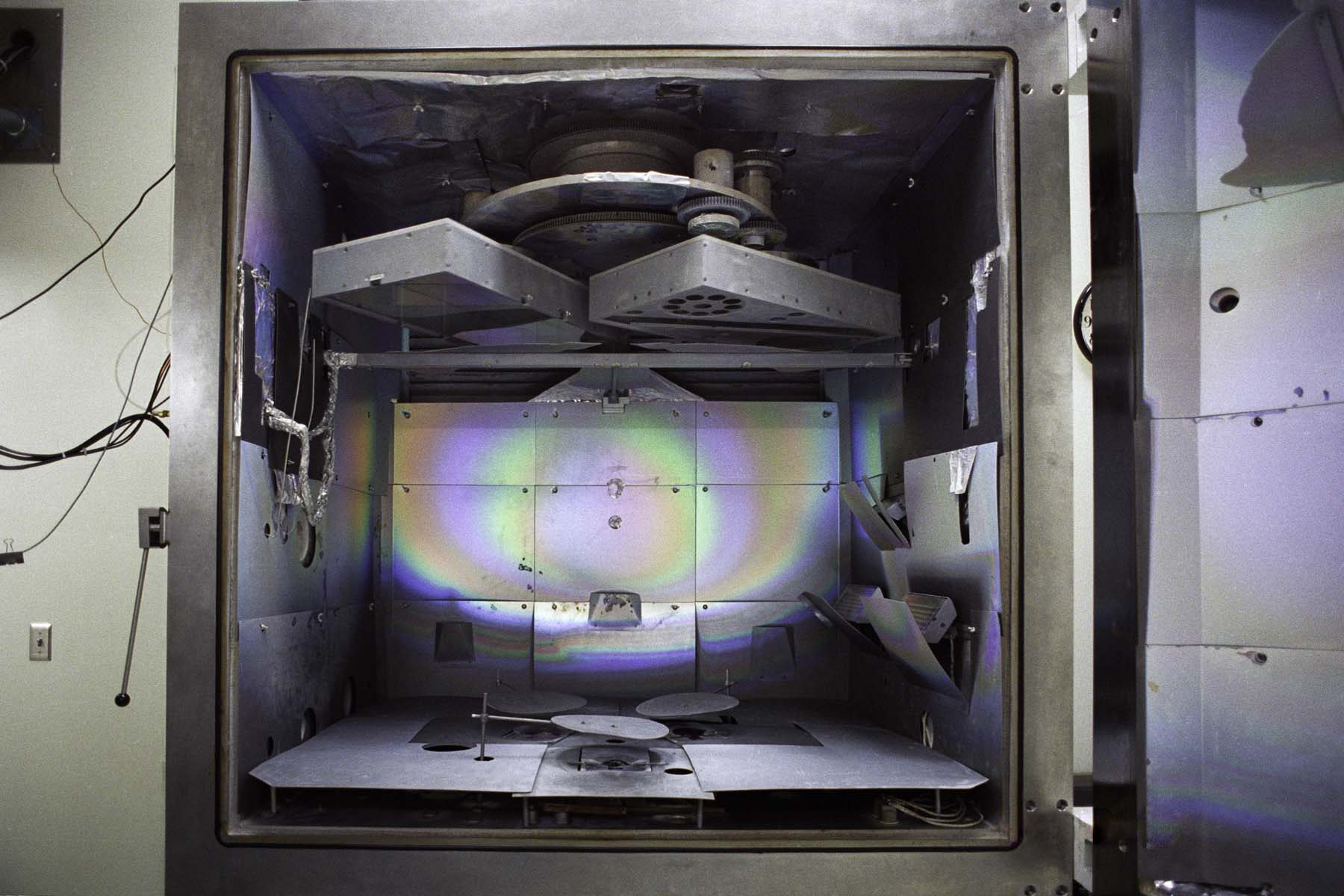
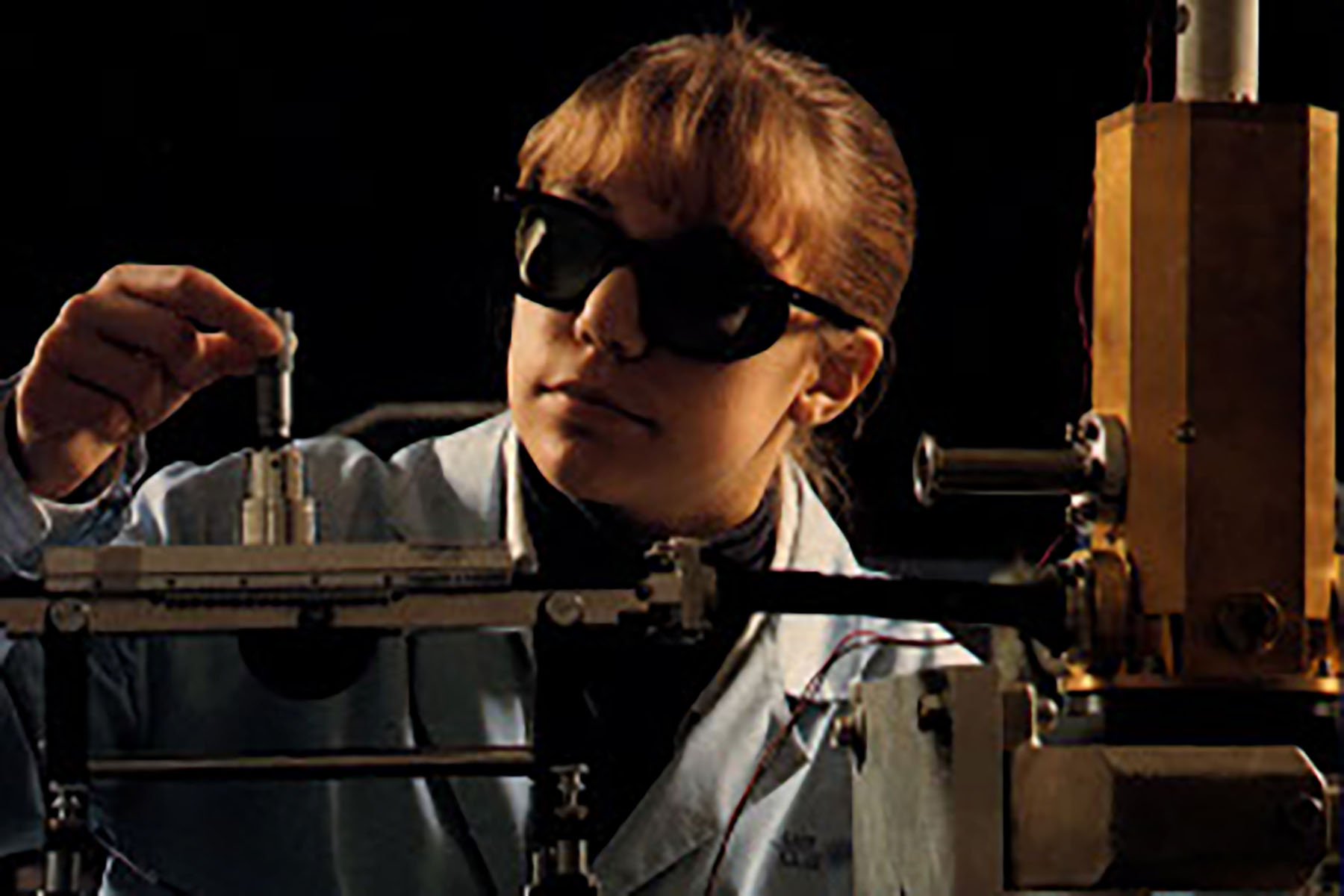
The joining of many diverse technologies resulted in the design, fabrication, and testing of high-quality distributed phase plates (DPPs). Computerized image generation, photolithography, chemical vapor deposition, and high-resolution interferometry were combined to make OMEGA the only frequency-tripled and phase-converted laser system. DPP’s improved the irradiation uniformity at the target plane by more than a factor of 3. The increased reproducibility of the beam profiles offered by the DPPs made possible the more-critical assessment of shot-to-shot variations in beam energy and beam pointing.
Diagnosing High Density Using Fusion
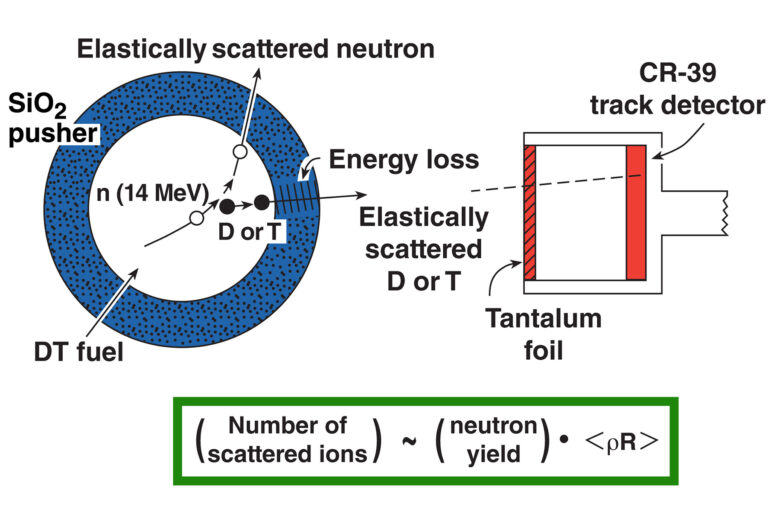
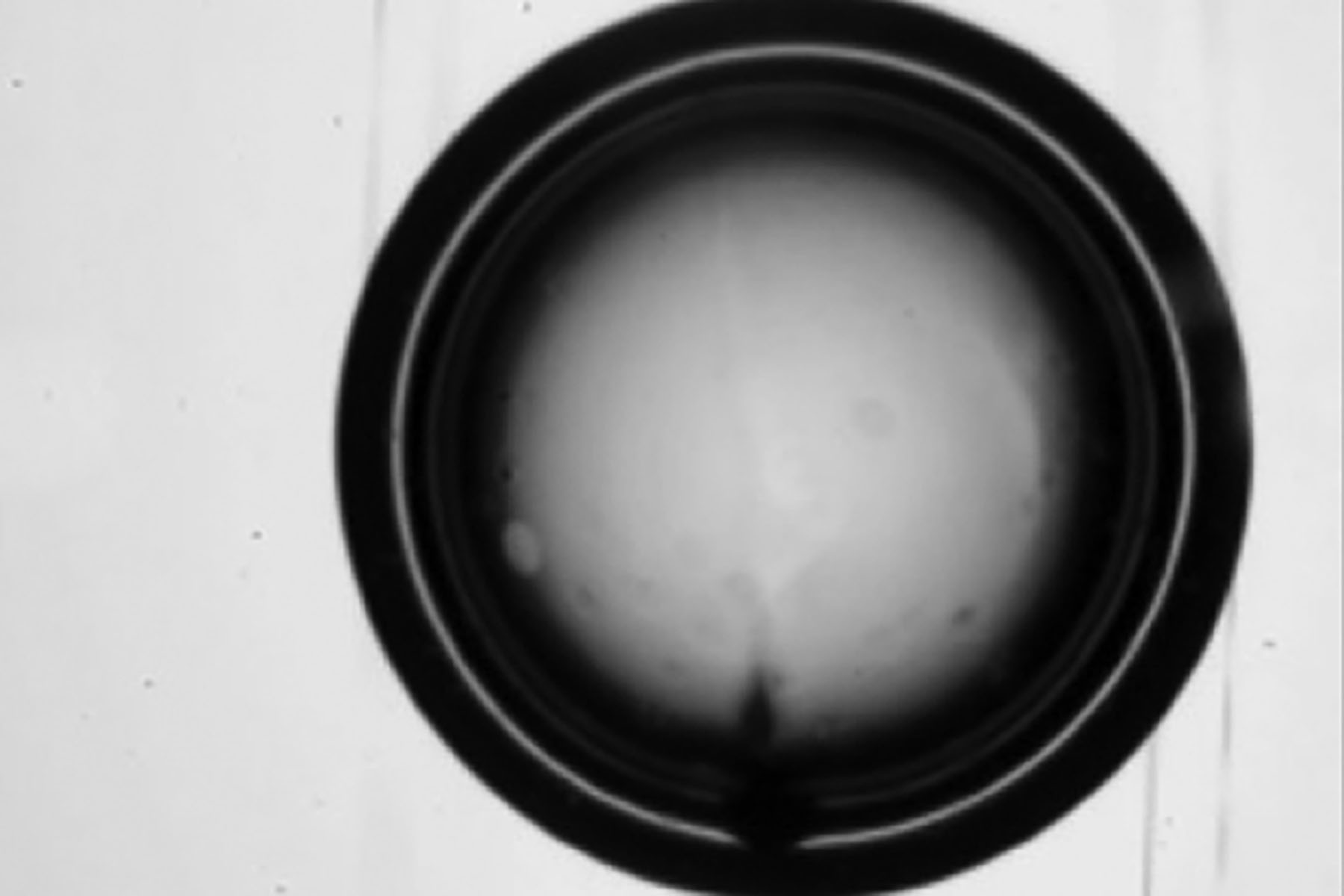
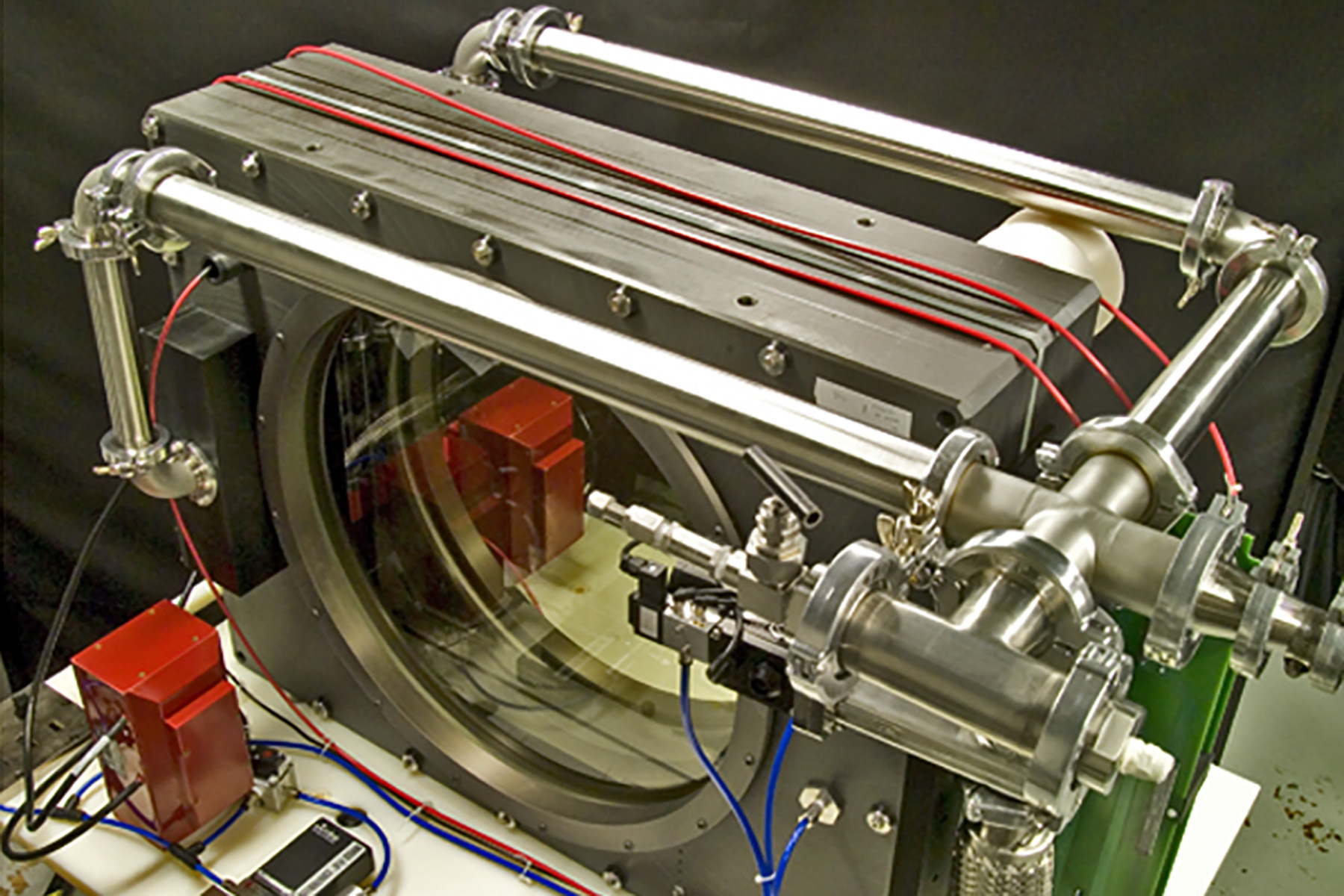
The DT fuel density in high-compression experiments at LLE was measured using the “knock-on” diagnostic. Previously, this diagnostic had been used only in low-density experiments where there was a negligible amount of slowing of the knock-on particles within the target. In the experiments, the target density-radius product (ρR) was sufficiently large to significantly moderate the knock-on particles. So a new technique had to be developed to accommodate the distorted spectrum.
A technique was developed to measure fuel ρR with knock-on particles in a model-independent way for experiments where the total target ρR is less than ~50 mg/cm2. The technique takes into consideration moderation of the knock-on within the target and is independent of the moderation source whether it is in the fuel or shell. Even if there is mixing between the fuel and shell, the diagnostic measures the ρR of the fuel portion. In addition, the ρΔR of the shell can be estimated by demanding consistency among the number of tracks in different foils.